
Learn
Peptide blends and stacks
A peptide blend is one vial that holds two or more peptides, and sellers also call such products stacks. The four blends sold here contain six different peptides. No published study has tested KLOW or Glow as mixed, no clinical trial has tested CJC-1295 with ipamorelin, and the one controlled study of BPC-157 with TB-500, in rats, found no added benefit over either peptide alone.12345
This page summarizes published sources for information only. It is not medical advice and does not tell anyone to use a product. Questions about your own health belong with a licensed clinician. For questions about an order or a product, contact us.
What a blend is
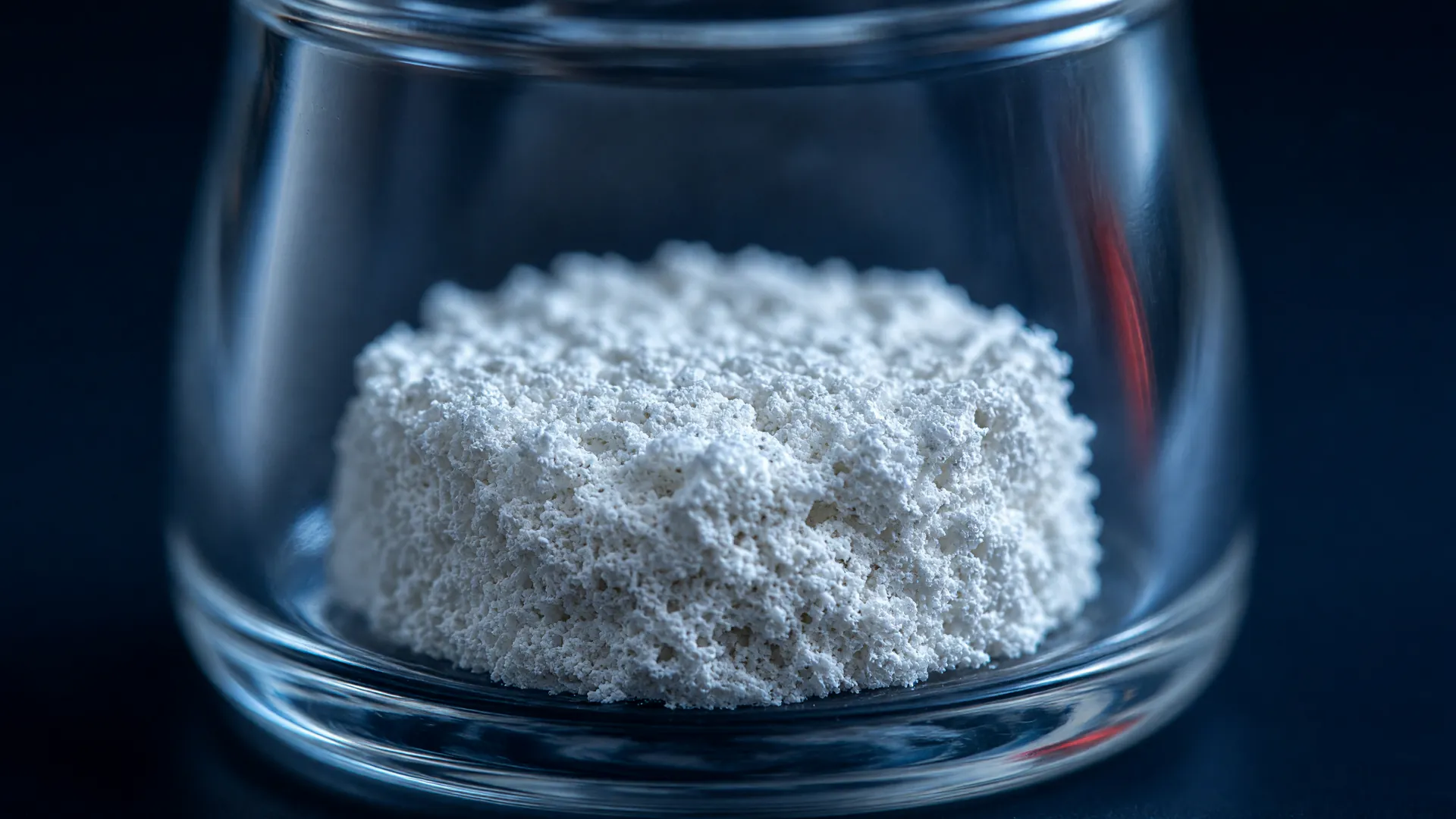
Each product on this page is a single vial of freeze-dried powder that holds two to four peptides. Their names use both words, as in KLOW Peptide Blend and Glow Peptide Stack. "Stack" also describes peptides used together outside one vial.
Approved medicines face a specific test before two drugs can share one dose form. Under FDA's rule for fixed-combination prescription drugs, each component must contribute to the claimed effects, and the dose of each must make the combination safe and effective for a significant patient population.14 None of these blends has been through that review. Each contains at least one peptide that is not a component of any FDA-approved drug: BPC-157 and TB-500 in the first three, CJC-1295 and ipamorelin in the fourth.8151617
What is in each blend
| Blend | Peptides in the vial | Amount of each | Total | Tested as a combination |
|---|---|---|---|---|
| KLOW | BPC-157, TB-500, KPV, GHK-Cu | Not disclosed | 70 mg | No published study118 |
| Glow | GHK-Cu, BPC-157, TB-500 | 50 mg, 5 mg, 5 mg | 60 mg | No published study192 |
| Wolverine Stack | BPC-157, TB-500 | 5 mg each | 10 mg | One rat study, 20265 |
| CJC-1295 + Ipamorelin | CJC-1295 without DAC, ipamorelin | 5 mg each | 10 mg | No clinical trial; mouse data only3425 |
BPC-157 and TB-500 are in three of the four vials. Glow and KLOW share three peptides, and KLOW adds KPV. CJC-1295 + Ipamorelin is the only one built around growth hormone release: both of its peptides act on receptors in the pituitary gland.1620
What research covers each combination
KLOW: four peptides, no combination data
No published study has tested KLOW or the trio of BPC-157, KPV and GHK-Cu: a PubMed search for those three together returned no records, and a ClinicalTrials.gov search for KLOW returned one unrelated study (October 2026).118 KPV, the peptide KLOW adds to Glow's three, has been studied in animals but not in people: it showed anti-inflammatory effects in two mouse models of colitis,21 and FDA found no clinical studies or human exposure data for it by any route.6 Read the KLOW profile or see KLOW Peptide Blend for sale; the single-peptide profiles are KPV and GHK-Cu.
Glow: mostly GHK-Cu by weight
GHK-Cu makes up 50 of Glow's 60 mg, and most human studies of GHK-Cu used creams or gels on the skin.2223 In a randomized, placebo-controlled trial in people with diabetic foot ulcers, a GHK-Cu gel raised median ulcer closure to 98.5%, against 60.8% with the plain gel (1994).23 A 2026 review says controlled human trials of injected GHK-Cu are absent,7 and FDA says injectable GHK-Cu may pose a risk of immune reactions, with limited human data.24 The same review warns that excessive systemic delivery of copper-binding peptides can disturb the body's copper balance, leading to oxidative stress and possible liver toxicity.7 Read the Glow profile or see Glow Peptide Stack for sale.
Wolverine Stack: one rat study of the pair
In a 2026 study, 32 male rats with surgically repaired Achilles tendons got BPC-157, TB-500, both, or no treatment by injection into the abdominal cavity for 4 weeks. The combination gave no added benefit over either peptide alone, and only TB-500 alone significantly raised the tendon's load to failure.5 The rats received the two peptides at a 1 to 6 ratio by weight, not the 1 to 1 ratio in this vial.5 In people, the pair appears only in uncontrolled reports.1011 Read the Wolverine Stack profile or see Wolverine Stack (BPC-157 + TB-500) for sale, with single-peptide profiles for BPC-157 and TB-500.
CJC-1295 + Ipamorelin: two routes to growth hormone
CJC-1295 without DAC copies the active 29-amino-acid stretch of GHRH, the hormone that signals the pituitary to release growth hormone, with four amino acids swapped.16 Ipamorelin acts on a separate pituitary receptor, the ghrelin receptor (GHSR-1a).20 Synergy between these two pathways has been shown with other peptides: in a 1990 study of 18 healthy men, low doses of GHRP-6 plus GHRH released growth hormone synergistically.9 For CJC-1295 with ipamorelin, a 2026 review says the pairing rests largely on anecdotal rationale and that controlled clinical evidence of synergy remains limited.20 Another 2026 review reports that the pair improved muscle force in mice with glucocorticoid-induced muscle loss, an animal finding only.25 FDA found no human study of CJC-1295 without DAC,16 and for ipamorelin it found human data only for the intravenous route, none for injection under the skin.17 Read the CJC-1295 + Ipamorelin profile or see CJC-1295 + Ipamorelin for sale, along with the profiles of CJC-1295 without DAC, the long-acting CJC-1295 with DAC and ipamorelin.
Questions every blend raises
Which peptide caused a reaction?
A mix makes side effects harder to trace. FDA's adverse event database holds a report of a 40-year-old woman who injected a research-labeled product containing BPC-157 and TB-500 under the skin and developed darkening of the skin and gums, which returned when she restarted it.8 FDA judged the reaction likely due to the product, but said it could not assess BPC-157's role because the product contained two peptides.8
Is a dose established?
No human dose is established for KLOW, Glow or the Wolverine Stack, or for any of their peptides given by injection; a 2026 review says the indications, dosing, frequency and duration of treatment for these injectable peptides remain unknown.25 No dose of CJC-1295 without DAC, ipamorelin or the pair is established for people either.1617
Do the peptides stay stable together?
FDA notes that peptides can be extremely sensitive to pH, heat, concentration and impurities, which may lead to clumping (aggregation) and breakdown.815 The storage and solubility figures in FDA's reviews describe each peptide alone, not mixtures.815 The components also differ: BPC-157 free base dissolves in water at 5 mg/mL and TB-500 free base at 50 mg/mL,815 while CJC-1295 without DAC, as the free base, is only slightly soluble in water.16
What do the vial amounts mean once mixed?
When a blend is reconstituted, any concentration refers to the total peptide in the vial, split by the blend's ratio. A 10 mg vial holding 5 mg of each of two peptides, mixed with 2 mL of diluent, holds 5 mg/mL in total, or 2.5 mg/mL of each. In Glow, GHK-Cu is five-sixths of the peptide mass and BPC-157 and TB-500 are one-twelfth each, at any volume. KLOW's split cannot be calculated, because only its 70 mg total is disclosed. The peptide calculator and the guide to reconstituting a vial cover the arithmetic.
How has FDA treated other blends?
In August 2026 warning letters, FDA named two blends sold by online peptide sellers as unapproved new drugs: a "Tesamorelin Ipamorelin Blend" and "BIMORELIN," described by its seller as tesamorelin 10 mg plus ipamorelin 3 mg.2627 The research peptides page explains how FDA judges a research-labeled product.
Where to read next
The goal pages place these blends among other compounds: healing and recovery, skin and hair and muscle. Every other compound has a profile in Peptides A to Z.
Frequently asked questions
What's the difference between KLOW and Glow peptides?
Glow's 60 mg vial holds three peptides: GHK-Cu (50 mg) plus BPC-157 and TB-500 (5 mg each). KLOW holds the same three plus KPV in a 70 mg vial, and the amount of each peptide is not disclosed. Neither blend has been tested in a published study,21 and FDA found no clinical studies or human exposure data for KPV by any route.6 No study compares the two.
What is a peptide stack?
It is an informal name for peptides used together; the products on this page mix them in one vial. A 2026 review notes that TB-500 is often given alongside BPC-157 in unregulated fitness regimens.7 Names such as Wolverine come from marketing, not research: FDA's 2026 BPC-157 review quotes a clinic website calling BPC-157 a "wolverine" compound for its claimed healing properties.8
Do peptide blends work better than single peptides?
No published evidence shows that for any blend sold here. In a 2026 rat study that compared BPC-157 plus TB-500 with each peptide alone, the combination gave no added benefit.5 Synergy has been shown for a different pair: in 1990, GHRH plus GHRP-6 released more growth hormone together in 18 healthy men,9 but no clinical trial has tested it for CJC-1295 with ipamorelin.34
Has any peptide blend been tested in people?
Not as sold. The closest human data are 4 knee-pain patients in a 2021 chart review who received BPC-157 with thymosin beta-4, 3 of whom reported improvement without a control group,10 and 3 dental nerve-injury patients in a 2026 case series who also received ARA-290, dexamethasone and a local anesthetic, so no effect can be credited to BPC-157 or TB-500.11 No clinical trial of CJC-1295 with ipamorelin has been published or registered.34
Are peptide blends allowed in sport?
None of the four sold here is. WADA's 2026 Prohibited List bans BPC-157 at all times as a non-approved substance (class S0) and places CJC-1295, ipamorelin and TB-500, a thymosin beta-4 derivative, in class S2, so every blend contains at least one banned peptide.12 The 2027 list, in force from January 1, 2027, adds "peptides" to its S0 examples.13
Written by D2C Peptides Editorial Team.
Pending qualified review.
Updated .
Sources
- PubMed search: (BPC-157 OR "BPC 157") AND KPV AND GHK. National Library of Medicine (PubMed E-utilities), 2026.
- NCBI E-utilities PubMed search: 'GLOW' or 'KLOW' with peptide and GHK, BPC, TB-500 or thymosin (title/abstract). NCBI, U.S. National Library of Medicine, 2026.
- ClinicalTrials.gov API search: ipamorelin CJC-1295 (no studies returned). ClinicalTrials.gov (U.S. National Library of Medicine).
- PubMed search: ipamorelin AND (CJC-1295 OR modified GRF) limited to clinical trial, randomized controlled trial and clinical study publication types (no results). NCBI PubMed (E-utilities).
- Effects of BPC-157 and TB-500 on Achilles tendon healing in rats: A histopathological and biomechanical study (Biçer O, Adanir O, et al.; PMID 42542926). Joint Diseases and Related Surgery, 2026.
- FDA presentations, Pharmacy Compounding Advisory Committee, July 23, 2026: KPV evaluation and recommendation. U.S. Food and Drug Administration, 2026.
- Moiz A, O'Keefe EL, O'Keefe JH. Dangers of Injectable Peptides and Other Unregulated 'Biohacking' Drugs (PMC13585006). Missouri Medicine, 2026.
- FDA Briefing Document, Pharmacy Compounding Advisory Committee, July 23-24, 2026: Evaluation of BPC-157-Related Bulk Drug Substances (BPC-157 (free base) and BPC-157 acetate), dated 5/11/2026. U.S. Food and Drug Administration, 2026.
- Growth hormone (GH)-releasing peptide stimulates GH release in normal men and acts synergistically with GH-releasing hormone (Bowers CY et al.). Journal of Clinical Endocrinology and Metabolism, 1990.
- Intra-Articular Injection of BPC 157 for Multiple Types of Knee Pain (Lee E, Padgett B; PMID 34324435). Alternative Therapies in Health and Medicine, 2021.
- Case Report: Regenerative peptides for Inferior alveolar nerve injury: a narrative review with hypothesis-generating three clinical cases (Froum S, et al.; PMID 42876687). Frontiers in Oral Health, 2026.
- World Anti-Doping Code International Standard: Prohibited List 2026. World Anti-Doping Agency (WADA), 2025.
- World Anti-Doping Code International Standard: Prohibited List 2027. World Anti-Doping Agency (WADA), 2026.
- 21 CFR 300.50 Fixed-combination prescription drugs for humans. Electronic Code of Federal Regulations (eCFR), 2026.
- FDA Briefing Document, Pharmacy Compounding Advisory Committee, July 23-24, 2026: Evaluation of TB-500-Related Bulk Drug Substances (TB-500 (free base) and TB-500 acetate), dated 5/15/2026. U.S. Food and Drug Administration, 2026.
- FDA Briefing Document, Pharmacy Compounding Advisory Committee Meeting, December 4, 2024: CJC-1295-Related Bulk Drug Substances (FDA evaluation dated 11/15/2024). U.S. Food and Drug Administration, 2024.
- FDA Briefing Document, Pharmacy Compounding Advisory Committee Meeting, October 29, 2024: Ipamorelin-Related Bulk Drug Substances (FDA evaluation dated 8/19/2024). U.S. Food and Drug Administration, 2024.
- ClinicalTrials.gov API search: KLOW. U.S. National Library of Medicine (ClinicalTrials.gov), 2026.
- PubMed search: (GHK-Cu OR copper peptide OR GHK) AND (BPC-157) AND (TB-500 OR thymosin beta-4); all 6 results are 2026 review articles. PubMed, U.S. National Library of Medicine, 2026.
- The emerging landscape of performance-enhancing peptides modulating GH-IGF1 axis: bridging the gap between clinical evidence and patient self-administration (Dominikowski A et al.). Frontiers in Endocrinology, 2026.
- Melanocortin-derived tripeptide KPV has anti-inflammatory potential in murine models of inflammatory bowel disease (Kannengiesser K et al.). Inflammatory Bowel Diseases, 2008.
- Pickart L, Margolina A. Regenerative and Protective Actions of the GHK-Cu Peptide in the Light of the New Gene Data (PMC6073405). International Journal of Molecular Sciences, 2018.
- Mulder GD, et al. Enhanced healing of ulcers in patients with diabetes by topical treatment with glycyl-l-histidyl-l-lysine copper (PMID 17147644). Wound Repair and Regeneration, 1994.
- Certain Bulk Drug Substances for Use in Compounding that May Present Significant Safety Risks: GHK-Cu (for injectable routes of administration) entry. U.S. Food and Drug Administration, 2026.
- Injectable Peptide Therapy: A Primer for Orthopaedic and Sports Medicine Physicians (Mayfield CK et al.): GHK-Cu and dosing. American Journal of Sports Medicine, 2026.
- Warning Letter: NuScience Peptides LLC (MARCS-CMS 733652), August 24, 2026. U.S. Food and Drug Administration, 2026.
- Warning Letter: Royal Peptides LLC (MARCS-CMS 734884), August 24, 2026. U.S. Food and Drug Administration, 2026.