HCG
$70
In stock
View product
Maricopa County, AZ
Tempe receives research peptides and lab supplies by shipping from the USA and Canada; HCG is the one product searched with the city's name. Afternoons at the Tempe ASU weather station run almost as hot as central Phoenix, with 106.8 days a year at or above 100 °F, while nights run much cooler.12
Tempe orders ship from the USA and Canada under the shipping policy for every order across the United States, whether the address is downtown near Mill Avenue or anywhere else in the city. When a product can ship from more than one origin, the policy page explains the choice.
For a lab, the useful pages are the lab results page, which lists lab documents by product and lot number as they become available, and the supplies section, which lists 7 items for preparing vials. Groups ordering in volume can look at wholesale accounts, and the contact page handles everything else.
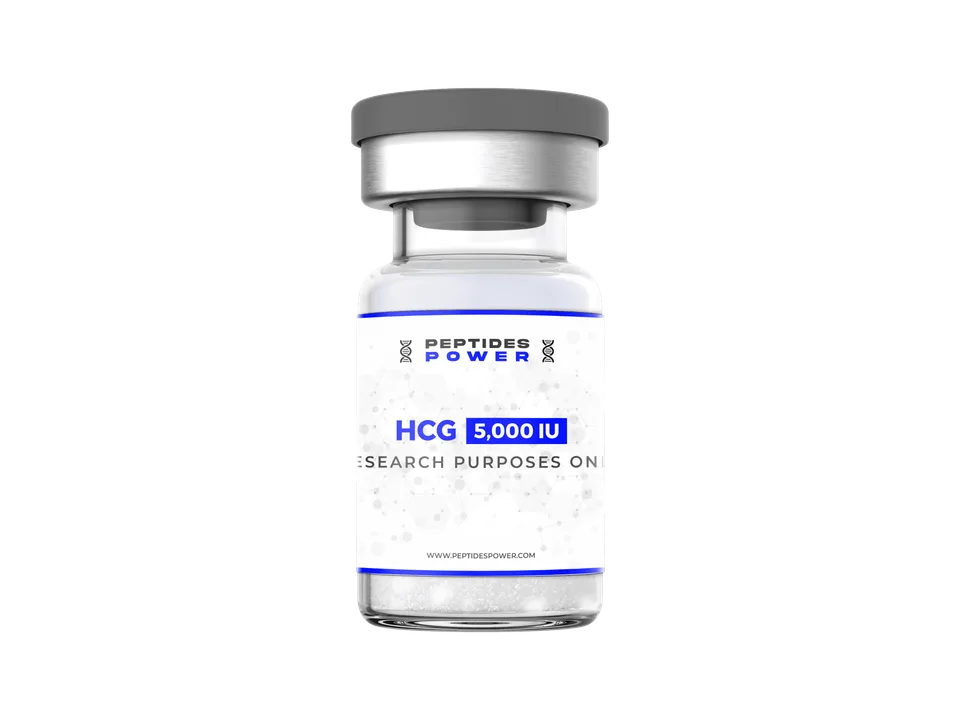
"HCG Tempe" is the single product search in our keyword data that names the city, so HCG is the product card below. The peptide shop holds the rest of the catalog.
HCG is sold in one size, a 5000 IU vial, and appears in the reproductive health peptides and hormone therapy peptides categories. What is HCG? summarizes what published sources report about it, and the glossary defines the lab terms used across the site.
$70
In stock
View productNo products match these filters.
Tempe has its own NOAA station, TEMPE ASU, at about 1,167 feet and some 2.6 miles north-northeast of the city's Census center point.23 Its 1991 to 2020 normals give July a 105.9 °F high and a 75.8 °F low, and January a 70.6 °F high and a 38.5 °F low.2 The station averages 106.8 days a year at or above 100 °F and 179.1 at or above 90 °F, with 9.7 nights at or below freezing and 8.80 inches of precipitation a year.1
Phoenix Sky Harbor, about 5 miles to the west, has a similar July high of 106.5 °F, but its nights are far warmer: 84.5 °F in July against Tempe's 75.8 °F, and 46.0 °F in January against 38.5 °F.26 A July day in Tempe can swing about 30 °F between afternoon and night,2 and the afternoon is what a parcel on a doorstep meets.
Mixing a vial calls for care of its own. FDA labels for approved freeze-dried products describe the technique: run the diluent down the inside wall of the vial rather than onto the powder, then swirl or roll it gently instead of shaking, to avoid foaming.54 Both tesamorelin labels say to use a solution only if it is clear and colorless with no particles.57 The two labels differ on how long a mixed vial lasts, and the EGRIFTA WR label says the two formulations are not substitutable, so neither limit transfers to a research peptide.7 The storage guide covers freezer and fridge storage, and the reconstitution calculator handles the concentration math.
Tempe began at a river crossing. In 1871 Charles Trumbull Hayden, one of its founders, started the Hayden Ferry at the Salt River "Narrows", now the entrance to downtown, and the Mill Avenue bridge was built at the ferry crossing in 1931.8 More than a century later the dry riverbed became Tempe Town Lake. Central Arizona Project water began filling it on June 2, 1999, and it opened to the public on November 7, 1999, after a festival that drew more than 35,000 people.8
The Census Bureau estimates 190,571 residents on July 1, 2025, on 40.0 square miles of land.93 It is a young, renting city: the median age is 30.0, against 37.6 for Maricopa County, and about 57.7 percent of occupied homes are rented, against about 34.8 percent countywide (American Community Survey, 2020 to 2024).1011
Arizona State University's Tempe campus, established in 1885, is ASU's original home.12 It has 46,476 undergraduate and 8,836 graduate and professional students and 3,433 faculty, and it awarded 14,597 degrees in 2024 to 2025.12 Landmarks include Palm Walk, Old Main, the ASU Art Museum and ASU Gammage, designed by Frank Lloyd Wright.12 ASU's Biodesign Institute occupies three buildings with 540,000 square feet on the campus and houses more than 1,500 faculty, staff and students.13 Its shared facilities include the Compact X-ray Free Electron Laser Lab, the DNASU Plasmid Repository and core labs for genomics, mass spectrometry and imaging.13
Tempe's center lies about 5 miles southeast of the Phoenix Sky Harbor weather station, and the county hub is Peptides in Phoenix.36 Other pages close by include Mesa, Scottsdale, Chandler and Gilbert, and the locations page lists every place we cover.
Yes. Tempe is compact, with about 40 square miles of land,3 and every address in it is served the same way: orders ship from the USA and Canada and follow the shipping policy used across the United States. Strengths, price and stock are shown on each product page before checkout. A parcel that arrives damaged, short or with the wrong item is handled through the returns page.
Cold can do it. The FDA label for one somatropin product, ZOMACTON, says some cloudiness may occur after refrigeration, that the product should warm to room temperature, and that it should not be used if the cloudiness persists.4 The same label warns that shaking or vigorous mixing makes the solution cloudy.4 The EGRIFTA SV (tesamorelin) label says to use a solution only if it is clear, colorless and free of particles.5 Those rules belong to approved products; for a research vial, its own label, product page and documents are the guide.
No. D2C Peptides lists no location in Tempe, near the campus or anywhere else in the county, so no address appears here. Tempe orders are handled by shipping only. To reach us, use the contact page. All Maricopa County pages, plus a table comparing summer heat at seven NOAA stations, are on Peptides in Phoenix.
The HCG product page lists the supplies sold for preparing it, including bacteriostatic water, insulin syringes and alcohol swabs. The reconstitution guide describes the lab steps, and Peptide supplies explained describes what each item is for. HCG strength is given in international units, 5000 IU per vial, so concentration math starts from units rather than milligrams.
D2C Peptides sells peptides for laboratory research. Please confirm both statements to continue.