Staging preview: health content pending qualified review

Guide

How to reconstitute a peptide vial

Reconstitution dissolves a freeze-dried (lyophilized) peptide in a measured volume of sterile diluent, so the vial holds a known concentration. Labels for approved freeze-dried medicines show the technique: let the diluent run down the vial's inner wall, swirl or roll it gently, never shake it, and use the solution only if it is clear.12 This guide covers lab handling only.

This page summarizes published sources for information only. It is not medical advice and does not tell anyone to use a product. Questions about your own health belong with a licensed clinician. For questions about an order or a product, contact us.

What reconstitution does

In freeze-drying, a frozen product is held under vacuum while its ice passes directly into vapor, leaving a dry powder. FDA's inspection guide counts that powder's better stability as an advantage, and the sterile diluent it needs at reconstitution as a drawback.9 Reconstitution reverses the drying: a measured volume of liquid goes into the vial, the powder dissolves, and the vial then holds a known amount of peptide in each milliliter.

That number, the concentration, is the point of the exercise. It is close to the amount of peptide in the vial divided by the volume of liquid added, and every later measurement depends on it. Approved medicines fix both numbers on their labels. The bacteriostatic water label itself sets no volume: it leaves the choice to the maker of the drug being dissolved.3 A research peptide has no label, so the volume is chosen to give the concentration a given experiment needs, and it is recorded with the work.

Supplies

  • A sealed freeze-dried peptide vial.
  • A sterile diluent. As Hospira labels them, Bacteriostatic Water for Injection, USP contains 0.9% or 1.1% benzyl alcohol as a preservative and comes in multiple-dose containers, while sterile water for injection has no preservative and comes only in single-dose containers.36 Bacteriostatic water is listed with the supplies.
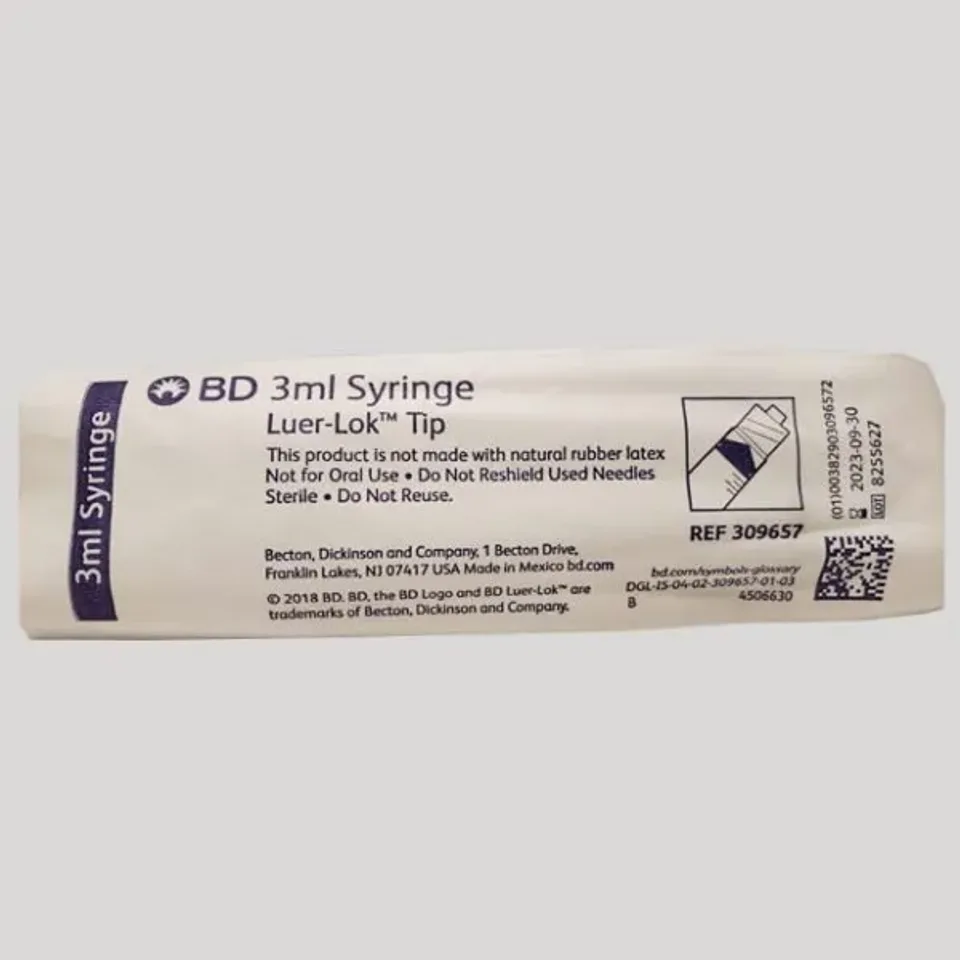
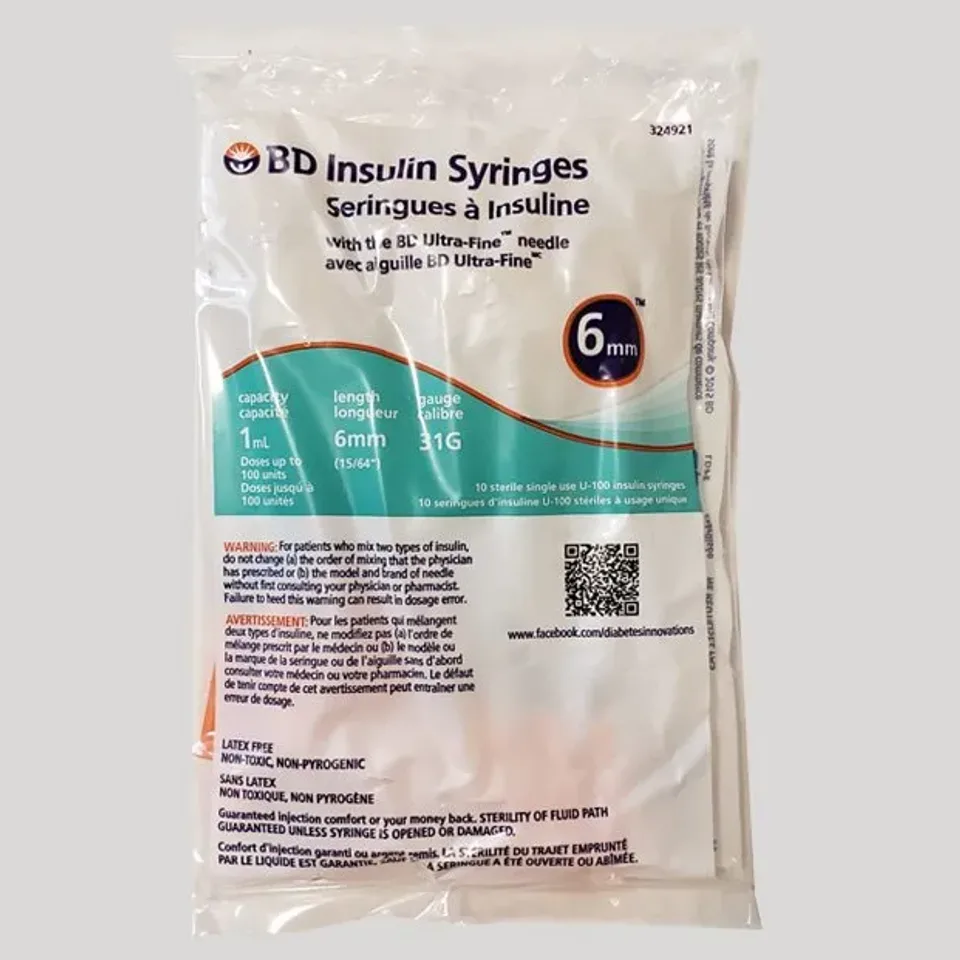
  • A syringe and needle to measure the diluent, such as the 3 mL Luer-Lok syringe with an 18G 1-inch needle. For volumes of 1 mL or less, insulin syringes are an option; dosing basics explains how their unit marks read.
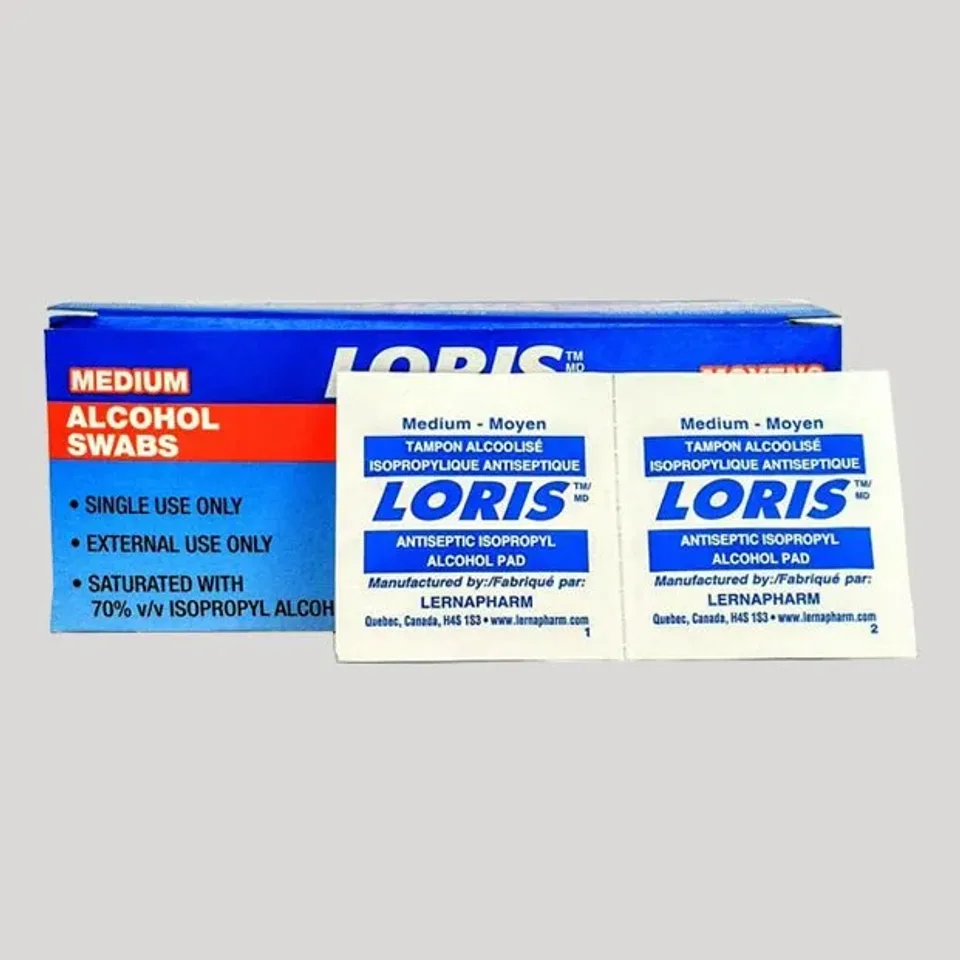
  • Alcohol swabs to disinfect each rubber stopper before it is pierced.10
  • A label and pen for the vial, and a sharps container for the used needle.11

The diluent, syringes, needles and swabs above are listed on the supplies page.

Choosing the diluent

The two common diluents differ in one ingredient, and the difference carries through to storage. Bacteriostatic water's preservative is what allows repeated withdrawals from one container, while sterile water is for single use.36 FDA-approved tesamorelin shows the effect: EGRIFTA SV is mixed with 0.5 mL of sterile water and used right away, while EGRIFTA WR is mixed with bacteriostatic water, and one mixed vial is used for up to 7 days.14

Three cautions apply:

  • "Bacteriostatic" does not name one formula. The ZOMACTON (somatropin) label pairs its 5 mg vial with bacteriostatic sodium chloride containing 0.9% benzyl alcohol, and its 10 mg vial with bacteriostatic water preserved with 0.33% metacresol.2 The diluent packed with Omnitrope 5.8 mg is bacteriostatic water with 1.5% benzyl alcohol.5
  • Some compounds do not tolerate the preservative. The bacteriostatic water label warns that some drugs may be incompatible with a vehicle containing benzyl alcohol,3 and the AmBisome label requires sterile water free of any bacteriostatic agent, which could make the drug precipitate.7 A 2023 narrative review adds that some preservatives have been reported to increase particle formation in protein and peptide formulations.12
  • Benzyl alcohol is not for newborns. The bacteriostatic water label carries the warning "NOT FOR USE IN NEONATES" because of the potential toxicity of benzyl alcohol in newborns.3

Where a product names its diluent, that diluent is the one to use: both tesamorelin labels say to use only the diluent supplied.14

Before you start

  • Let a cold vial warm up. Many peptides draw water out of the air, so peptide makers bring a cold container to room temperature, ideally in a desiccator, before it is opened.813 The storage guide explains what moisture does to the powder.
  • Know what the vial holds. A high HPLC purity figure does not mean the powder is all peptide. Bachem says the peptide share of the solid may be only 70 to 90%, with counter-ions (acetate or trifluoroacetate, for example) and leftover moisture making up the rest, and says any solution of a set concentration has to allow for it.13 The lab results page covers matching a certificate to its lot.
  • Plan for clean technique. The bacteriostatic water label calls for aseptic technique on every entry into the container.3 CDC's injection safety checklist asks for each rubber septum to be disinfected with alcohol before it is pierced, and for a fresh needle and syringe each time a vial is entered.10

Steps

  1. Work out the volume. Decide the concentration you need, then divide the amount in the vial by it to get the volume of diluent. The reconstitution calculator does the division and shows it.
  2. Check both vials. Use the diluent only if it is clear and its seal is intact.3
  3. Disinfect the stoppers. Wipe the rubber stopper of each vial with an alcohol swab before piercing it.10
  4. Draw the diluent. With a new sterile needle and syringe, draw up the measured volume.10
  5. Add it slowly. Insert the needle through the peptide vial's stopper and push the plunger slowly, aiming the stream at the inside wall rather than onto the powder, so the solution does not foam.12
  6. Swirl, do not shake. Swirl gently, or roll the vial between your palms, until the powder dissolves. The EGRIFTA SV label rolls its vial for 30 seconds, and the ZOMACTON label warns that shaking clouds the solution.12
  7. Give a slow powder time. Bachem notes that some peptides take a while to dissolve, occasionally several hours. A few minutes in an ultrasonic water bath may help, but the sample should not be warmed much.8
  8. Inspect the solution. The tesamorelin labels allow use only when the solution is clear and colorless with no visible particles; a cloudy or colored solution is not used.14
  9. Label and date. Write the compound, the concentration and the date of mixing on the vial. Date the bacteriostatic water vial too: CDC says an opened multiple-dose vial is discarded within 28 days unless its manufacturer states another date.14
  10. Dispose of the sharps. Drop the used needle and syringe into a sharps container right away.11 The guide to how subcutaneous injections are given covers containers and disposal rules in full.

The math, with example numbers

These figures show arithmetic only. They are not doses or recommended concentrations.

Amount in vial Diluent added Concentration Same, in mcg per mL
5 mg 1 mL 5 mg/mL 5,000 mcg/mL
5 mg 2 mL 2.5 mg/mL 2,500 mcg/mL
10 mg 2 mL 5 mg/mL 5,000 mcg/mL
10 mg 3 mL 3.33 mg/mL 3,333 mcg/mL

Three points keep the math honest:

  • More liquid lowers the concentration, not the amount. The vial holds the same peptide whatever volume is added.
  • Labeled products state their final concentration instead of leaving it to division, and the stated figure can sit slightly below the simple result. Omnitrope's 5.8 mg vial with 1.14 mL of diluent divides to 5.09 mg per mL, and its label states 5 mg per mL.5
  • Fill weight and peptide content can differ. If the 10 mg on a label were the weight of the powder and the powder were 80% peptide, the vial would hold 8 mg of peptide, and 2 mL would give 4 mg/mL, not 5. That is the point behind Bachem's advice to account for peptide content.13

The peptide calculator takes the next step and converts an amount into a volume and into U-100 syringe units.

After mixing

Both water labels call for prompt use after thorough mixing, and say a reconstituted solution should not be kept unless the dissolved drug's own maker allows it.36 Approved products set very different limits once mixed, from immediate use for EGRIFTA SV up to 60 days in the refrigerator for the Fresenius Kabi hCG product, and all four labels reviewed here say not to freeze the mixed product.14215 Bachem goes further and advises against storing peptides in solution, even sterile solution, because they may slowly break down chemically.8 The storage guide covers temperatures, aliquots and freezing in detail.

Supplies in the store

For research use only. Not for human or veterinary use. Read the research use policy.

Calculators

  • Peptide calculator

    Enter the vial amount, the water added and the amount to measure, and get the concentration and U-100 syringe units. Shows the formula. For reference only.

  • Reconstitution calculator

    Enter the peptide amount and the diluent volume and get the concentration per mL and per syringe unit. Shows the formula. For reference only.

  • Peptide units converter

    Convert between mg and mcg, and between mL and U-100 syringe units. Shows the formula. For reference only.

Frequently asked questions

How many mL of bacteriostatic water do you mix with a peptide?

There is no universal volume. The bacteriostatic water label hands that decision to the manufacturer of the drug being dissolved, who weighs its concentration, dose and route.3 Approved products print their own figure: 1.3 mL for the 11.6 mg EGRIFTA WR vial and 1.14 mL for the 5.8 mg Omnitrope vial.45 A research peptide has no label, so the volume follows from the concentration the work needs: volume equals the amount in the vial divided by the target concentration. The reconstitution calculator shows that arithmetic.

Can sterile water be used instead of bacteriostatic water?

Only where the product allows it. Sterile water for injection has no preservative and comes only in single-dose containers,6 and EGRIFTA SV, which is mixed with sterile water, is used right away after mixing.1 Some drugs require it, such as AmBisome, which must not be mixed with a bacteriostatic agent.7 Others, such as EGRIFTA WR, say to use only the bacteriostatic water supplied with them.4 For research work, the diluent is part of the method and belongs in the lab record.

Why should a peptide vial not be shaken?

Labels for approved freeze-dried products say not to. The ZOMACTON label explains that shaking or rough mixing turns the solution cloudy, and has the diluent aimed at the side of the vial to stop foaming, followed by a gentle swirl.2 The EGRIFTA SV instructions roll the vial between the hands for 30 seconds instead.1 If the powder is slow to dissolve, Bachem suggests patience or a few minutes in an ultrasonic water bath, without warming the sample much.8

What does it mean if the solution is cloudy after mixing?

The tesamorelin labels accept a mixed solution only when it is clear, colorless and free of particles, and reject it when it is cloudy or colored.14 The ZOMACTON label describes one exception: some cloudiness can appear after refrigeration, so the vial is allowed to reach room temperature first, and if the cloudiness remains, the solution is not used.2 Shaking is another cause the same label names, which is why gentle mixing matters.2

Written by D2C Peptides Editorial Team.

Pending qualified review.

Updated .

Sources

  1. EGRIFTA SV (tesamorelin for injection) prescribing information and instructions for use. U.S. Food and Drug Administration (Drugs@FDA label), 2024.
  2. ZOMACTON (somatropin) for injection, prescribing information (revised 7/2025). DailyMed, U.S. National Library of Medicine, 2025.
  3. Bacteriostatic Water for Injection, USP (multiple-dose vial) prescribing information. Hospira, Inc. (Pfizer labeling), 2019.
  4. EGRIFTA WR (tesamorelin for injection) prescribing information and instructions for use. U.S. Food and Drug Administration (Drugs@FDA label), 2025.
  5. OMNITROPE (somatropin) for injection, prescribing information, BLA 021426 (revised 07/2025). U.S. Food and Drug Administration (Drugs@FDA label; Sandoz), 2025.
  6. Sterile Water for Injection, USP (single-dose vials) prescribing information. Hospira, Inc. (Pfizer labeling), 2026.
  7. AMBISOME (amphotericin B) liposome for injection, prescribing information (Drugs@FDA label dated 11/04/2024, NDA 050740). U.S. Food and Drug Administration (Drugs@FDA label; Astellas), 2024.
  8. Handling and Storage Guidelines for Peptides (Peptide Guide, chapter 8). Bachem.
  9. Lyophilization of Parenteral (7/93), Inspection Guide. U.S. Food and Drug Administration, 1993.
  10. Injection Safety Checklist (subset of the CDC Infection Prevention Checklist for Outpatient Settings), CDC-INFO Pub ID 221176. U.S. Centers for Disease Control and Prevention and the Safe Injection Practices Coalition (CDC Stacks), 2012.
  11. Best Way to Get Rid of Used Needles and Other Sharps. US Food and Drug Administration, 2023.
  12. Antimicrobial Preservatives for Protein and Peptide Formulations: An Overview (Stroppel L, et al.; PMID 36839885; doi 10.3390/pharmaceutics15020563). Pharmaceutics (record via Europe PMC), 2023.
  13. Care and Handling of Peptides. Bachem, 2021.
  14. Preventing Unsafe Injection Practices. U.S. Centers for Disease Control and Prevention, 2024.
  15. Chorionic Gonadotropin for Injection, USP (Fresenius Kabi), label revised February 2025. DailyMed, U.S. National Library of Medicine, 2025.