
Learn
What are research peptides?
Research peptides are lab-made peptides sold with wording such as "for research use only" instead of as approved medicines. That wording echoes FDA labeling rules for lab tests and for drugs shipped for test-tube or animal research,12 and FDA has found that it does not stop a product from being an unapproved drug when the seller's website shows it is meant for people.34
This page summarizes published sources for information only. It is not medical advice and does not tell anyone to use a product. Questions about your own health belong with a licensed clinician. For questions about an order or a product, contact us.
What the term covers
Peptides are short chains of amino acids, usually 2 to 50 of them, linked by peptide bonds.14 The term "research peptide" says nothing more about the molecule. It describes how a product is labeled and sold: as material for laboratory study, not as a medicine with an approved label. What are peptides? covers the basics.
The same molecule can sit on either side of that line. Semaglutide and tirzepatide are the active ingredients in FDA-approved medicines such as Ozempic (2017) and Mounjaro (2022).15 Yet FDA has warned companies that sold unapproved semaglutide, tirzepatide, retatrutide, survodutide or mazdutide falsely labeled "for research purposes" or "not for human consumption."16 Other research peptides have no approved form anywhere: FDA found no approved BPC-157 product in any country.17
Two federal rules behind the label
Research-only wording echoes two federal rules. Neither one covers giving a product to people.
| Rule | What it covers | Required wording |
|---|---|---|
| 21 CFR 809.10(c)(2)(i) | In vitro diagnostic products (lab tests) in the research phase of development | "For Research Use Only. Not for use in diagnostic procedures."1 |
| 21 CFR 312.160 | New drugs shipped only for test-tube work or laboratory animal research | A caution that ends "Not for use in humans."2 |
Under the second rule, the shipper must use due diligence to make sure the recipient regularly does such research, and FDA can end the permission to ship if the drug is used for anything other than bona fide scientific investigation.2 Testing an unapproved drug in people is a separate path. Federal law requires an approved marketing application before a drug crosses state lines, and an Investigational New Drug application (IND) is how a study sponsor gets an exemption from that rule.5
How FDA decides what a product is for
FDA does not go by the label alone. Under 21 CFR 201.128, a product's intended use is the objective intent of the people responsible for its labeling, shown through labeling claims, advertising, spoken or written statements, the product's design and the way it is distributed.18 A product is a drug when it is intended to prevent, treat or cure disease, or to affect the structure or function of the body.3
FDA applied that test in warning letters to online peptide sellers sent between December 2024 and August 2026. Despite labels such as these, FDA said the sellers' own websites showed that their products were intended as drugs for human use:364
- "RESEARCH USE ONLY" and "INTENDED AS A RESEARCH CHEMICAL ONLY"3
- "for laboratory, research, and analytical use" and "not intended for human or veterinary use"19
- "for research use only" and "not for human or animal consumption"20
The evidence FDA quoted included product page descriptions, social media posts that sent readers to the store and, in one case, a PubChem page linked from a semaglutide product page.32119 FDA also looked at what was sold alongside the peptides. In a March 2026 letter, it said bacteriostatic water sold with peptides that need reconstitution was itself a drug, because selling them together showed the water was meant to be used with them for injection.6 In August 2026 letters, it cited bacteriostatic water marketed as a solvent, a "peptide calculator" and a "peptide guide" as providing "the means to prepare an injectable drug for human administration."192220
Because no approved application covers these products, FDA called them unapproved new drugs and said their sale across state lines violated sections 301(d) and 505(a) of the Federal Food, Drug, and Cosmetic Act.623 The letters asked for a written reply within 15 working or business days and warned that unresolved violations could lead to seizure and injunction.323
What regulators tell consumers
FDA says the research-labeled GLP-1 products it warned about were sold directly to consumers with dosing instructions, and it urges consumers not to purchase them because they are of unknown quality and may be harmful.16
Health Canada said on April 9, 2026 that a "For Research Use Only, Not for Human Consumption" label does not make a product legal or exempt from regulatory requirements. Its advisory named BPC-157, CJC-1295, DSIP, Epitalon, GHK-Cu, HCG, Ipamorelin, KPV, Melanotan I and II, MOTS-C, NAD+, SS-31, TB-500 and retatrutide among unauthorized injectable peptide products.24
How research peptides are supplied
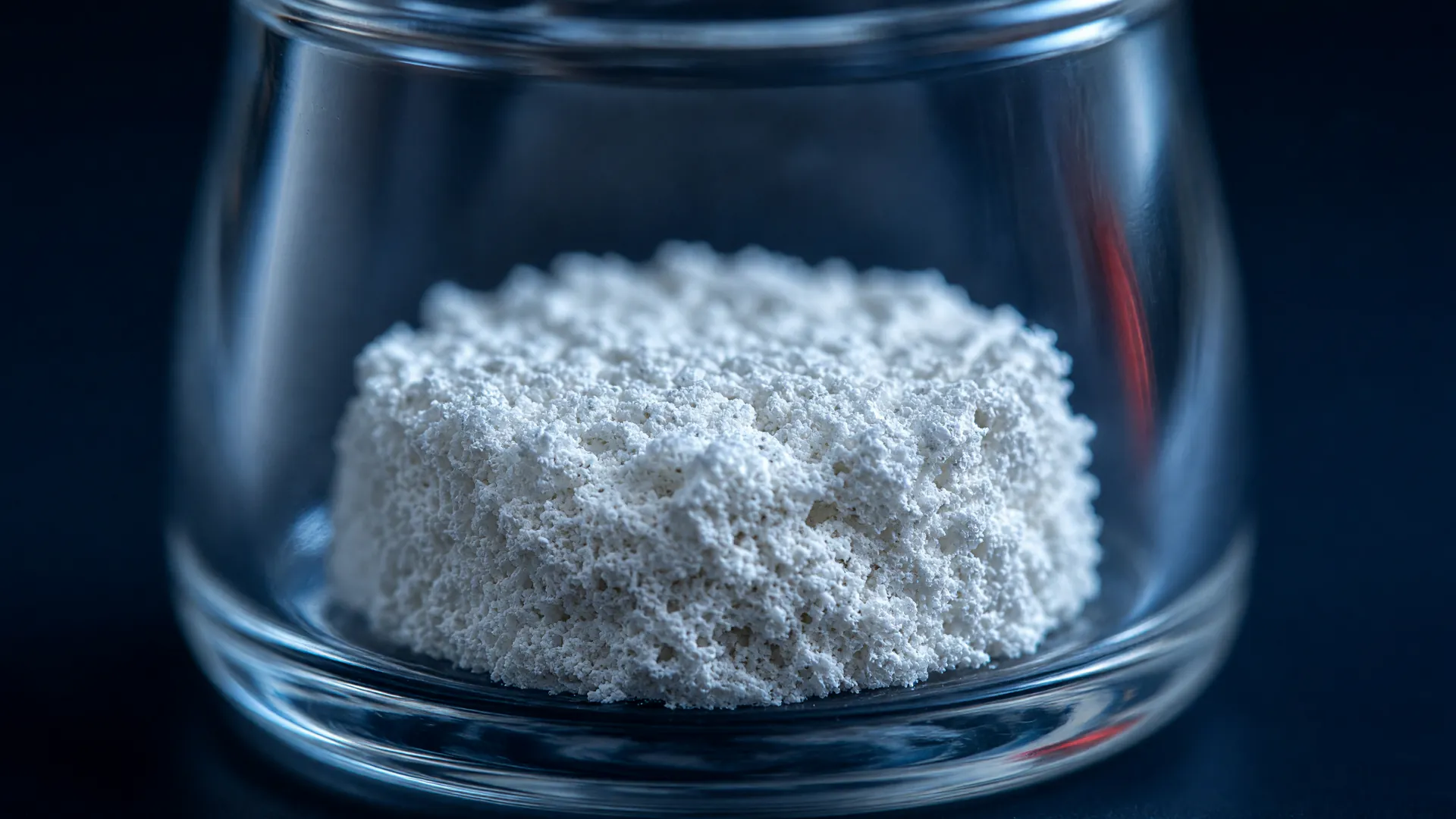
Many peptides, including every blend sold here, come as freeze-dried powder in a sealed vial. Freeze-drying (lyophilization) removes water from a frozen product under vacuum, so the ice turns straight to vapor. FDA lists the better stability of a dry powder among its advantages, and the need for a sterile diluent at reconstitution among its drawbacks.25 Bacteriostatic Water for Injection, USP is sterile water with 0.9% or 1.1% benzyl alcohol added as a preservative, and its label limits it to diluting or dissolving drugs for injection.26 The guide to reconstituting a vial covers the lab steps and the arithmetic.
Synthetic peptides usually come as salts: EMA's guideline says acetate is the usual counter ion, with trifluoroacetate (TFA) or chloride also possible.8 The salt changes how a compound behaves: FDA reports that ipamorelin acetate dissolves in water at 5 mg/mL, while ipamorelin free base dissolves at only 0.0032 mg/mL.27
Labels often leave the salt out. FDA found websites listing CJC-1295, with or without DAC, for research use only, and noted that the sites did not say whether it was the free base, the acetate or the TFA salt.28 FDA also says TB-500 is a common name rather than an official drug name, and that several salts and derivatives, including different active molecules, are sold under it.29
How identity and purity are tested
| Test | What it shows |
|---|---|
| Mass spectrometry | Identifies a chemical by its mass.30 EMA says it can determine a peptide's molecular mass and confirm its amino acid sequence.8 |
| HPLC (high-performance liquid chromatography) | A liquid chromatography technique with high inlet pressure, high sensitivity and high speed.31 A 2024 study used liquid chromatography with mass spectrometry to measure drug content in semaglutide vials.9 |
| Impurity profile | Total and individual impurities. For peptide medicines, European Pharmacopoeia thresholds cited by EMA call for reporting impurities above 0.1%, identifying them above 0.5% and qualifying them above 1.0%.8 |
| Bacterial endotoxins | Toxins released when certain microorganisms break apart.32 FDA has accepted the LAL test for endotoxins in place of the rabbit pyrogen test for more than 30 years.33 |
EMA's guideline for peptide medicines, in effect in the EU from June 1, 2026, gives a non-exhaustive list of tests for a synthetic peptide's specification: appearance, identification, purity (total and individual impurities), aggregates, assay or content, counter-ion content, residual TFA, water content, residual solvents, elemental impurities, bacterial endotoxins and microbiological purity.8
The gaps matter. FDA concluded that bulk BPC-157 is not well characterized, lacking critical data on impurities, aggregates, bioburden and bacterial endotoxins, and reached the same conclusion for KPV and TB-500.3435 For GHRP-2, FDA says compounded products may pose a risk of an immune reaction because of possible aggregation and peptide-related impurities.11
What a certificate of analysis should show
A certificate of analysis (COA) is the test report for one batch. FDA's Q7 manufacturing guidance says a certificate should:7
- Be issued for each batch.
- List each test performed, with its acceptance limits and numerical results.
- Be dated and signed by the quality unit.
- Give the original manufacturer's name, address and telephone number.
Read what a certificate covers, not only its purity line. FDA noted that a publicly available certificate for TB-500 did not test assay, impurities, bacterial endotoxins or aggregates.36 Against the EMA list above, a certificate with a purity figure alone leaves identity, content, individual impurities and endotoxins unreported.8 To see the documents for a product sold here, go to lab results and certificates of analysis.
What testing of online products has found
- A 2018 Belgian study screened the 10 falsified peptide drugs found most often, obtained from three suspected illegal internet pharmacies. The amount of drug per unit varied widely, purity of cysteine-containing peptides ran from 5% to 75%, and several samples held arsenic at up to ten times the ICH limit for injectable drugs (laboratory analysis).37
- A 2024 study ordered semaglutide from illegal online pharmacies and received 3 vials. Drug content ran 28.56% to 38.69% above the label, every vial contained endotoxin, and measured purity was 7.7% to 14.37% against 99% claimed on the labels (laboratory analysis).9
- Health Canada warns that unauthorized peptide products may hold too much, too little or none of the active ingredient, unlisted ingredients, and contaminants such as solvents, heavy metals and particles of fiber, glass or plastic, and that they can lead to infections and allergic reactions.24
WHO calls a medical product substandard when it fails quality standards and specifications, often through poor manufacturing or quality control, and falsified when it deliberately misrepresents its identity, composition or source. WHO says both are often sold online.38
Where to go next
Peptides A to Z has a profile for every compound on the site, each with its regulatory and anti-doping status. The research use policy sets out the terms that apply to orders from D2C Peptides, and the peptide shop lists the compounds the store carries. The glossary defines terms such as lyophilization, counter ion and endotoxin.
Guides, tools and references
Frequently asked questions
What does "research use only" mean on a peptide?
It is labeling language, not a permission for any use in people. In FDA rules, "For Research Use Only. Not for use in diagnostic procedures." is the label for lab tests still in the research phase, and a new drug shipped only for test-tube or lab animal work must carry a caution that ends "Not for use in humans."12 Testing an unapproved drug in people is done under an Investigational New Drug application.5
Is it legal to sell research peptides in the US?
Federal rules set one narrow route: an unapproved new drug may be shipped for test-tube or lab animal research if it is labeled "Not for use in humans" and the shipper makes sure the recipient regularly does such research.2 In warning letters sent from December 2024 to August 2026, FDA found that research-labeled peptides sold online were unapproved new drugs intended for human use, based on evidence from the sellers' own websites.364
What should a certificate of analysis include?
Under FDA's Q7 guidance, a certificate covers one batch, lists each test with its acceptance limits and numerical results, is dated and signed by the quality unit, and names the original manufacturer with its address and telephone number.7 For a peptide, look for identity, content, impurity and endotoxin results, which EMA counts among a synthetic peptide's specification tests, not a purity figure alone.8
How can a lab confirm a peptide is what the label says?
By testing identity and content directly rather than trusting the label. EMA's guideline on synthetic peptides says mass spectrometry can determine a peptide's molecular mass and confirm its amino acid sequence.8 Labels can be far off: in a 2024 analysis of 3 semaglutide vials from illegal online pharmacies, measured purity was 7.7% to 14.37% against 99% on the labels, and drug content ran 28.56% to 38.69% above the stated amount.9
Can a pharmacy compound BPC-157 or other research peptides?
As of October 25, 2026, the federal list of bulk substances that state-licensed pharmacies may compound with (21 CFR 216.23) names six substances and no peptides.10 BPC-157 and several other peptides sat in FDA's category for substances that may present significant safety risks until their nominations were withdrawn.11 In July 2026, FDA's advisory committee narrowly recommended adding six peptides, including BPC-157, but the vote is non-binding and rulemaking would be needed first.1213
Written by D2C Peptides Editorial Team.
Pending qualified review.
Updated .
Sources
- 21 CFR 809.10 Labeling for in vitro diagnostic products, paragraph (c)(2)(i). Electronic Code of Federal Regulations (eCFR), 2026.
- 21 CFR 312.160 Drugs for investigational use in laboratory research animals or in vitro tests. Electronic Code of Federal Regulations (eCFR), 2026.
- Warning Letter: Summit Research Peptides, MARCS-CMS 695607 (December 10, 2024). US Food and Drug Administration, CDER, 2024.
- Warning Letter: Peptide Partners LLC, MARCS-CMS 735063 (August 24, 2026). US Food and Drug Administration, CDER, 2026.
- Investigational New Drug (IND) Application. U.S. Food and Drug Administration, 2026.
- Warning Letter: Gram Peptides, MARCS-CMS 721806 (March 31, 2026). US Food and Drug Administration, CDER, 2026.
- Q7 Good Manufacturing Practice Guidance for Active Pharmaceutical Ingredients, Guidance for Industry (ICH Revision 1), September 2016. U.S. Food and Drug Administration (CDER, CBER), 2016.
- Guideline on the Development and Manufacture of Synthetic Peptides (EMA/CHMP/CVMP/QWP/367182/2025), adopted December 2025, in effect June 1, 2026. European Medicines Agency, 2025.
- Multifactor Quality and Safety Analysis of Semaglutide Products Sold by Online Sellers Without a Prescription (Ashraf AR, Mackey TK, et al.), PubMed abstract. Journal of Medical Internet Research, 2024.
- 21 CFR 216.23 Bulk drug substances that can be used to compound drug products in accordance with section 503A of the FD&C Act. Electronic Code of Federal Regulations (eCFR), 2026.
- Certain Bulk Drug Substances for Use in Compounding that May Present Significant Safety Risks. US Food and Drug Administration, 2026.
- FDA Panel Backs 6 Peptides for Compounding (July 31, 2026). AJMC (The American Journal of Managed Care), 2026.
- July 23-24, 2026: Meeting of the Pharmacy Compounding Advisory Committee. US Food and Drug Administration, 2026.
- Peptide (Talking Glossary of Genomic and Genetic Terms). National Human Genome Research Institute (NIH), 2026.
- Update on FDA's ongoing evaluation of reports of suicidal thoughts or actions in patients taking a certain type of medicines approved for type 2 diabetes and obesity (Drug Safety Communication, 01-11-2024). U.S. Food and Drug Administration, 2024.
- FDA's Concerns with Unapproved GLP-1 Drugs Used for Weight Loss. US Food and Drug Administration, 2026.
- FDA Briefing Document, Pharmacy Compounding Advisory Committee, July 23-24, 2026: Evaluation of BPC-157-Related Bulk Drug Substances (BPC-157 (free base) and BPC-157 acetate), dated 5/11/2026. U.S. Food and Drug Administration, 2026.
- 21 CFR 201.128 Meaning of intended uses. Electronic Code of Federal Regulations (eCFR), 2026.
- Warning Letter: NuScience Peptides LLC, MARCS-CMS 733652 (August 24, 2026). US Food and Drug Administration, CDER, 2026.
- Warning Letter: Royal Peptides LLC, MARCS-CMS 734884 (August 24, 2026). US Food and Drug Administration, CDER, 2026.
- Warning Letter: Prime Vitality, Inc. dba Prime Peptides, MARCS-CMS 695156 (December 10, 2024). US Food and Drug Administration, CDER, 2024.
- Warning Letter: Peak Performance Peptides, MARCS-CMS 735127 (August 24, 2026). US Food and Drug Administration, CDER, 2026.
- Warning Letter: TXP Innovations LLC dba Tex Peptides, MARCS-CMS 735067 (August 24, 2026). US Food and Drug Administration, CDER, 2026.
- Think twice before injecting peptides bought online: unauthorized products can seriously harm your health. Health Canada (Recalls and Safety Alerts), 2026.
- Lyophilization of Parenteral (7/93), Inspection Guide. U.S. Food and Drug Administration, 1993.
- Bacteriostatic Water for Injection, USP (bacteriostatic water injection, solution), prescribing information, revised 11/2019. Pfizer (Hospira), 2019.
- FDA Briefing Document, Pharmacy Compounding Advisory Committee Meeting, October 29, 2024: Ipamorelin-Related Bulk Drug Substances (FDA evaluation dated 8/19/2024). U.S. Food and Drug Administration, 2024.
- FDA Briefing Document, Pharmacy Compounding Advisory Committee Meeting, December 4, 2024: CJC-1295-Related Bulk Drug Substances (FDA evaluation dated 11/15/2024). U.S. Food and Drug Administration, 2024.
- FDA Briefing Document, Pharmacy Compounding Advisory Committee, July 23-24, 2026: Evaluation of TB-500-Related Bulk Drug Substances (TB-500 (free base) and TB-500 acetate), dated 5/15/2026. U.S. Food and Drug Administration, 2026.
- Mass Spectrometry (MeSH descriptor D013058). National Library of Medicine (NCBI MeSH), 2026.
- Chromatography, High Pressure Liquid (MeSH descriptor D002851; entry term: High-Performance Liquid Chromatography). National Library of Medicine (NCBI MeSH), 2026.
- Endotoxins (MeSH descriptor D004731). National Library of Medicine (NCBI MeSH), 2026.
- Pyrogen and Endotoxins Testing: Questions and Answers (Edition 2), Guidance for Industry, March 2026. U.S. Food and Drug Administration, 2026.
- FDA presentations, Pharmacy Compounding Advisory Committee, July 23, 2026: BPC-157 characterization. U.S. Food and Drug Administration, 2026.
- Same source as 34: KPV and TB-500 characterization.
- Same source as 29: FDA Evaluation of TB-500-Related Bulk Drug Substances (2026): certificate of analysis.
- Impurity profiling of the most frequently encountered falsified polypeptide drugs on the Belgian market (Janvier S, et al.), PubMed abstract. Talanta, 2018.
- Substandard and falsified medical products (fact sheet). World Health Organization, 2026.