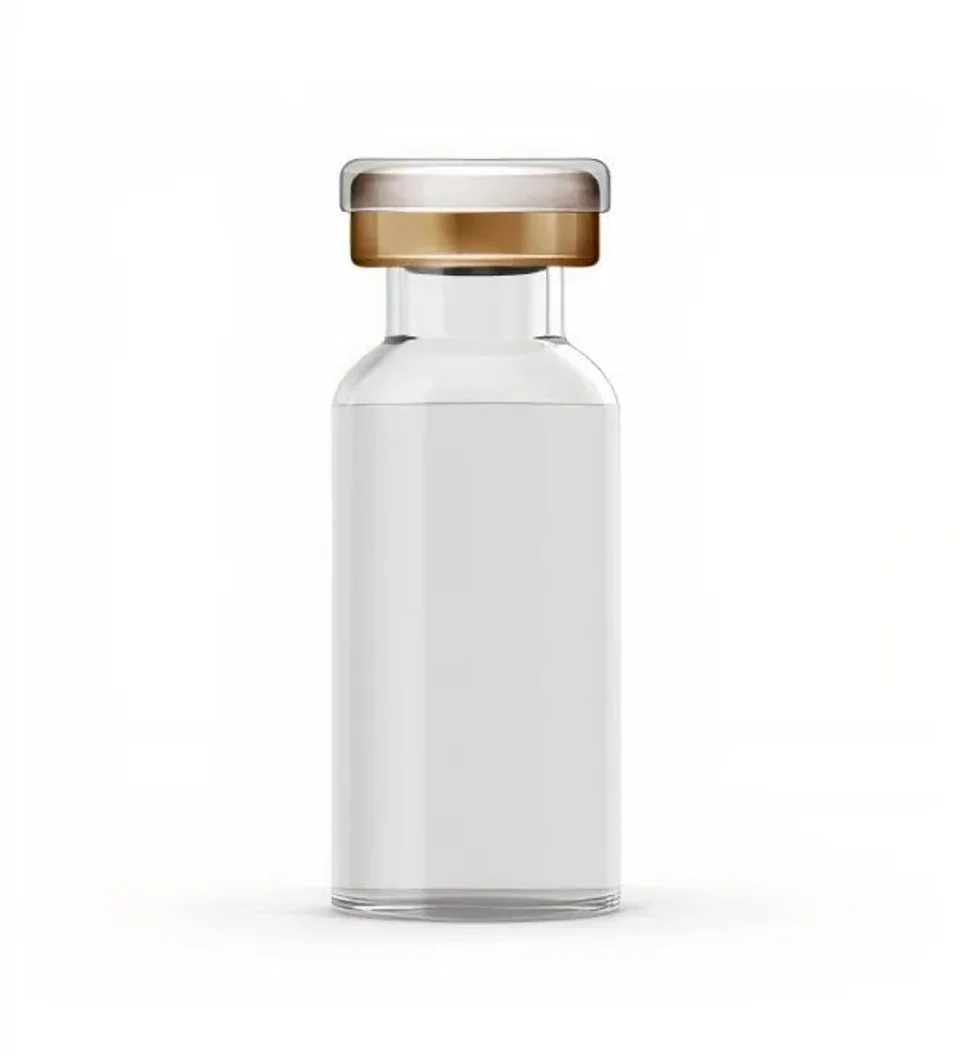
Bacteriostatic Water
$10
In stock
View product
Calculator
A peptide calculator turns the amount on a vial label and the water added into a concentration, then shows the volume and the U-100 syringe units that hold an amount you enter. It works only from the numbers you type, shows every step and never suggests an amount.
Enter the vial amount, the water added and the amount to measure, and get the concentration and U-100 syringe units. Shows the formula. For reference only.
This page summarizes published sources for information only. It is not medical advice and does not tell anyone to use a product. Questions about your own health belong with a licensed clinician. For questions about an order or a product, contact us.
Results update as you type, and the Calculate button runs them again. Once the first two fields hold numbers, the panel shows the concentration in mg per mL (with mcg per mL beneath it) and the mcg in one unit (0.01 mL). Add the amount to measure and it also shows the volume in mL, the number of units on a U-100 syringe and a bar showing how full the chosen syringe would be. The formula is repeated under the panel with your own numbers. Clear empties the three number fields.
Two checks catch common slips. If the amount to measure is more than the vial holds, you get a message instead of a volume. If the units are more than the chosen syringe holds, the line under the bar says so. Your numbers stay in your browser and never become part of the page address.
The factor of 100 is the U-100 scale: 100 units fill 1 mL, so one unit is 0.01 mL.12 A shortcut gives the same answer in one step: syringe units = amount to measure (mcg) / per unit (mcg).
These numbers are arbitrary and show the arithmetic only. They are not a suggested amount for any product.
A vial labeled 10 mg gets 4 mL of water.
The same vial and the same 600 mcg give very different readings at other water volumes:
| Water added | Concentration | Per unit | Volume for 600 mcg | Syringe units |
|---|---|---|---|---|
| 1 mL | 10 mg/mL | 100 mcg | 0.06 mL | 6 |
| 2 mL | 5 mg/mL | 50 mcg | 0.12 mL | 12 |
| 4 mL | 2.5 mg/mL | 25 mcg | 0.24 mL | 24 |
| 5 mL | 2 mg/mL | 20 mcg | 0.3 mL | 30 |
The amount is identical in every row; only the volume carrying it changes, and with it how forgiving the reading is. A misread of one unit mark is 1/6, about 17%, of a 6-unit volume, but 1/24, about 4%, of a 24-unit volume. At 5 mL the volume fills a 0.3 mL syringe exactly, so a larger amount at that concentration would need a bigger barrel.
The concentration is only as good as the mixing behind it. The reconstitution guide covers the steps, and bacteriostatic water is one of the diluents it describes. Insulin syringes are marked in units; confirm which scale yours carry before you rely on a result. The rest of the lab supplies are on the supplies page.
The other two calculators split this one into parts. The reconstitution calculator stops at the concentration, per mL and per unit, and also works in IU. The units converter handles single conversions, such as mL to units or mcg to mg. Terms such as U-100 and diluent are defined in the glossary.
$10
In stock
View product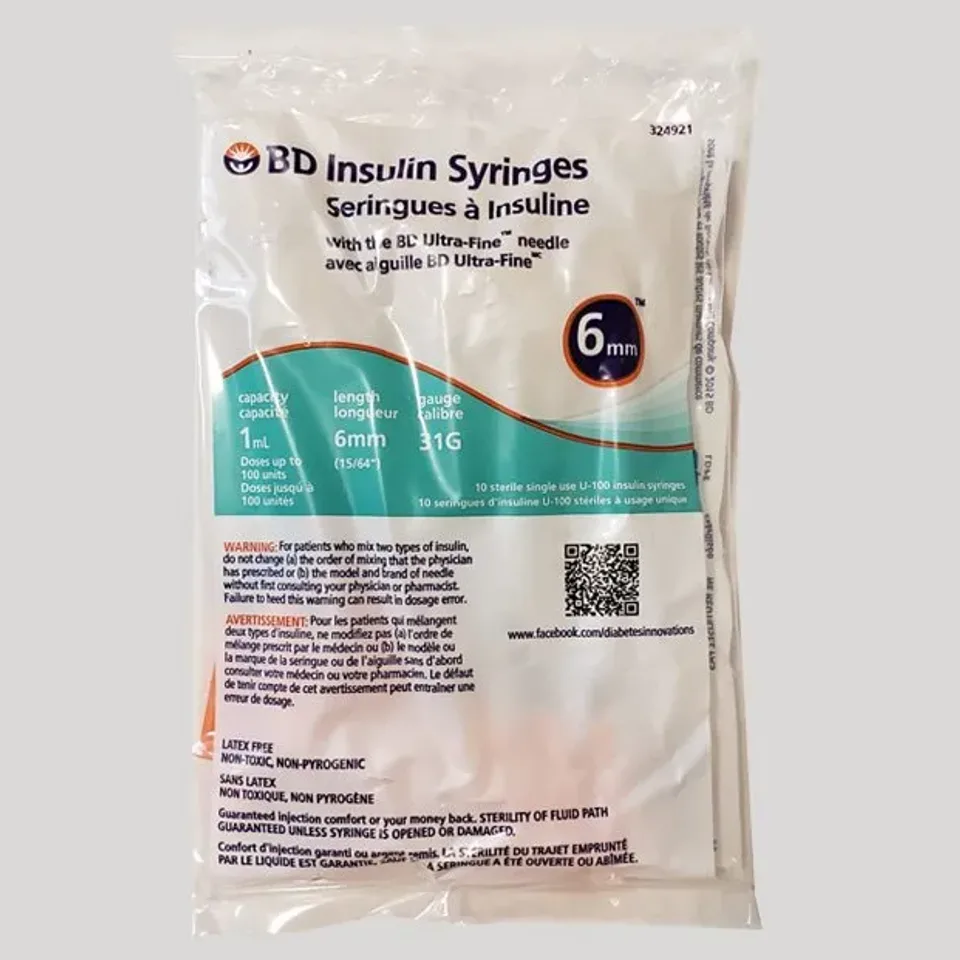
$10
In stock
View productNo products match these filters.
For research use only. Not for human or veterinary use. Read the research use policy.
Reconstituting a lyophilized peptide step by step: the supplies, the diluent, the math and storage after mixing.
Enter the peptide amount and the diluent volume and get the concentration per mL and per syringe unit. Shows the formula. For reference only.
Convert between mg and mcg, and between mL and U-100 syringe units. Shows the formula. For reference only.
No. It divides and multiplies the numbers you type and does nothing else. The fields start empty, the amount to measure is always yours to enter, and the example numbers on this page are arbitrary figures chosen to show the arithmetic. The calculator cannot see what is in a vial beyond the number you give it, so it cannot check that number either. For a question about an order or a product, use the contact page.
Only to draw the fill bar and to warn you when a volume will not fit. The units themselves do not depend on the barrel: on a U-100 scale, 100 units fill 1 mL whatever the syringe size.1 One maker sells insulin syringes in 0.3, 0.5 and 1 mL barrels,3 which on that scale hold up to 30, 50 and 100 units. The bar shows the result as a share of the barrel you picked, and the line under it says when the units exceed what that barrel holds.
Then that volume cannot be read exactly on that barrel. MedlinePlus says the small marks on a standard 1 mL insulin syringe are 1 unit apart,1 so a result of 12.5 units sits halfway between two of them. One maker offers half-unit marks on its 0.3 mL barrel.3 The other route is arithmetic: a different volume of water gives a different concentration, so the same amount lands on a different number of marks. Try the new volume in the calculator before mixing, because water cannot be taken back out of a mixed vial.
Because the water sets the concentration. Twice the water halves the mg in each mL, so the same amount takes up twice the volume and twice the unit marks. In the worked example on this page, 600 mcg from a 10 mg vial fills 6 units with 1 mL of water and 24 units with 4 mL. The peptide in the vial is the same in both cases; only the volume of liquid carrying it changes.
Not this one: it works in mg and mcg only, with no way to turn IU into mg. The reconstitution calculator accepts IU and leaves every result in IU, whether per mL or per syringe mark. The units converter converts IU to mg only with an IU-per-mg factor you enter, which should be the one stated for that exact product, and gives no result without one.
Written by D2C Peptides Editorial Team.
Pending qualified review.
Updated .
D2C Peptides sells peptides for laboratory research. Please confirm both statements to continue.