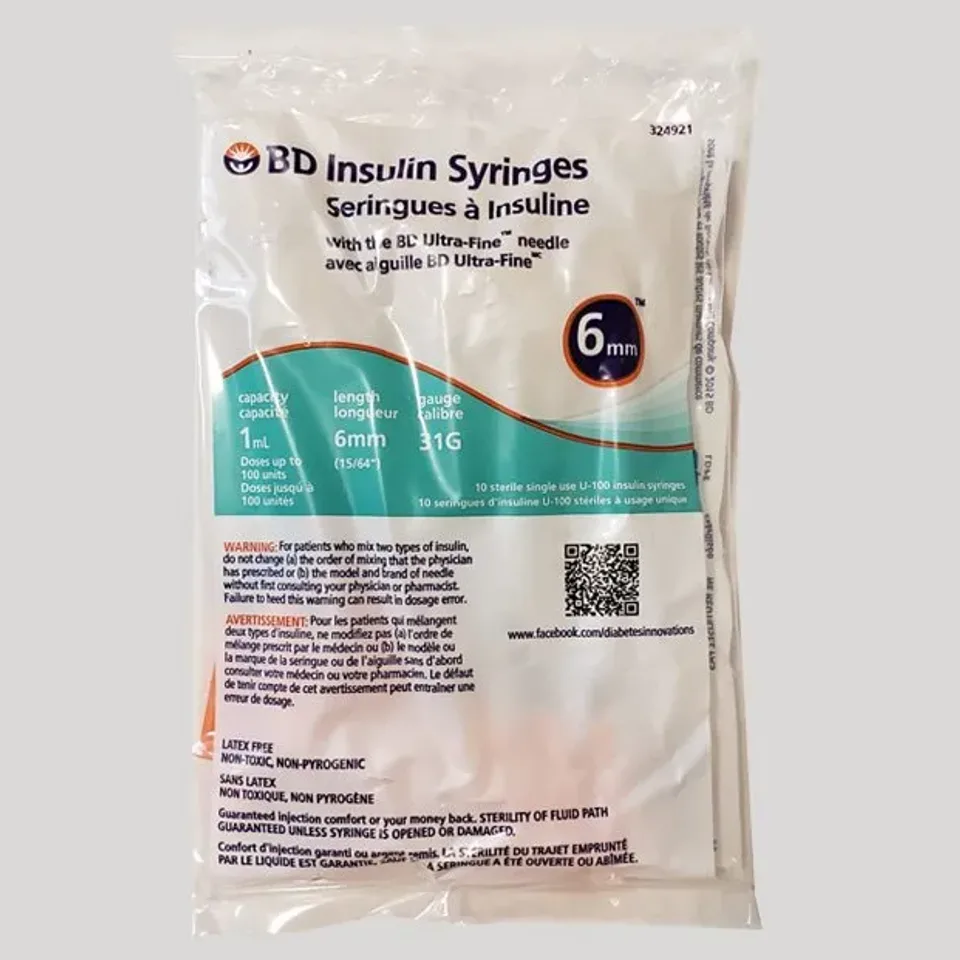
Insulin Syringes (Pack of 10)
$10
In stock
View product
Guide
A subcutaneous injection places medicine in the fatty tissue just under the skin, not in muscle.1 This guide describes how prescribed subcutaneous injections are given, following patient guides from the US National Library of Medicine, the American Diabetes Association, the NHS and FDA: sites, rotation, clean technique and sharps disposal. It is not a guide to injecting any research compound.
This page summarizes published sources for information only. It is not medical advice and does not tell anyone to use a product. Questions about your own health belong with a licensed clinician. For questions about an order or a product, contact us.
A subcutaneous (SQ or sub-Q) injection goes into the fatty layer under the skin. MedlinePlus, the National Library of Medicine's patient site, lists insulin, blood thinners and fertility drugs among the medicines people give themselves this way.1 The NHS describes semaglutide and tirzepatide as once-weekly injections that patients give themselves on prescription.23
Injection is the usual route for peptide medicines, for a practical reason: a 2022 review explains that digestive enzymes in the stomach and intestine break peptides down, so most peptide drugs are given by injection.10
Research peptides are a different case. Under federal rules, an unapproved new drug sent out for in vitro or animal research has to be labeled with a caution that ends "Not for use in humans".11 Everything below describes prescribed medicines. For any of them, the instructions supplied with the product and the prescriber's directions come first.
MedlinePlus names three areas for self-injection:1
The American Diabetes Association names the same three areas, abdomen, thigh and arm, for insulin given by syringe, pen or pump.12 NHS medicine pages for weekly semaglutide and tirzepatide name the thigh, tummy and upper arm, and for tirzepatide the back of the upper arm, where someone else may need to help. People who also inject insulin are told to use a different place for these medicines.23
The skin itself matters. Only healthy skin is used, with nothing red, swollen, scarred or bruised.1 The MedlinePlus insulin guide also keeps shots 1 inch (2.5 cm) clear of scars and rules out tender, lumpy, firm or numb spots.4
Pen medicines come with their own Instructions for Use, covered on the Ozempic, Wegovy and Mounjaro pen pages.
MedlinePlus spaces each injection 1 inch or more from the one before, to protect the skin and aid absorption.1 For weekly semaglutide or tirzepatide, the NHS says the same area can be used each week, but not the exact same spot.23 The MedlinePlus insulin guide suggests keeping a chart of the spots already used.4 It names injections into lumpy, firm or numb tissue as a frequent reason insulin acts less well than it should.4
The MedlinePlus guides break a syringe injection into the steps below. Prefilled pens skip the vial steps and follow their own instructions.
MedlinePlus says never to reuse needles or syringes.14 The American Diabetes Association notes that makers do not vouch for a syringe's sterility once it has been reused, and says never to let anyone use a syringe you have used, or to use anyone else's. It adds that wiping a needle with alcohol strips the coating that helps it slide into the skin.13 A syringe with a torn wrapper, or a cap that is broken or missing, goes into a sharps container unused.1
How to read unit marks, and why syringe units are not milligrams, is covered in dosing basics. For lab measurements, the reconstitution calculator and the peptide calculator show the arithmetic. Syringes, needles and alcohol swabs are listed on the supplies page.
MedlinePlus says some soreness at the site is expected, and advises contacting a health care provider for signs of infection, such as redness, swelling, red streaks or fever.1
FDA's term "sharps" covers any device with a point or edge that can pierce or cut skin: needles, syringes, lancets, auto-injectors such as insulin and epinephrine pens, infusion sets and connection needles. Used needles that are not disposed of safely can injure people and spread infections, most commonly hepatitis B, hepatitis C and HIV.6
FDA's method has two steps: sharps go into a disposal container immediately after use, and the full container is then disposed of under your community's rules.8
Once a container is about three-quarters full, FDA says to dispose of it under community rules, since overfilling invites needle-sticks, and never to reuse it. Options depend on where you live: drop boxes or supervised collection sites at doctors' offices, hospitals, pharmacies, health departments, or police and fire stations; household hazardous waste sites; mail-back programs for certain FDA-cleared containers; and residential special waste pick-up. For state-specific rules, FDA points to the Safe Needle Disposal program.8
FDA's advice after a stick from someone else's used needle: wash the spot at once with soap and water, or use an antiseptic such as rubbing alcohol or hand sanitizer, then get medical care straight away from a physician or a local hospital. Blood or other body fluids in the eyes, nose or mouth, or on the skin, call for the same steps.6
FDA advises carrying a travel-size sharps container, checking the TSA website before flying, keeping each medicine labeled with what it is and who made it, or with a pharmacy label, and bringing a letter from a doctor.8 The ADA says to bring used syringes home in a hard case, such as a plastic pencil box.13
$10
In stock
View product
$10
In stock
View product
$0.50
In stock
View product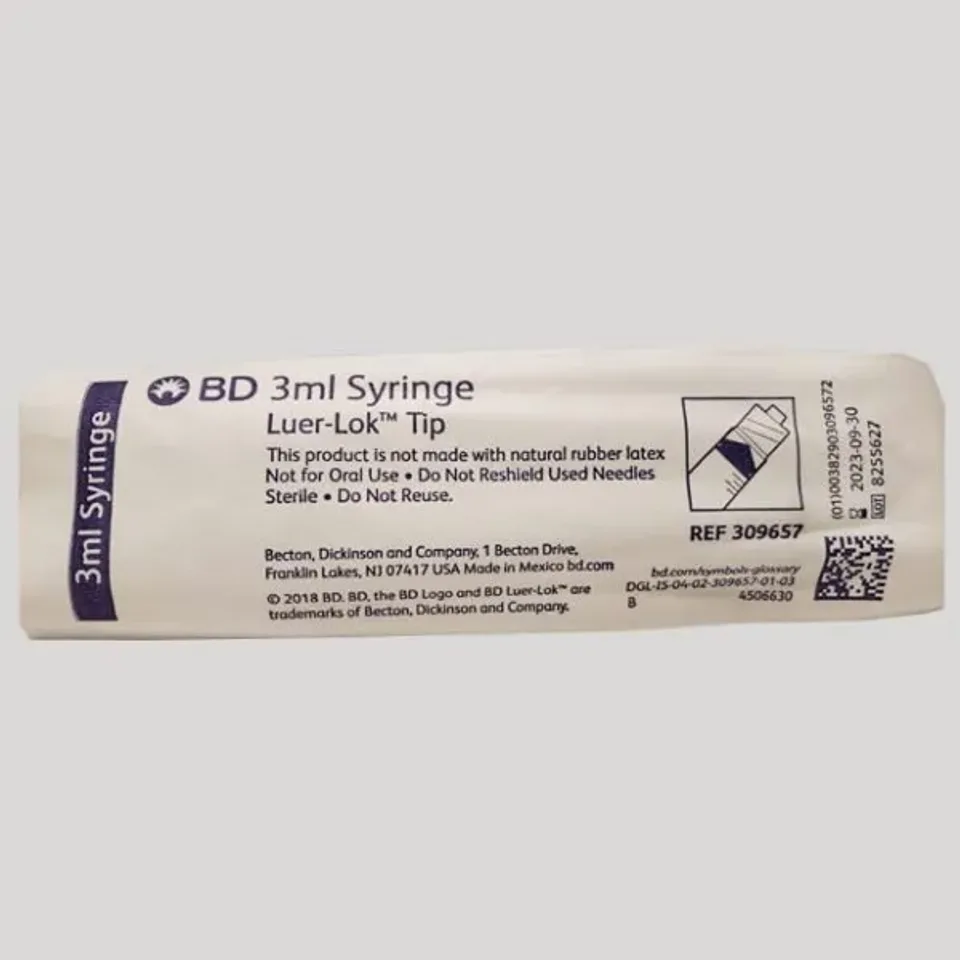
$2.50
In stock
View product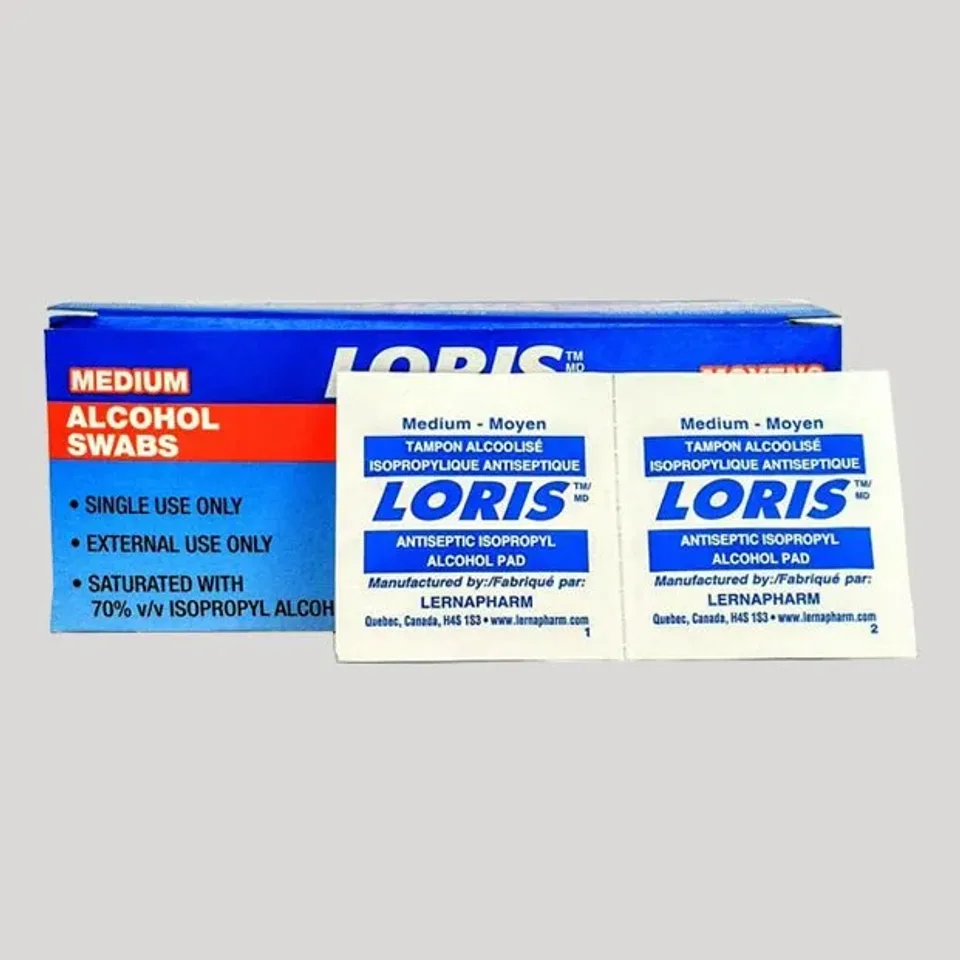
$0.50
In stock
View productNo products match these filters.
For research use only. Not for human or veterinary use. Read the research use policy.
Enter the vial amount, the water added and the amount to measure, and get the concentration and U-100 syringe units. Shows the formula. For reference only.
Enter the peptide amount and the diluent volume and get the concentration per mL and per syringe unit. Shows the formula. For reference only.
Convert between mg and mcg, and between mL and U-100 syringe units. Shows the formula. For reference only.
MedlinePlus names three areas: the belly, at least 2 inches from the belly button; the outer upper thighs; and the side or back of the upper arms, at least 3 inches below the shoulder and above the elbow.1 NHS medicine pages for weekly semaglutide and tirzepatide name the thigh, tummy and upper arm.23 The skin should be healthy, and injections are spaced at least an inch apart.1 The instructions supplied with a prescribed product take priority.
The patient guides differ. The MedlinePlus subcutaneous guide cleans the skin with an alcohol pad and lets it dry,1 while its insulin guide asks only for clean, dry skin and rules out an alcohol wipe on the injection site.4 Both agree on wiping a vial's rubber top with alcohol before a needle goes through it.45 Where they disagree, the instructions that come with the prescribed medicine decide.
Guides give two defaults. The MedlinePlus subcutaneous guide inserts the needle quickly at 90 degrees, or at 45 degrees when there is little fatty tissue.1 The MedlinePlus insulin guide starts at 45 degrees and goes straight in at 90 degrees only when the tissue is thicker and the provider agrees.4 Both pinch up the skin first; the subcutaneous guide takes about an inch (2.5 cm) of skin and fat, not muscle.14
Put them straight into a sharps container: an FDA-cleared one, or a heavy-duty plastic bottle, such as a laundry detergent jug, with a tight, puncture-resistant lid and a hazardous-waste label.67 At about three-quarters full, local rules apply; options can include drop-off points, household hazardous waste sites, mail-back programs and pick-up services.8 Never put loose needles in the trash or recycling, and never flush them.9
Written by D2C Peptides Editorial Team.
Pending qualified review.
Updated .
D2C Peptides sells peptides for laboratory research. Please confirm both statements to continue.