Insulin Syringes (Pack of 10)
$10
In stock
View product

$0.50 In stock
For research use only. Not for human or veterinary use.
Ships from the USA. Shipping details
| Gauge | 18 G (wider than 23 G or 25 G)2 |
|---|---|
| Length | 1 inch |
| Device type | Hypodermic single lumen needle, FDA Class II device (21 CFR 880.5570)1 |
| Fits | A syringe nozzle made to take a needle hub, such as a Luer lock tip56 |
| Supplier's stated use | Drawing up and mixing, not injecting |
| Use | Single use: one needle, one syringe, only one time8 |
| Ships from | USA |
| Category | Peptide Supplies |
Buying for a lab or for resale? Wholesale and bulk terms are confirmed on application.
Reconstituting a lyophilized peptide step by step: the supplies, the diluent, the math and storage after mixing.
How prescribed subcutaneous injections are given: sites, rotation, sterile technique and sharps disposal, from clinical sources.
How lyophilized and reconstituted peptides are stored: temperature, light, moisture and how long they keep, from manufacturer guidance.
Enter the peptide amount and the diluent volume and get the concentration per mL and per syringe unit. Shows the formula. For reference only.
A hypodermic needle is a metal tube sharpened at one end and joined at the other to a hub that fits a syringe. US rules class it as a Class II medical device.1 This one is 18 gauge and 1 inch long, the widest of the three needle sizes we list, since a lower gauge number means a wider needle.2
The supplier does not name the brand. One comparable product, BD's 18G x 1 inch PrecisionGlide needle (catalog 305195), has a pink hub, a regular bevel and a thin wall, and is sold sterile for single use.3 FDA's device database lists that BD model as a prescription-use device cleared under premarket notification K021475.9
FDA's record for the BD 18G needle describes single-use hypodermic needles as made to give or withdraw fluids, and notes they may also be used to prepare fluids or drugs.9 The supplier lists this needle for drawing up and mixing. In a lab, that means moving liquid in and out of a vial, such as adding diluent to a freeze-dried peptide; the reconstitution guide sets out those steps and the reconstitution calculator works out the resulting concentration.
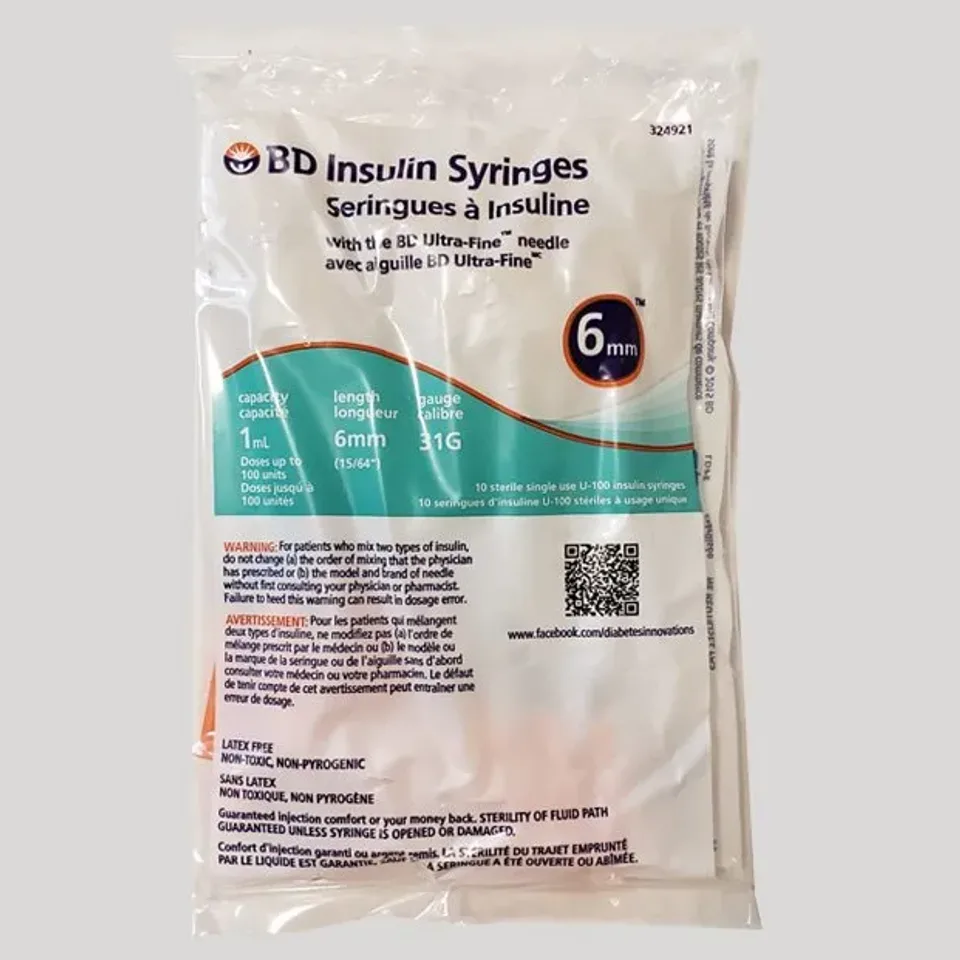
The needle needs a syringe whose nozzle takes a needle hub.5 On a Luer lock tip, such as our 3mL Syringe, Luer-Lok Tip, the hub screws onto a threaded fitting that holds it securely but can be undone.6 Insulin syringes are different: they come with their own fine needle.2 Peptide supplies explained shows which syringe and needle do which job.
A used needle goes straight into a sharps disposal container; once the container is about three-quarters full, your community's rules apply.10 FDA says never to bend or break a needle or take it off the syringe by hand, because that can cause needle sticks.11 Loose needles never go in the household trash, the recycling bin or the toilet.12 If someone is stuck by another person's used needle, FDA says to wash the area with soap and water or an antiseptic such as rubbing alcohol and get medical care right away.13 The storage guide covers how peptides are kept once mixed.
The supplier lists this needle for drawing up and mixing, not for injecting. For comparison, CDC's vaccine guidance lists 22 to 25 gauge needles for intramuscular injection and 23 to 25 gauge needles, 5/8 inch long, for subcutaneous injection.4 At 18 gauge, this needle is wider than every needle in those ranges. How prescribed injections are given is covered in the injection guide.
18G is the needle's gauge and 1 inch is its length. Gauge runs opposite to width: the higher the number, the thinner the needle.2 So 18G is wide next to the 23G needle and the 25G needle, and far wider than the 31G needles preattached to some U-100 insulin syringes.2
No. CDC advises against leaving a needle inserted in a vial's septum for repeated use.8 Its injection safety checklist calls for disinfecting the rubber stopper with alcohol before piercing it, and for a new needle and a new syringe every time a vial is entered, even for another draw from the same vial.7
Written by D2C Peptides Editorial Team.
Pending qualified review.
Updated .
$10
In stock
View product
$10
In stock
View product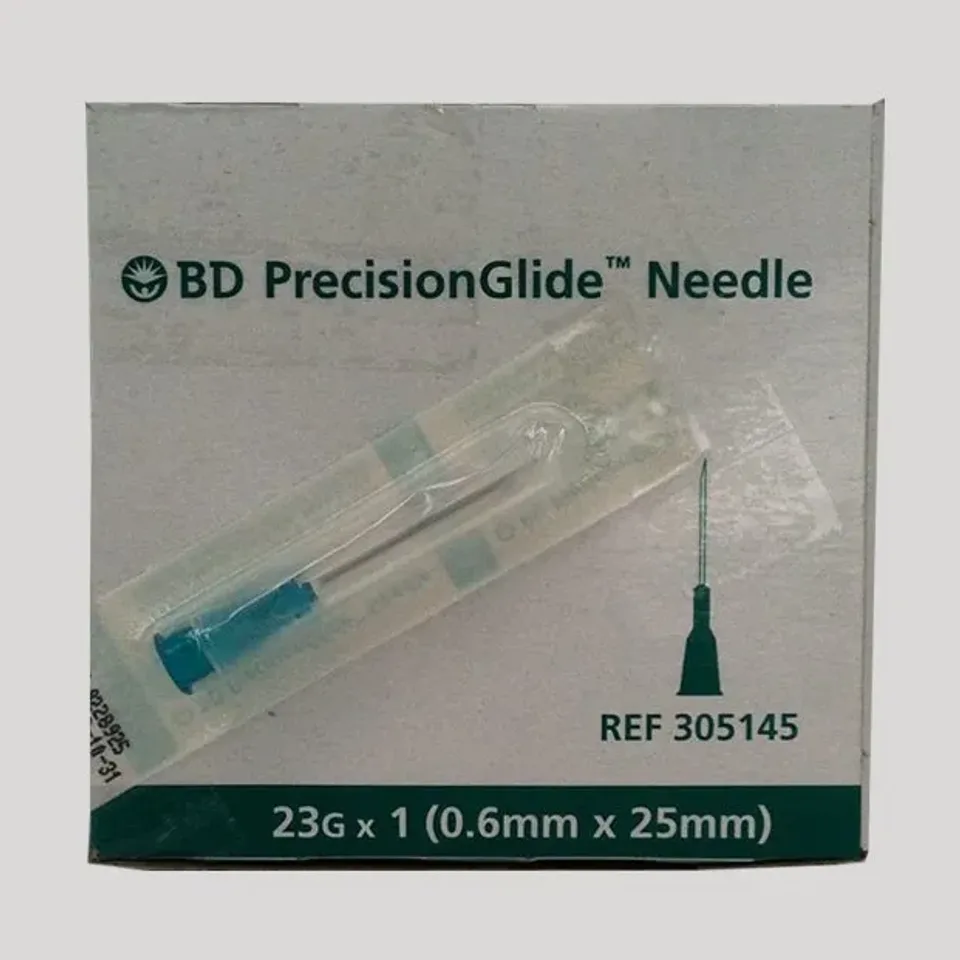
$0.50
In stock
View product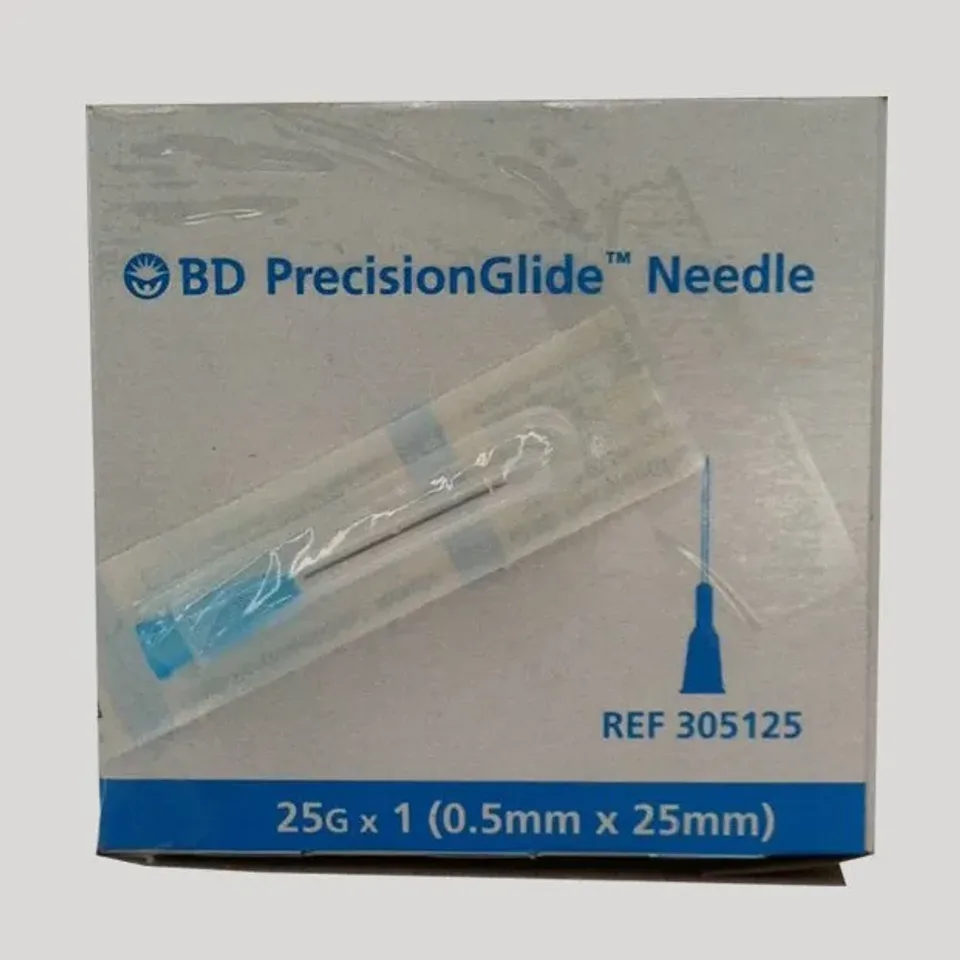
$0.50
In stock
View productNo products match these filters.
D2C Peptides sells peptides for laboratory research. Please confirm both statements to continue.