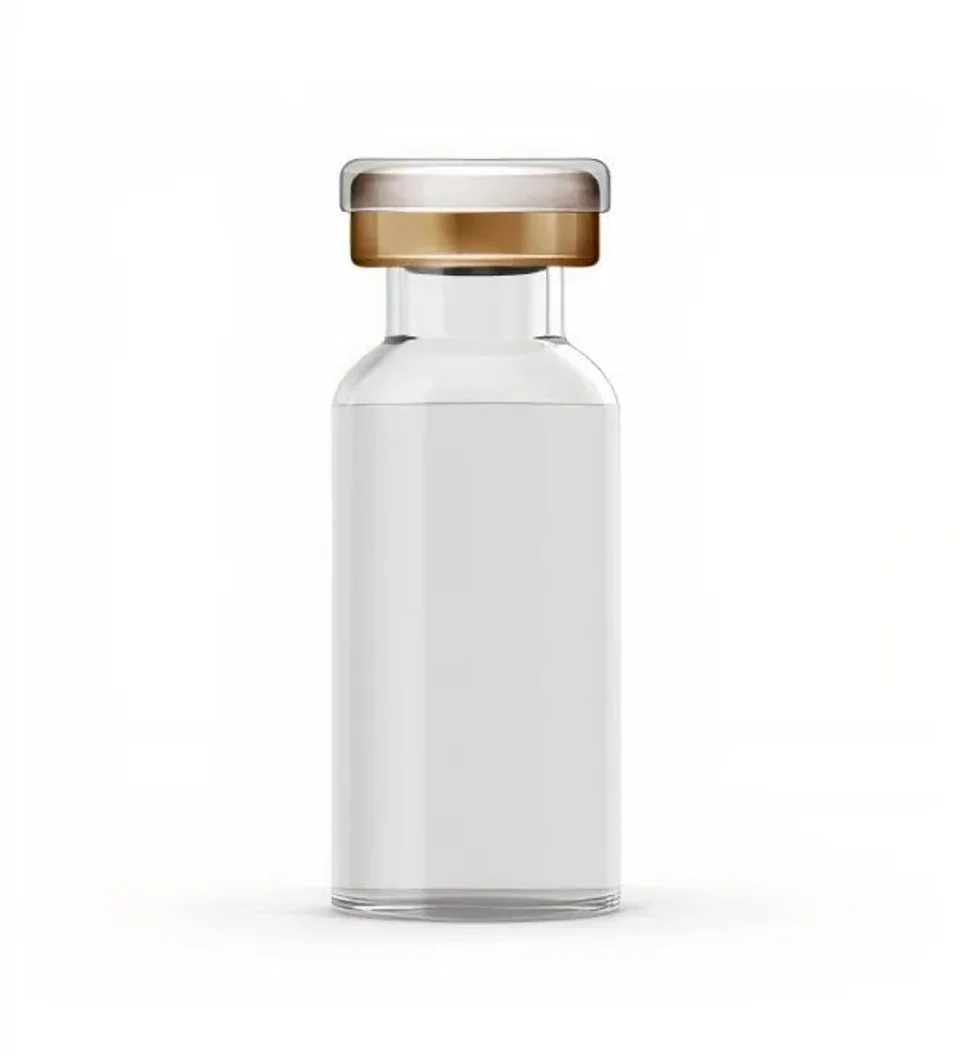
Bacteriostatic Water
$10
In stock
View product
Calculator
Reconstitution sets a vial's concentration: the amount in the vial divided by the volume of diluent added. This reconstitution calculator does that division in mg, mcg or IU and breaks the result down per 10 units and per unit on a U-100 syringe, so you can see what each unit holds.
Enter the peptide amount and the diluent volume and get the concentration per mL and per syringe unit. Shows the formula. For reference only.
This page summarizes published sources for information only. It is not medical advice and does not tell anyone to use a product. Questions about your own health belong with a licensed clinician. For questions about an order or a product, contact us.
Results appear once both fields hold a number above zero. The panel shows the concentration per mL, the amount in 10 units (0.1 mL) and the amount in one unit (0.01 mL). Results in mg also show the mcg figure beneath them, and results in mcg show mg. IU stay in IU. The formula with your own numbers sits under the panel, and Clear starts over.
Use this calculator to learn what each mL or each syringe unit of a mixed vial holds. To go from an amount you want to measure to a volume and a syringe reading, use the peptide calculator.
The 0.1 and the 0.01 come from the U-100 scale, where 100 units fill 1 mL.10 Rearranged, the first line answers the planning question before a vial is mixed:
The figures below are made up to show the division; they describe no particular product.
A vial labeled 6 mg, mixed with 3 mL.
Planning the same vial at 1.5 mg per mL. Water to add = 6 mg / 1.5 mg per mL = 4 mL. Entered in the calculator, 6 mg and 4 mL give 1.5 mg per mL, so 10 units then hold 0.15 mg (150 mcg) and one unit holds 0.015 mg (15 mcg).
A vial labeled 2,000 IU, mixed with 4 mL. Concentration = 2,000 IU / 4 mL = 500 IU per mL, so 10 units hold 50 IU and one unit holds 5 IU.
No single volume is right for every vial. The bacteriostatic water label leaves the volume to the maker of the drug being mixed.1 An approved product's label fixes it: the EGRIFTA WR (tesamorelin) label calls for 1.3 mL of bacteriostatic water per vial and states the result as 8 mg per mL.3 The same label says the two tesamorelin versions differ in dosage, mixing instructions and storage and are not substitutable, so figures do not carry over even between versions of one drug.3
Without a label, the volume is a trade-off, and the calculator shows both sides of it:
Whatever you choose, measure the diluent rather than estimating it: the result is only as exact as the volume you type.
The calculator divides the number printed on the label and treats all of it as peptide, which may overstate what the vial holds. Bachem, a peptide manufacturer, says research peptides are typically more than 95% pure by HPLC, yet the solid may be only 70 to 90% peptide, because it also holds counter-ions (such as acetate or trifluoroacetate) and residual moisture. It adds that peptide content has to be taken into account when making a solution of a set concentration.5
The effect is proportional. If a 10 mg vial held 8 mg of peptide, 2 mL of water would give 4 mg per mL, not 5, and every per-unit figure would be 20% lower. Whether a label states net peptide or powder weight is a question for the batch's paperwork; certificates of analysis are covered on the lab results page.
The reconstitution guide covers the mixing itself, step by step. Bacteriostatic water has its own supply page, and insulin syringes carry the unit marks that the per-unit results refer to; confirm their scale first. The rest of the lab supplies are on the supplies page.
Some compounds have their own pages on what is known about mixing them, such as TB-500 and AOD-9604. The storage guide covers keeping vials before and after mixing.
$10
In stock
View product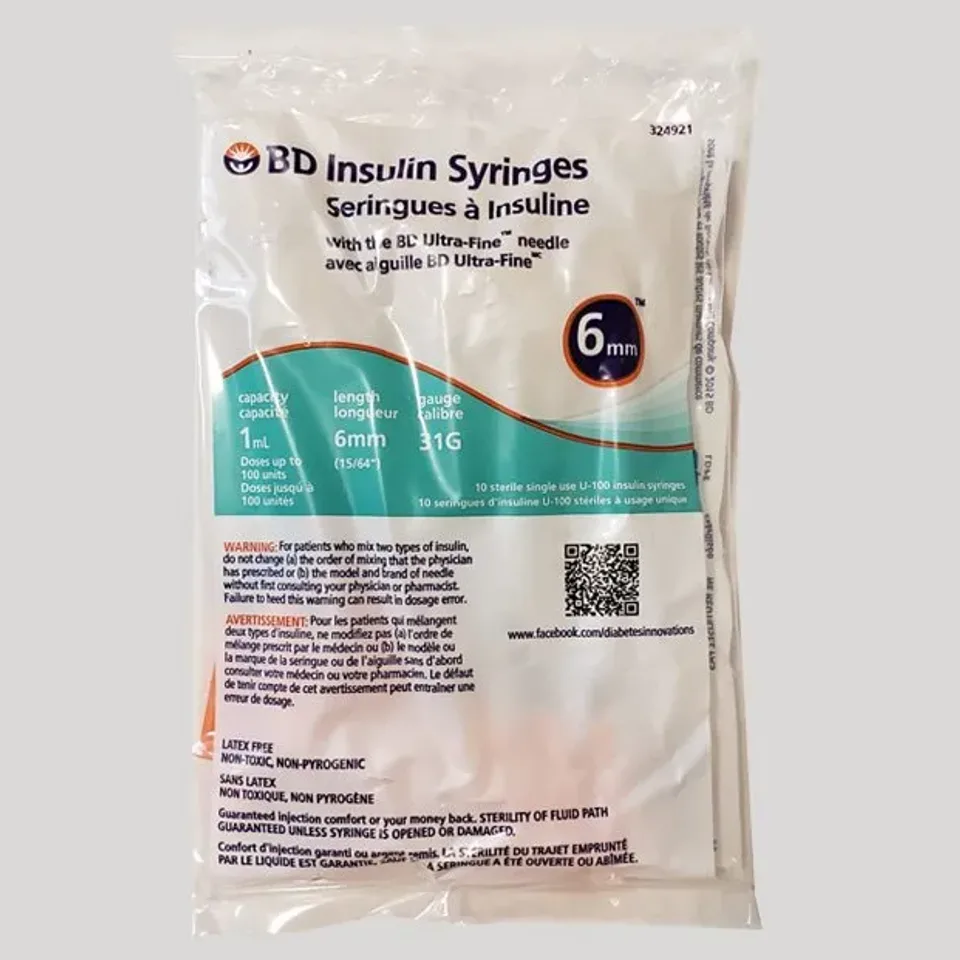
$10
In stock
View productNo products match these filters.
For research use only. Not for human or veterinary use. Read the research use policy.
Reconstituting a lyophilized peptide step by step: the supplies, the diluent, the math and storage after mixing.
Enter the vial amount, the water added and the amount to measure, and get the concentration and U-100 syringe units. Shows the formula. For reference only.
Convert between mg and mcg, and between mL and U-100 syringe units. Shows the formula. For reference only.
No single volume is correct. The bacteriostatic water label leaves the volume to the maker of the drug being mixed, based on that drug's concentration, dose and route.1 Labeled products state their own, such as 1.3 mL per EGRIFTA WR vial.3 Without a label, the volume is a choice that sets the concentration: 10 mg in 2 mL gives 5 mg per mL, and 10 mg in 5 mL gives 2 mg per mL. To reach a set concentration, divide the amount in the vial by that concentration.
Not the arithmetic: the concentration depends only on the amount and the volume. The liquids differ in other ways. On Hospira's labels, bacteriostatic water contains 0.9% or 1.1% benzyl alcohol as a preservative and comes in multiple-dose vials, while sterile water has no preservative and comes only in single-dose containers.12 Some drugs may be incompatible with benzyl alcohol: AmBisome must be mixed with sterile water without a bacteriostatic agent, because such an agent may make it precipitate.19 The EGRIFTA labels name the diluent to use with each version.34
Yes. Pick IU next to the amount and every result stays in IU: per mL, per 10 units and per unit. For example, a vial labeled 3,000 IU mixed with 2 mL holds 1,500 IU per mL, 150 IU per 10 units and 15 IU per unit. The calculator leaves IU unconverted. The units converter converts IU to mg only with an IU-per-mg factor you enter, which should be the one stated for that specific product.
It is the amount held in 0.1 mL of the mixed solution, which is 10 units on a U-100 syringe, where 100 units fill 1 mL.10 It is a handy block for reading a barrel: 30 units hold three times that figure, 5 units half of it. "Per unit" is the same idea for one unit, 0.01 mL. Both come from the concentration per mL, divided by 10 and by 100.
The math does not change over time, but the peptide can. Bachem advises against storing peptides in solution, where they may slowly break down, and GenScript calls the shelf life of peptide solutions very limited, far shorter than for dry powder.67 Approved products set their own limits: EGRIFTA SV is used right away, while EGRIFTA WR is discarded 7 days after mixing.43 For an opened multiple-dose vial, such as a vial of bacteriostatic water, CDC says to date it and discard it within 28 days unless its maker gives another date.8 The storage guide has more.
Written by D2C Peptides Editorial Team.
Pending qualified review.
Updated .
D2C Peptides sells peptides for laboratory research. Please confirm both statements to continue.