
Tirzepatide
From $100
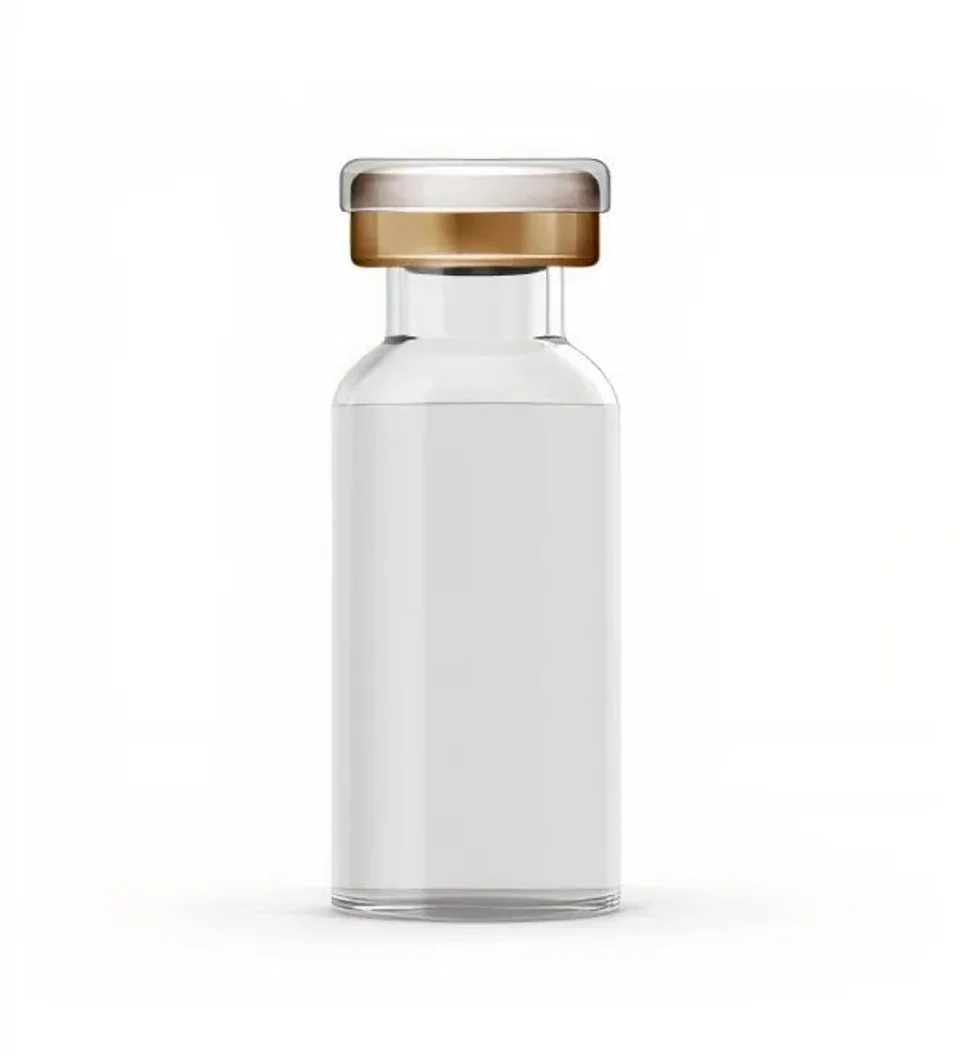
In stock Research vial
Choose strength
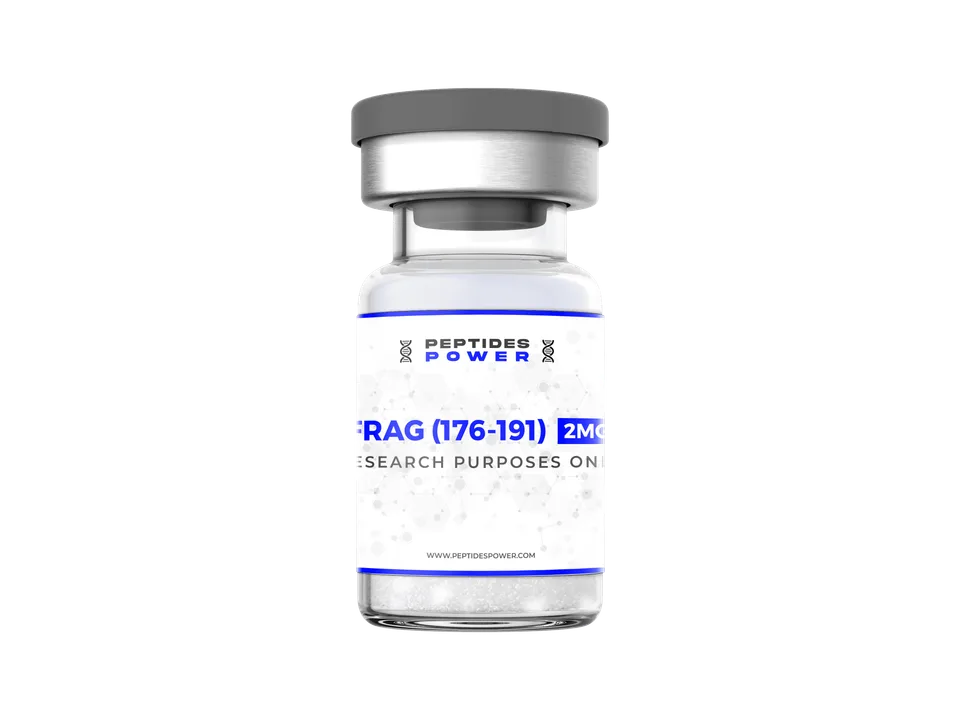
Also searched as: hgh frag 176-191, frag 176-191
Sold as Frag (176-191) - 2mg
$30 In stock
For research use only. Not for human or veterinary use.
Ships from the USA or Canada. Shipping details
HGH Fragment 176-191 is a synthetic peptide copying the last 16 amino acids of human growth hormone (positions 176 to 191), looped by one disulfide bond.12 Neither it nor its tyrosine-modified relative AOD-9604 is an approved drug,34 and ClinicalTrials.gov lists no human trial of the fragment.5 This vial holds 2 mg of white freeze-dried solid; the supplier's listing gives the AOD-9604 sequence.67
| Sequence, native fragment (one-letter code) | FLRIVQCRSVEGSCGF, with a disulfide bond between Cys7 and Cys1412 |
|---|---|
| Sequence, native fragment (three-letter code) | H-Phe-Leu-Arg-Ile-Val-Gln-Cys-Arg-Ser-Val-Glu-Gly-Ser-Cys-Gly-Phe-OH1 |
| Sequence listed by the supplier | Tyr-Leu-Arg-Ile-Val-Gln-Cys-Arg-Ser-Val-Glu-Gly-Ser-Cys-Gly-Phe, which is the AOD-9604 sequence (YLRIVQCRSVEGSCGF)67 |
| Length | 16 amino acids: positions 176 to 191 of the 191-amino-acid human growth hormone18 |
| Molecular formula | C78H123N23O22S2 (free peptide); C80H127N23O24S2 (acetate salt); the supplier lists C78H125N23O23S296 |
| Molar mass | 1799.1 g/mol (free peptide); 1859.1 g/mol (acetate salt); the supplier lists 1817.1 g/mol96 |
| CAS number | 66004-57-7 (the supplier lists the same number)106 |
| PubChem CID | 16131230 (Somatotropin (176-191)); 172966176 (acetate salt)101 |
| Form | White lyophilized (freeze-dried) solid, as listed by the supplier6 |
| Vial contents | 2 mg per vial; no diluent included6 |
| Strength | 2 mg |
| Ships from | USA, Canada |
| Category | Weight Loss Peptides |
| Storage | Shelf life per the supplier: 36 months frozen at -20 °C or 30 days refrigerated at 2 to 8 °C, with the solution kept in the refrigerator after reconstitution.6 No published stability study of the fragment was found. |
Research groups that need HGH Fragment 176-191 in volume can apply for a wholesale account, with bulk terms confirmed on application.
HGH Fragment 176-191 is the tail end of human growth hormone, positions 176 to 191 of the 191-amino-acid hormone, made in the lab.18 Its two cysteines form one disulfide bond, which closes the chain into a loop.1 Its close relative AOD-9604 is hGH 177-191 with a tyrosine added at the front,3 so the two peptides differ only in their first amino acid.17
The names get mixed up: a 2026 review notes that AOD-9604 is sometimes labeled hGH 176-191,4 and the supplier of this vial lists the AOD-9604 sequence under the fragment's name.6
This page lists HGH Fragment 176-191 for sale as a 2 mg research vial, and the selector above shows the HGH Fragment 176-191 price and stock by shipping origin. Before you buy HGH Fragment 176-191 for a study, What is HGH Fragment 176-191? covers the evidence, side effects and full source list.
Neither hGH 176-191 nor AOD-9604 is an approved drug,34 and the supplier states its products are not evaluated by FDA.6 The fragment does not appear on FDA's May 14, 2026 list of substances nominated for pharmacy compounding.18 For AOD-9604, FDA's compounding advisory committee voted 12 to 0 in December 2024 against adding it to the 503A bulks list.19 The 2026 WADA Prohibited List names hGH 176-191 under S2.2.3, growth hormone fragments, banned at all times in and out of competition.12 The vial carries this label: For research use only. Not for human or veterinary use.
No published solubility or post-mixing stability figure for the native fragment was found. For AOD-9604, a supplier certificate cited by FDA lists water solubility up to 2 mg per mL, and FDA notes that its disulfide bridge can break down and that heat or pH changes can make it aggregate.3 In blood samples, both peptides were extensively degraded after a week at 4 °C but stayed stable for at least two months at -20 °C.20 Lab steps are in How to reconstitute a peptide vial, the AOD-9604 figures in How to reconstitute AOD-9604, and the reconstitution calculator does the division.
One strength is listed: 2 mg per vial, from $30. Orders ship from the USA and Canada to addresses across the United States. The selector above shows stock for each shipping origin before the vial goes in the cart. Delivery options are on the shipping page and return terms on the returns page.
The supplier's longest shelf life is frozen: 36 months at -20 °C, against 30 days at 2 to 8 °C.6 It does not say whether the 30 days applies before or after mixing, and it says to refrigerate the solution after reconstitution.6 For the closely related AOD-9604 acetate, supplier documents cited by FDA recommend -20 °C, with 2 to 8 °C only for storage under six months.3
The listing does not settle it. The native fragment starts with phenylalanine (FLRIVQCRSVEGSCGF), while AOD-9604 starts with tyrosine (YLRIVQCRSVEGSCGF).17 The supplier names the product Frag (176-191) but lists the tyrosine sequence with the native fragment's CAS number, and a formula and molar mass that match neither PubChem record.6109 A certificate reporting a measured mass can be compared with PubChem's 1799.1 g/mol for the native peptide and 1815.1 g/mol for AOD-9604.9
Certificate information is on the lab results page, and a specific lot can be asked about through the contact page. Read which tests a certificate reports, not only its purity figure: for AOD-9604, FDA found that a certificate submitted with a nomination gave no results for impurities, aggregates, microbial limits or bacterial endotoxin.3
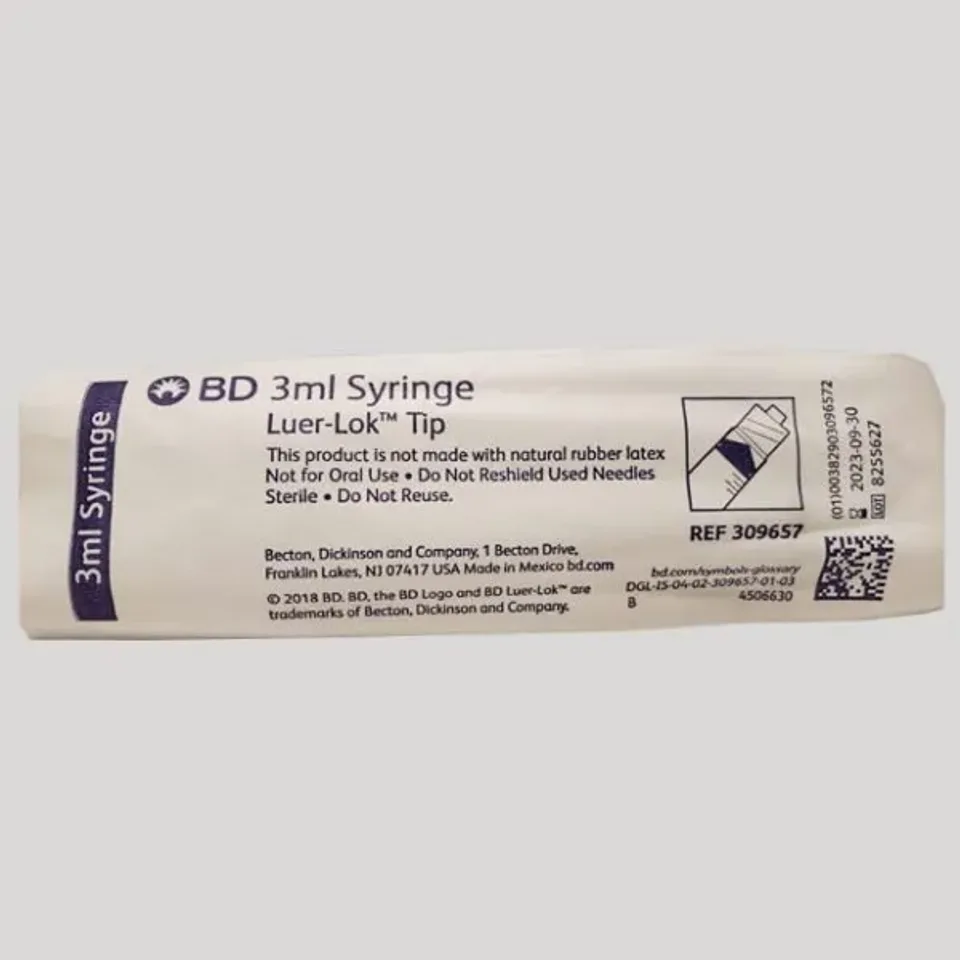
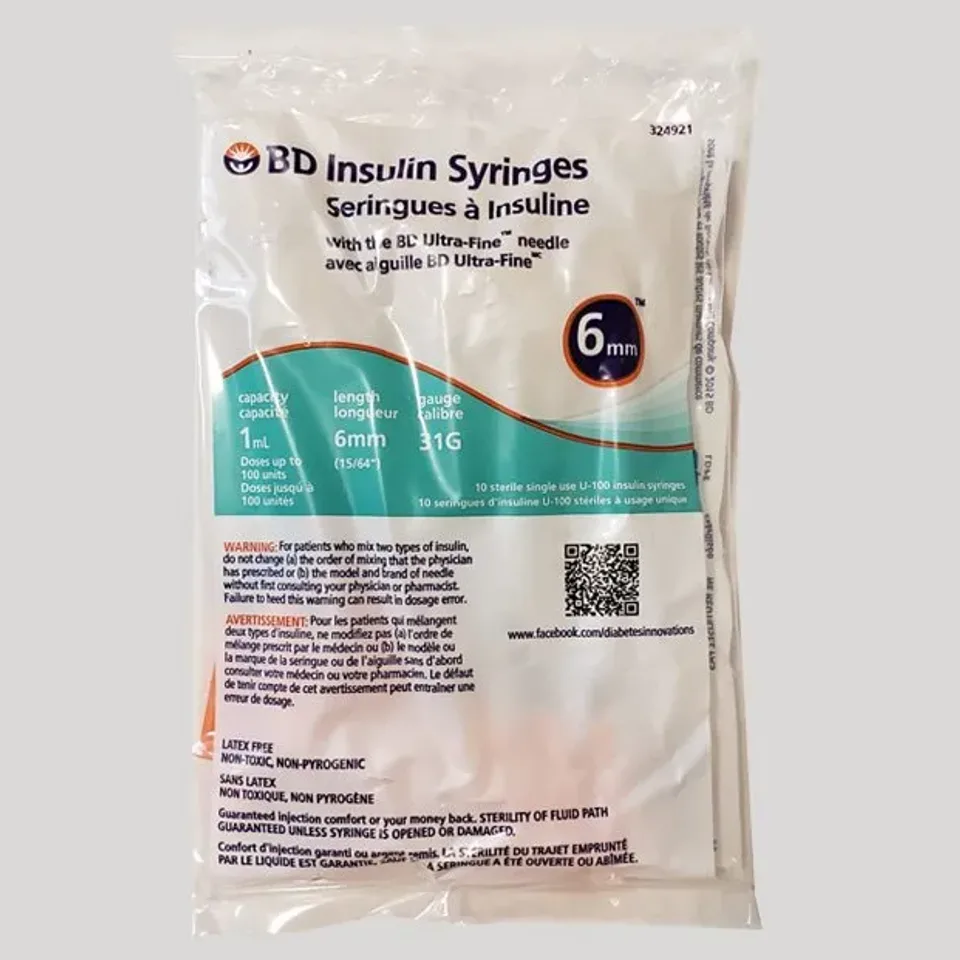
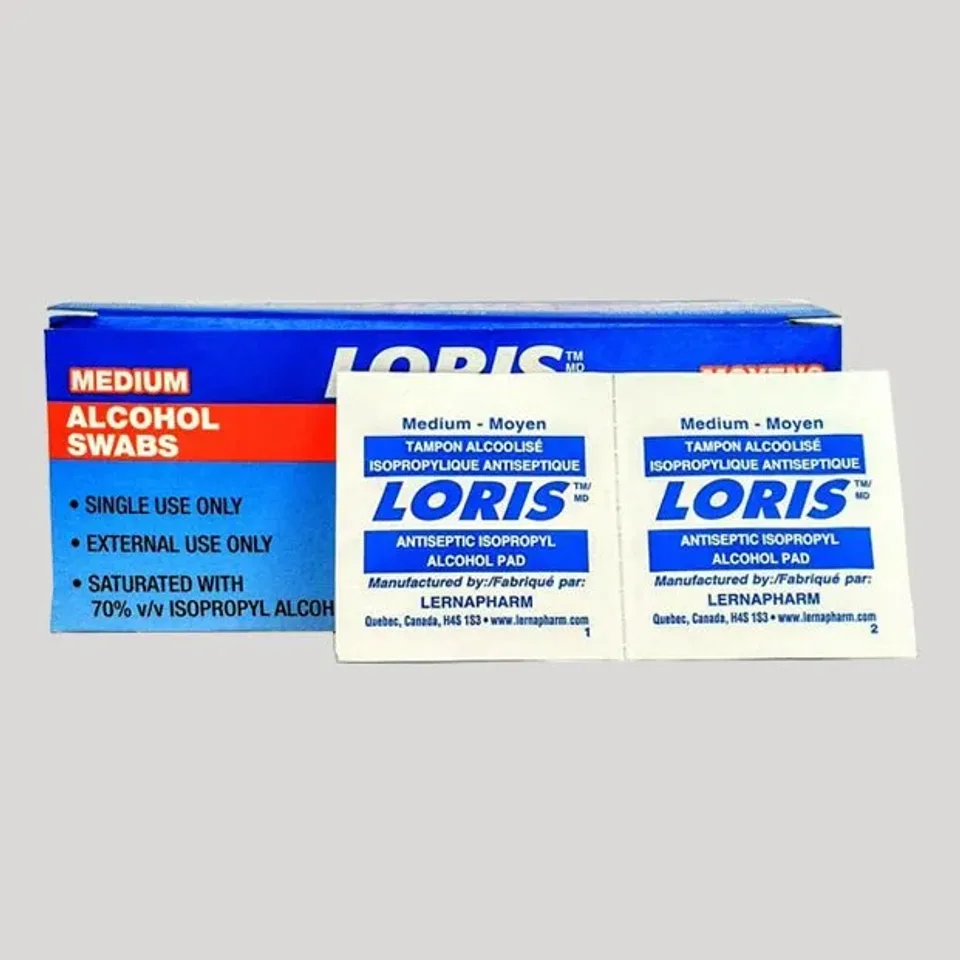
No diluent comes with the vial, so the solid is mixed with a measured volume of liquid before lab work.6 Listed with this product are bacteriostatic water, a 3 mL Luer-Lok syringe, an 18G 1-inch needle, insulin syringes and alcohol swabs.
No. It is a laboratory research vial, labeled: For research use only. Not for human or veterinary use. ClinicalTrials.gov lists no trial of the native fragment,5 and the only human trials found used AOD-9604, given by mouth or by vein.11 FDA found no information on injecting AOD-9604 under the skin in humans.3 WADA bans hGH 176-191 in sport at all times.12
Written by D2C Peptides Editorial Team.
Pending qualified review.
Updated .
From $100
In stock Research vial
Choose strength
From $50
In stock Research vial
Choose strength
$35
In stock
View product
From $125
In stock Research vial
Choose strengthNo products match these filters.
D2C Peptides sells peptides for laboratory research. Please confirm both statements to continue.