
Sermorelin
$70
In stock
View product
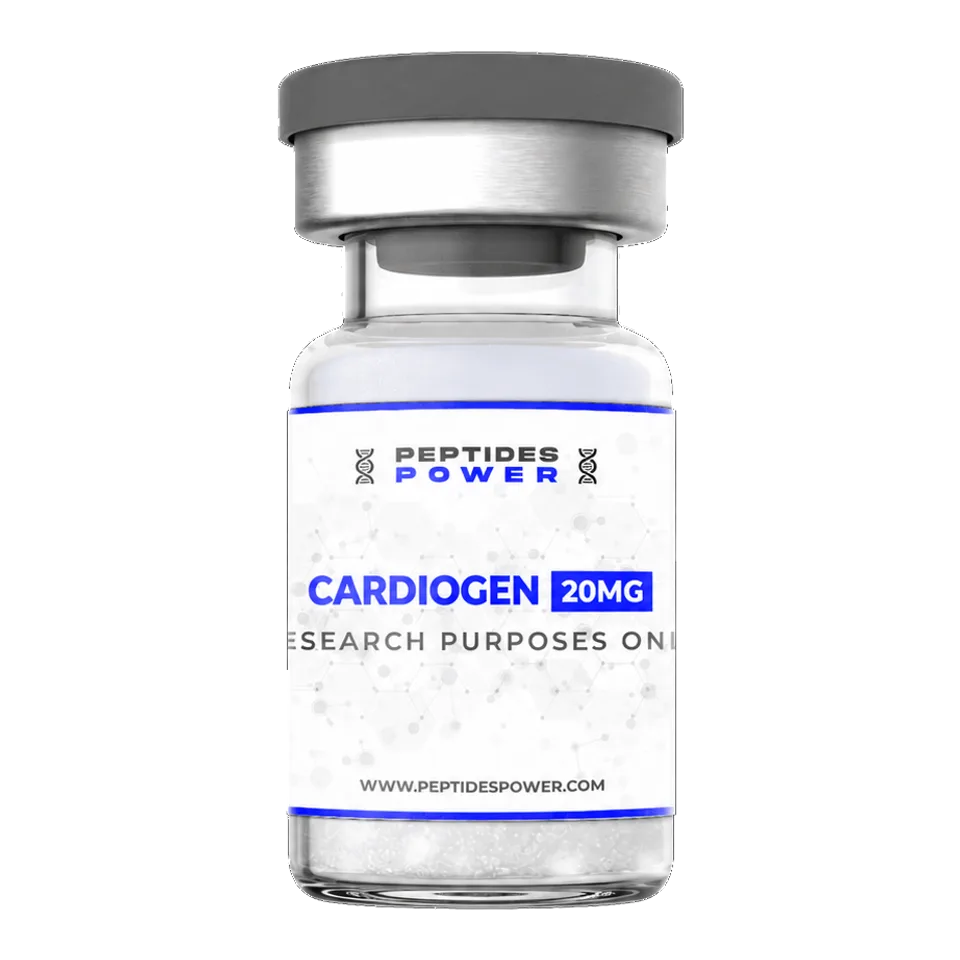
Sold as Cardiogen 20mg
$55 In stock
For research use only. Not for human or veterinary use.
Ships from the USA or Canada. Shipping details
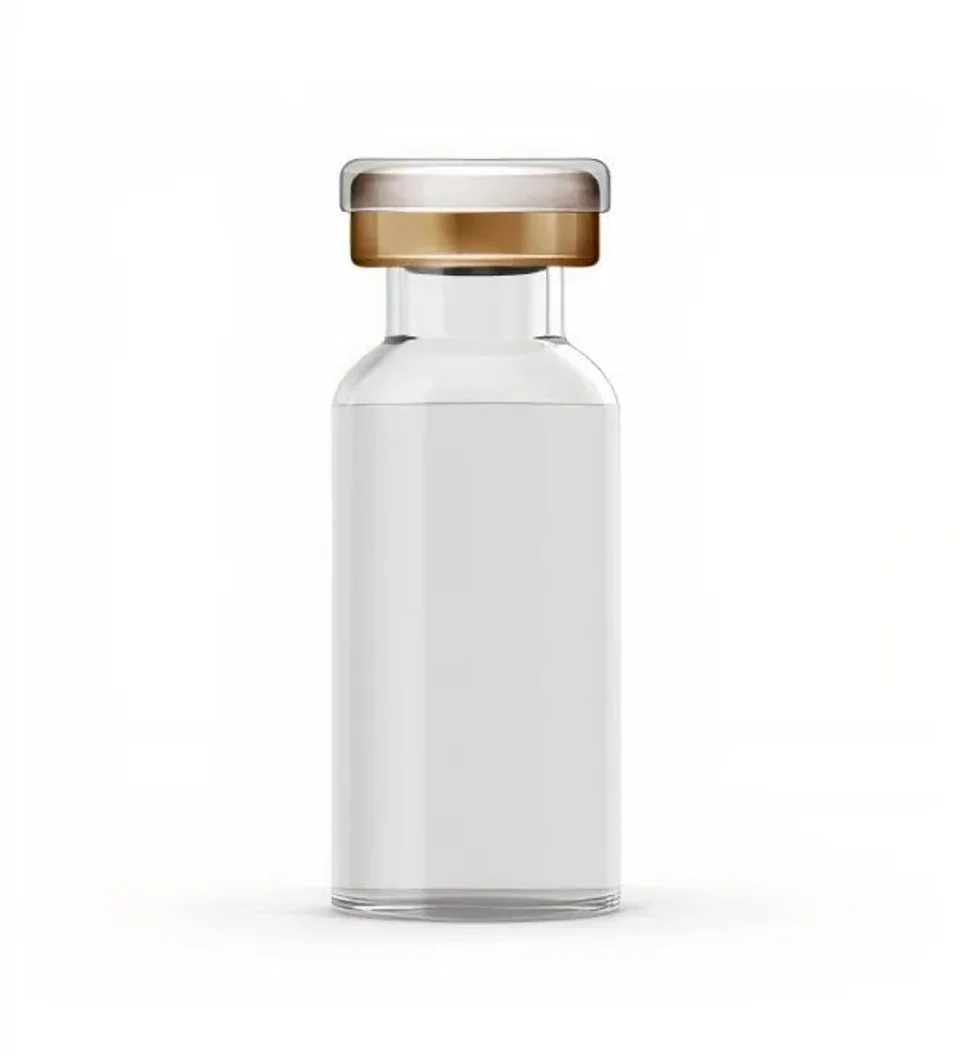
Cardiogen is a synthetic tetrapeptide, Ala-Glu-Asp-Arg (AEDR), from Vladimir Khavinson's group at the St. Petersburg Institute of Bioregulation and Gerontology in Russia, which links it to cardiovascular function.12 Published work is cell and tissue culture plus a few rat studies, and no human study was found.345 It is not FDA approved.6 Each vial holds 20 mg of freeze-dried powder for laboratory research.7
| Sequence (one-letter code) | AEDR18 |
|---|---|
| Sequence (three-letter code) | H-Ala-Glu-Asp-Arg-OH28 |
| PubChem record | Not confirmed for AEDR; a PubChem name search for 'cardiogen' returns (-)-carnitine, CID 10917, a different molecule9 |
| Form | Freeze-dried (lyophilized) powder7 |
| Vial contents | 20 mg per vial7 |
| Diluent | Not included; bacteriostatic water is sold separately7 |
| Strength | 20 mg |
| Ships from | USA, Canada |
| Storage | Store the sealed vial refrigerated and protected from light, as the supplier advises.7 For long-term storage, GenScript, a peptide maker, gives -20 °C away from bright light as its general condition for freeze-dried peptides.10 |
Research groups that need Cardiogen for repeated tissue culture runs can apply for a wholesale account. Volume terms are confirmed on application.
Cardiogen is a lab-made peptide of four amino acids: alanine, glutamic acid, aspartic acid and arginine (Ala-Glu-Asp-Arg, or AEDR).2 Vladimir Khavinson's group in St. Petersburg reports finding AEDR in a polypeptide complex extracted from heart tissue.8 The group lists it as a regulator of cardiovascular function.1 This page offers Cardiogen for sale as a 20 mg research vial, with stock for each shipping origin in the selector above.
The name causes confusion. CardioGen-82 is an unrelated FDA-approved product, a generator of the radioactive imaging agent rubidium Rb 82 used in heart PET scans.11 A PubChem name search for "cardiogen" also returns the wrong molecule, (-)-carnitine.9 Before you buy Cardiogen for a study, read What is Cardiogen? for the full evidence and its gaps.
The Cardiogen peptide is not FDA approved: an October 2026 search of FDA's approval data found no product with it as an active ingredient.6 It is not on FDA's May 14, 2026 list of bulk substances nominated for compounding under section 503A.14 Health Canada's August 1, 2025 advisory on unauthorized injectable peptides does not name Cardiogen, though it names other short peptides such as Pinealon and Livagen.15 The advisory says injectable peptides are regulated as prescription drugs in Canada and that selling unauthorized drugs is illegal there.15 WADA's 2026 list does not name Cardiogen, but its class S0 bans at all times any substance not covered by the list's other sections that has no government approval for human therapeutic use.16 The 2027 list, in force January 1, 2027, adds peptides to the S0 examples.17
The supplier says to reconstitute Cardiogen with bacteriostatic water, keep it refrigerated and use it within 30 days.7 That is supplier guidance, not published stability data.7 GenScript says peptide solutions keep for a much shorter time than powder, especially when the sequence contains Asp, as Cardiogen's does.10 For concentration work, Bachem notes that freeze-dried peptide powder may be only 70 to 90% peptide by weight.18 The reconstitution guide covers the lab steps, and the reconstitution calculator does the math.
Orders ship from the USA and Canada to addresses across the United States. The selector at the top of the page shows each shipping origin for this vial and its stock status. Check it before checkout, because stock can differ by origin. Delivery details are on the shipping page, and return terms are on the returns page.
Refrigerate the sealed vial on arrival and keep it away from light, as the supplier advises.7 GenScript notes that peptides containing Asp, Glu or Arg tend to pull moisture from the air, and Cardiogen contains all three.10 Let a cold vial reach room temperature before opening it, weigh out what is needed quickly and reseal it tightly.10 Details are in How to store peptides.
No. CardioGen-82 is an FDA-approved generator from Bracco Diagnostics. It produces rubidium Rb 82, a radioactive agent for PET imaging of heart blood flow in adults with suspected or known coronary artery disease.11 The Cardiogen on this page is the AEDR research peptide, which is not an FDA-approved drug.6 Check the name and the sequence, Ala-Glu-Asp-Arg, on any order or document.
See the lab results page for the store's certificate information. When you read a Cardiogen certificate, confirm that it describes the sequence Ala-Glu-Asp-Arg. A PubChem name search for 'cardiogen' points to (-)-carnitine (CID 10917, formula C7H15NO3).9 That is a different molecule, so identity data must not be taken from that entry.9
No. The supplier sells Cardiogen only for lab research, and its label rules out human and veterinary use.7 No human dose is established, and no clinical trial of the Cardiogen peptide is registered; the records a 'cardiogen' search returns are unrelated.65 Its safety in people, including people with heart disease, has not been studied.5
Written by D2C Peptides Editorial Team.
Pending qualified review.
Updated .
$70
In stock
View product
$85
In stock
View product
$85
In stock
View product
$35
In stock
View productNo products match these filters.
D2C Peptides sells peptides for laboratory research. Please confirm both statements to continue.