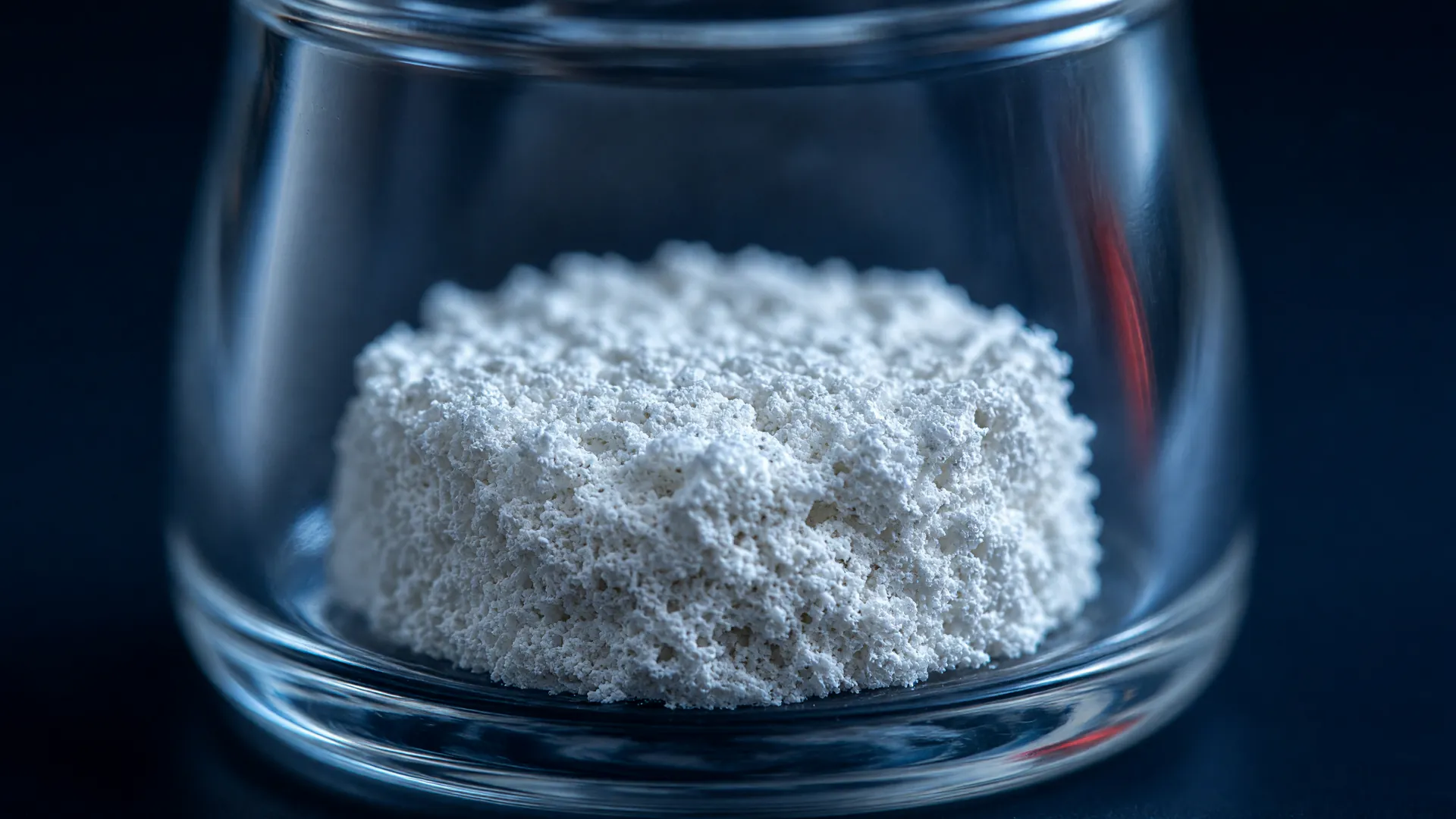
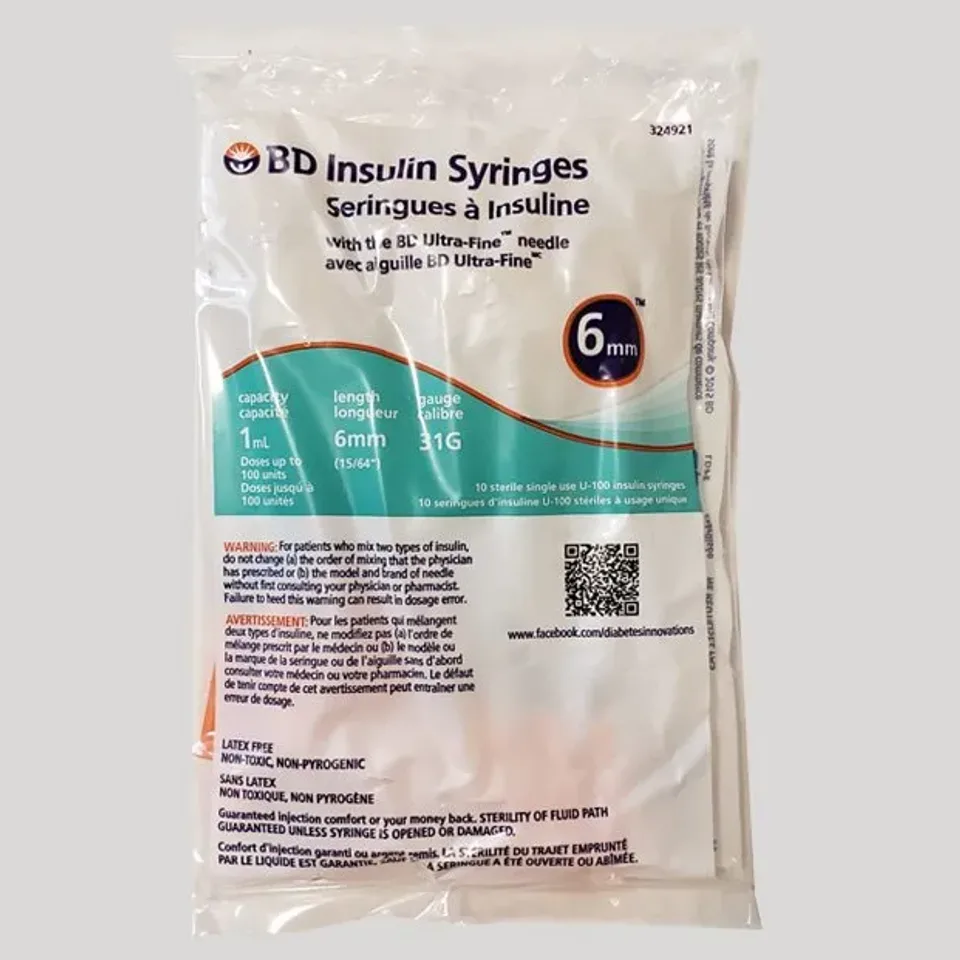
Insulin Syringes (Pack of 10)
$10
In stock
View product
Learn
Bacteriostatic water, the most searched peptide supply, is sterile water with 0.9% or 1.1% benzyl alcohol added as a preservative, and its FDA-approved label limits it to diluting or dissolving drugs.1 It is one of the lab supplies, with syringes, needles and swabs, used to mix and measure a freeze-dried vial.
This page summarizes published sources for information only. It is not medical advice and does not tell anyone to use a product. Questions about your own health belong with a licensed clinician. For questions about an order or a product, contact us.
Bacteriostatic water is a sterile diluent: water for injection with benzyl alcohol added as a bacteriostatic preservative, at 0.9% (9 mg per mL) or, in a second Hospira version, 1.1% (11 mg per mL).1 It comes in a multiple-dose container, so repeated withdrawals can be made from one vial.1 It treats nothing. Its label describes it only as a diluent or solvent for drugs given intravenously, intramuscularly or subcutaneously.1 The vial we carry is on the Bacteriostatic Water for sale page.
The preservative limits the growth of bacteria that may enter a vial during repeated use.15 That protection has limits in time as well. FDA guidance gives an opened or needle-punctured multiple-dose container a 28-day beyond-use date unless the manufacturer's label states another, and CDC adds that the date never runs past the printed expiration date.56
FDA approved Hospira's Bacteriostatic Water for Injection on October 27, 1982 (NDA 018802), and lists its marketing status as prescription.2 FDA labels name bacteriostatic water as the diluent for approved hormone and peptide medicines, among them Egrifta WR (tesamorelin), whose kit includes its own 30 mL multiple-dose bottle,9 and Novarel (chorionic gonadotropin).10
Three label limits apply to any use. The label carries a boxed warning against use in newborns. Given into a vein without enough dissolved drug, it may cause hemolysis, the bursting of red blood cells. And some drugs are incompatible with a vehicle that contains benzyl alcohol.1 AmBisome, an antifungal, must be reconstituted with sterile water that has no bacteriostatic agent, because one may make it precipitate.11 For peptides in particular, a 2023 narrative review of protein and peptide medicines notes that some preservatives have been reported to increase particle formation, so a preservative has to suit the active ingredient.16
Vials sold next to research peptides sit in a different regulatory position from the approved product. In warning letters dated March 31 and August 24, 2026, FDA said bacteriostatic water offered alongside peptides that need reconstitution is intended for use with them by injection, which makes it a drug, and it called these products unapproved new drugs.131415 FDA said this held despite research-use and not-for-human-use statements on the sellers' labeling, citing evidence from their websites that the products were intended as drugs for human use.131415
Three diluents with similar names do different jobs, and the label of the drug being mixed decides which one it takes.1
| Bacteriostatic water | Sterile water for injection | Bacteriostatic saline | |
|---|---|---|---|
| Preservative | Benzyl alcohol, 0.9% or 1.1%1 | None3 | Benzyl alcohol, 0.9%4 |
| Salt | None; must be made near isotonic before use1 | None3 | Sodium chloride 9 mg per mL, isotonic4 |
| Container | Multiple-dose1 | Single-dose only; unused portion discarded3 | Multiple-dose4 |
| Newborns | Not for use (boxed warning)1 | The labeled choice for preparing newborn medicines1 | Not for use (boxed warning)4 |
Tesamorelin shows the difference in practice. EGRIFTA SV is mixed with sterile water and used right away, with leftover solution and diluent thrown out.36 EGRIFTA WR is mixed with bacteriostatic water, kept at room temperature and discarded 7 days after mixing.9 Not every bacteriostatic diluent uses benzyl alcohol, either: the 10 mg ZOMACTON (somatropin) vial comes with bacteriostatic water preserved with 0.33% metacresol.37
Insulin syringes carry a fine needle of their own and are marked in insulin units rather than milliliters.22 Standard U-100 insulin holds 100 units per mL and most insulin syringes are marked for it, so on a U-100 syringe 1 unit is 0.01 mL.2019 The maker embecta offers 1 mL, 0.5 mL and 0.3 mL barrels that hold up to 100, 50 and 30 units, half-unit marks on the 0.3 mL size, and needles 6, 8 or 12.7 mm long. Concentrated U-500 insulin needs its own U-500 syringe.21
Needle length has its own evidence base for insulin. International expert recommendations published in 2016 call the shortest needles, including the 6 mm syringe needle, safe, effective and less painful as the first choice for all patient groups, and advise against intramuscular insulin injections because severe hypoglycemia may result.23
Because a unit mark is a volume, the amount of compound in it depends on the solution's concentration.19 The units converter switches between mL and U-100 units. The store's pack of 10 is on the Insulin Syringes for sale page.
Federal rules define a piston syringe by three parts, a calibrated barrel, a plunger and a nozzle that takes a needle hub, and place it in Class II.24 Luer fittings join syringe and needle with either a push fit (a Luer slip) or a screw-in thread (a Luer lock), giving a secure, detachable, leak-proof connection.25 Luer-Lok is BD's name for its locking tip, and BD offers a 3 mL Luer-Lok syringe without a needle for general use.26 A 3 mL syringe holds the same volume as a 3 cc syringe, since 1 cc equals 1 mL.27 Next to a 1 mL insulin syringe, it holds three times as much, is read in mL and takes a separate needle. See the 3mL Syringe, Luer-Lok Tip for sale page.
Each needle is a sharpened metal tube on a hub that attaches to the syringe, a Class II medical device under US rules.28 The gauge number rises as the needle gets thinner.22 BD color-codes its 1 inch PrecisionGlide hubs, pink for 18G, turquoise for 23G and blue for 25G.293031
CDC's vaccine tables show where each gauge sits in clinical practice. They list 22 to 25 gauge needles for intramuscular vaccines, 1 inch long for many adults, and 23 to 25 gauge needles 5/8 inch long for subcutaneous vaccines.32 By those tables, 23G and 25G fall inside both gauge ranges, with a length that matches the intramuscular rows, and 18G falls outside both. The tables describe vaccines given by clinicians, not any research compound. The supplier lists its 18G needle for drawing up and mixing rather than injecting.
The three needle pages: 18G 1-Inch Needle for sale, 23G x 1 Inch Needle for sale and 25G x 1 Inch Needle for sale.
An alcohol swab, also called a prep pad, is a pad soaked in 70% isopropyl alcohol. The BD Alcohol Swabs label gives its purpose as antiseptic, lists preparing skin before an injection and decreasing germs in minor cuts and scrapes as its uses, and marks the pads flammable.33 They are regulated as over-the-counter drugs. In a 2017 final rule, though, FDA deferred deciding whether isopropyl alcohol is generally recognized as safe and effective for health care antiseptic use, pending more studies.3334
With vials, CDC's checklist calls for disinfecting the rubber septum with alcohol before each piercing.7 On skin before a prescribed injection, patient guides disagree. The MedlinePlus subcutaneous guide cleans the site with an alcohol pad,35 while the MedlinePlus insulin guide asks for clean, dry skin with no alcohol wipe at the site.20 The prescribed product's own instructions settle it. Swabs come in pairs on the Alcohol Swabs for sale page.
Mixing a freeze-dried vial draws on most of these items in one sequence. The stopper is wiped with alcohol and left to dry,32 diluent is drawn up with a new needle and syringe and added to the vial, and every later entry uses a fresh needle and syringe, with no needle left in the stopper.76 The resulting strength equals the vial's contents divided by the diluent volume. Research peptides have no FDA label, so no mixing volume is established for them.1
The reconstitution guide gives the steps in order, the reconstitution calculator does the arithmetic, and the storage guide covers how mixed vials are kept.
FDA's method has two steps: put needles and syringes in a sharps disposal container right after use, then dispose of the container under your community's rules once it is about three-quarters full.38 FDA-cleared containers are rigid plastic with a fill line. When none is available, a heavy-duty plastic household container that stays upright, resists leaks and has a tight, puncture-resistant lid can stand in, labeled to warn of hazardous waste.3940 Loose needles never go in household trash, recycling or the toilet.41 Collection options vary by place, from drop boxes and supervised collection sites to household hazardous waste sites, mail-back programs and residential pick-up.38
The injection guide covers how prescribed injections are given and sharps disposal in more detail, and every item above is listed on the peptide supplies page.
$10
In stock
View product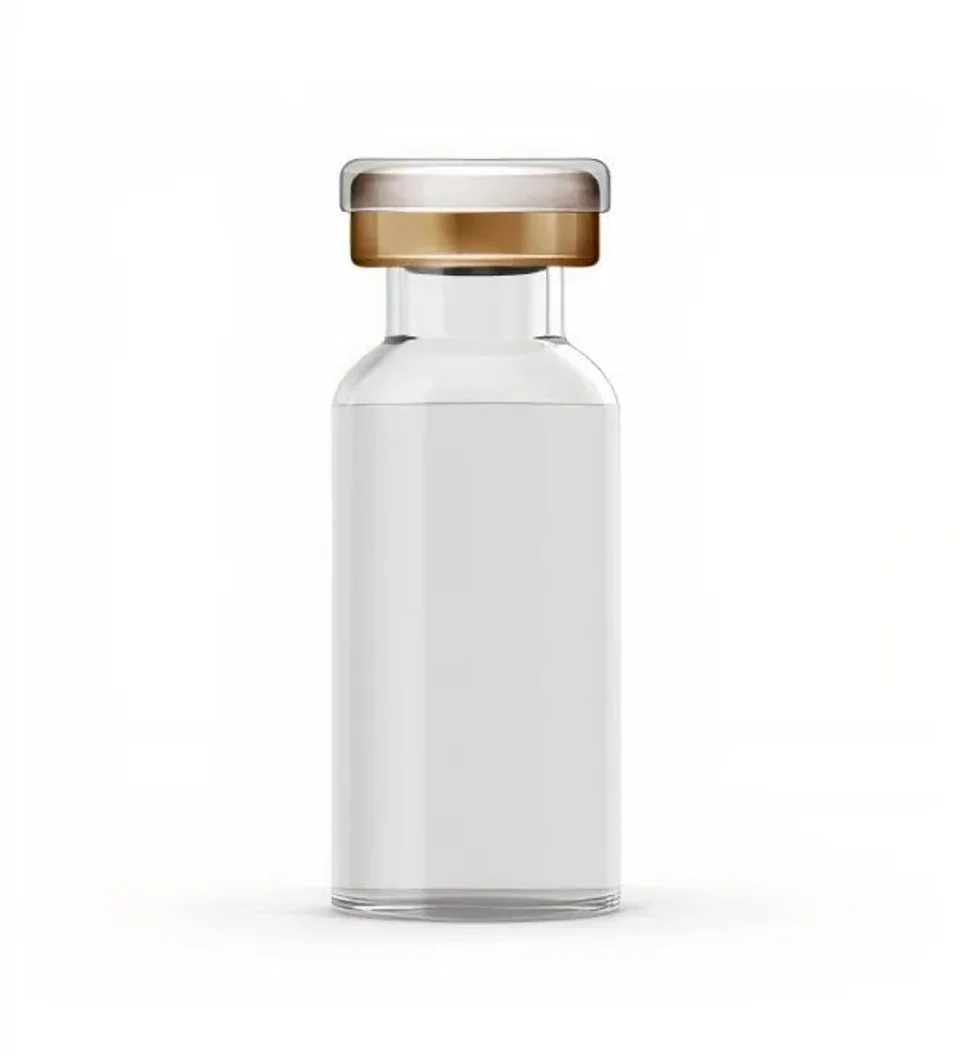
$10
In stock
View product
$0.50
In stock
View product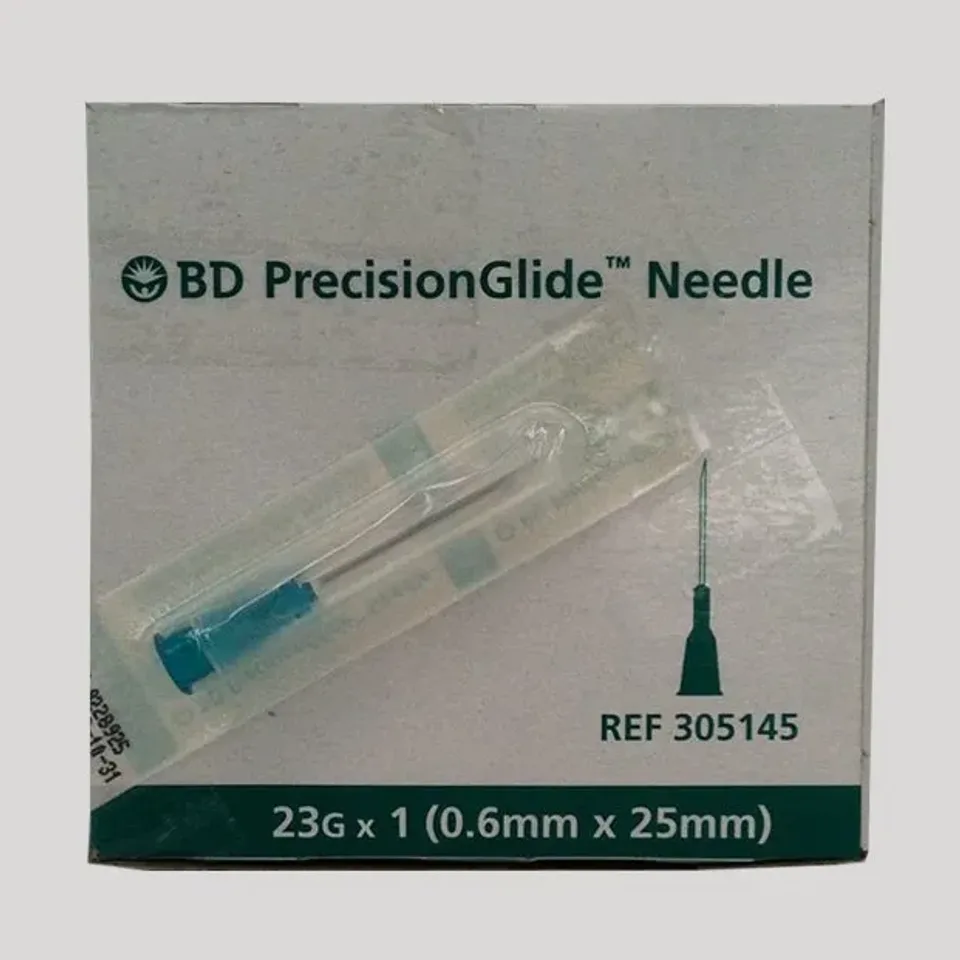
$0.50
In stock
View product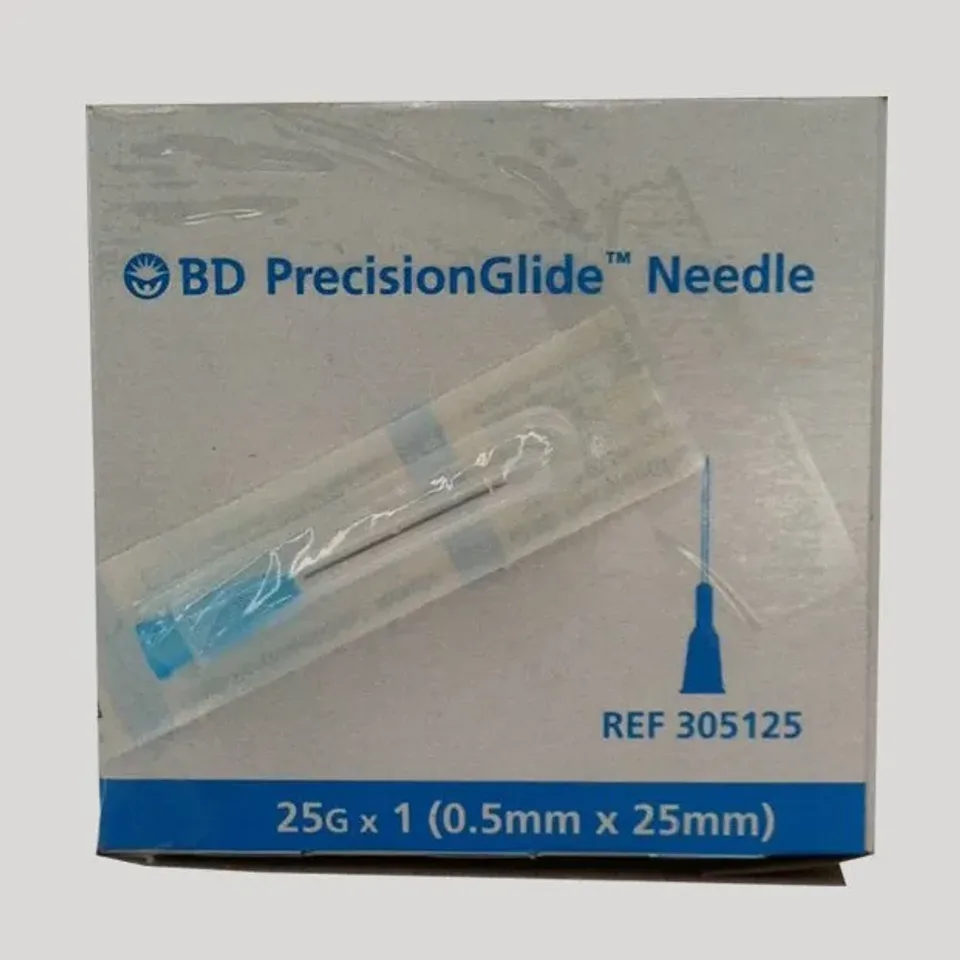
$0.50
In stock
View product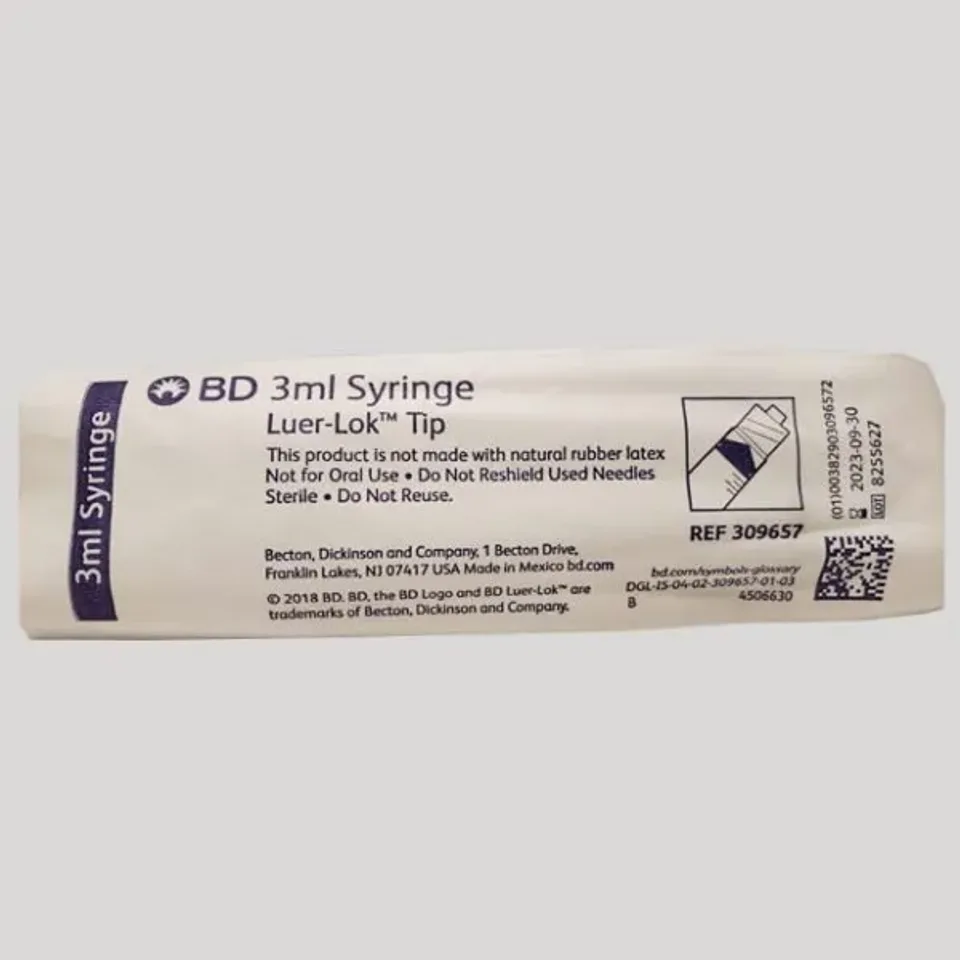
$2.50
In stock
View product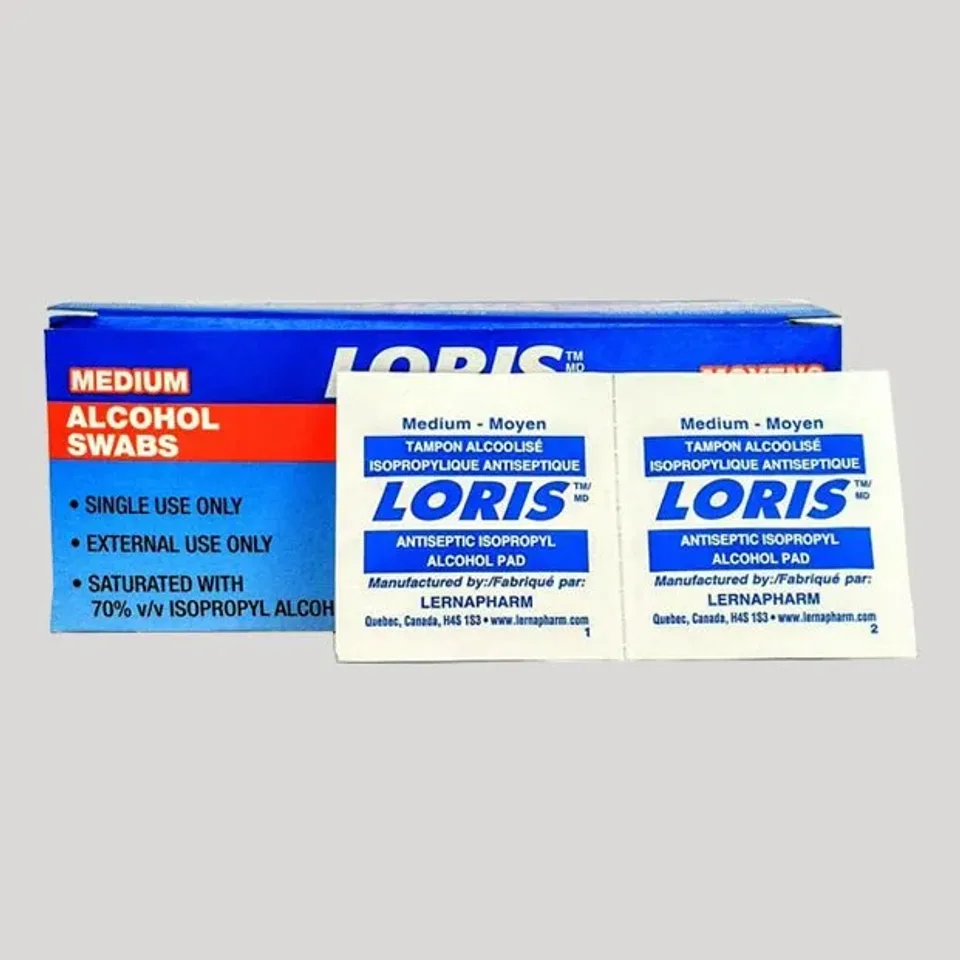
$0.50
In stock
View productNo products match these filters.
Reconstituting a lyophilized peptide step by step: the supplies, the diluent, the math and storage after mixing.
Enter the peptide amount and the diluent volume and get the concentration per mL and per syringe unit. Shows the formula. For reference only.
No. Sterile water for injection has no preservative and comes only in single-dose containers, so whatever is left after one use is discarded.3 Bacteriostatic water adds benzyl alcohol, which limits bacterial growth so a multiple-dose vial can be re-entered, generally for up to 28 days after first entry.15 The same preservative is why it is kept away from newborns and from drugs that need preservative-free water.111
Because of its benzyl alcohol. A 1982 CDC report linked 16 deaths of preterm newborns at two US medical centers to benzyl alcohol in the solutions used to flush their catheters, at an estimated 99 to 405 mg/kg a day, with metabolic acidosis progressing to gasping breathing.8 Labels now carry a boxed warning against use in neonates and call for preservative-free sterile water when newborn medicines are prepared.1
No. CDC says the preservative does nothing against viruses and cannot fully protect a vial from bacterial contamination.6 In two observational hospital studies, about 5% of opened vials grew microbes: 11 of 205 in Iran (2013) and 21 of 384 in Ethiopia (2023). In the Ethiopian study every contaminated sample came from a multiple-dose vial, and contamination was strongly linked to reused syringes or needles.1718
Yes. In September 2019 Hospira recalled one lot (W20308) of 30 mL Bacteriostatic Water for Injection vials nationwide, because sterilization could not be confirmed for some vials. The notice warned that vials without sterility assurance could cause serious infections, and Hospira said it had received no reports of such events.12
No. A unit mark on a syringe is a volume: on a U-100 syringe, 1 unit is 0.01 mL.20 How many milligrams that volume holds depends on the concentration of the solution. FDA has warned that confusion between units, milligrams and milliliters may have contributed to overdoses of 5 to 20 times the intended amount when people drew compounded semaglutide from vials.19
Written by D2C Peptides Editorial Team.
Pending qualified review.
Updated .
D2C Peptides sells peptides for laboratory research. Please confirm both statements to continue.