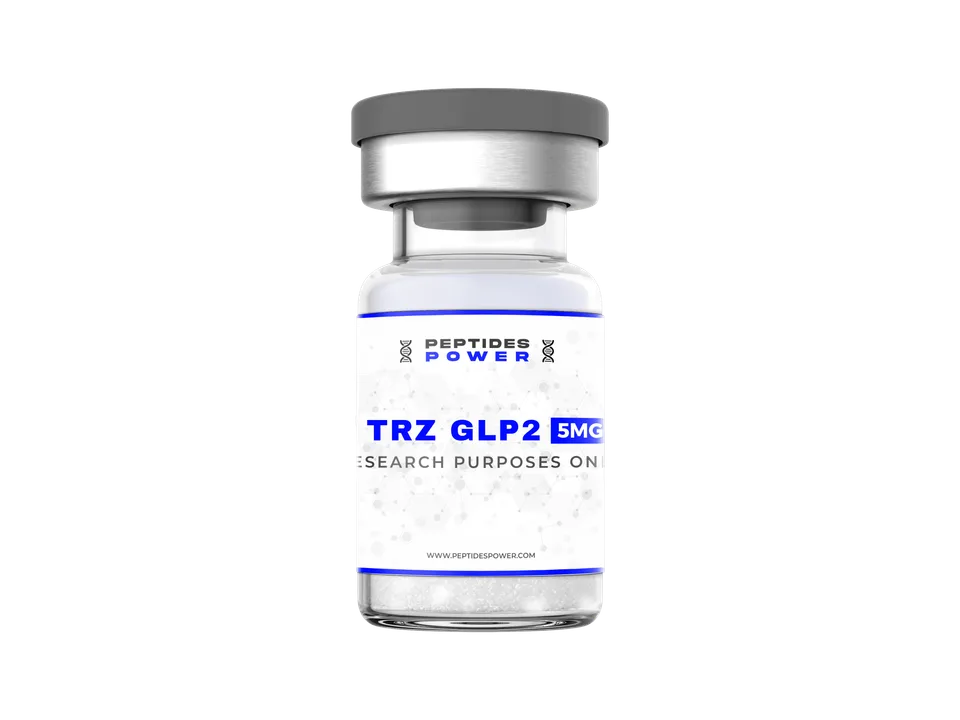
Tirzepatide
From $100
In stock Research vial
Choose strength
Reconstitution and storage
Approved tirzepatide needs no mixing: Mounjaro and Zepbound come as a ready-to-use solution in pens and vials.1 The research vial holds a freeze-dried solid with no FDA-reviewed mixing or storage directions, and bacteriostatic water is sold separately.234 This page covers label use and storage, then lab handling and math for a dry vial.
This page summarizes published sources for information only. It is not medical advice and does not tell anyone to use a product. Questions about your own health belong with a licensed clinician. For questions about an order or a product, contact us.
This section covers how to use tirzepatide as the labels describe it for the prescribed medicines, Mounjaro and Zepbound. The prescriber sets the dose; see Tirzepatide dosage.
General background on under-the-skin injections of prescribed medicines: How subcutaneous injections are given.
The Zepbound label gives these storage rules:
These limits describe the labeled solution. They are not stability data for a freeze-dried research vial.
These are general steps from peptide makers and from diluent and approved-product labels. None was tested on this vial.
Adding a diluent turns the dry peptide into a solution of known strength. The arithmetic is the same for any vial:
Concentration (mg/mL) = peptide in the vial (mg) ÷ diluent added (mL)
The table applies the formula to three example vial contents and three example volumes. It is arithmetic only, not a recommended volume or a dose.
| Peptide in vial | With 1 mL | With 2 mL | With 3 mL |
|---|---|---|---|
| 5 mg | 5 mg/mL | 2.5 mg/mL | about 1.67 mg/mL |
| 20 mg | 20 mg/mL | 10 mg/mL | about 6.67 mg/mL |
| 30 mg | 30 mg/mL | 15 mg/mL | 10 mg/mL |
To find the peptide in a smaller volume, multiply the concentration by that volume: at 10 mg/mL, 0.1 mL holds 1 mg. Two inputs drive the result: the vial's actual content and the volume added. The supplier does not state the actual fill, so the labeled amount is an assumption in this math. Bachem, a peptide maker, notes that peptide powder may be only 70% to 90% peptide, the rest being counter-ions and moisture.26 FDA warns that illegally marketed GLP-1 drugs may contain too little, too much or no active ingredient at all.18 The reconstitution calculator runs the same formula, and the peptide units converter handles syringe markings.
The store lists five supplies for lab handling of this vial: bacteriostatic water, 3 mL Luer-Lok syringes, 18G 1-inch needles, insulin syringes and alcohol swabs. General lab technique for a freeze-dried vial is in How to reconstitute a peptide vial, and storage of dry and mixed vials is in How to store peptides.
In warning letters to other sellers, FDA treated bacteriostatic water sold alongside a research peptide as evidence that the peptide was meant for injection.19 It also cited one seller's peptide guide and peptide calculator as means to prepare an injectable drug for people.20 FDA has received adverse event reports, some needing hospital care, that may be related to dosing errors when patients measured and self-injected compounded semaglutide.21 It has also received reports that may be related to compounded semaglutide or tirzepatide prescribed above the labeled dose.22 In one letter, FDA said injectable products can pose risks of serious harm to users.23 This page describes lab handling of a research material and the label facts for the approved medicines. It is not instructions for use in people.
Back to the Tirzepatide profile. Related: Tirzepatide side effects and Tirzepatide benefits and uses.
Side effects of Tirzepatide as reported in labels, trials and published studies, with links to the full profile. Reviewed by a qualified reviewer.
Published dosing information for Tirzepatide from labels and studies, with its source, and why it is not advice for you.
What published sources report about Tirzepatide and its uses, with the evidence level of each finding. No promises.
From $100
In stock Research vial
Choose strengthTirzepatide for sale: strengths, stock and shipping are on the product page.
For research use only. Not for human or veterinary use. Read the research use policy.
For the prescribed medicines, the labels list the thigh, the abdomen, or the back of the upper arm when someone else gives the injection, and say to rotate the site with each dose.78 Drug exposure was similar at all three sites.9 For a more exact spot on the thigh, the product's Instructions for Use and the prescriber are the sources to follow. None of this applies to research-labeled vials.
As prescribed, Mounjaro and Zepbound are injected under the skin once weekly, at any time of day, with or without meals.2425 The solution is checked for particles or discoloration first, and vial users take a new syringe and needle for each injection.610 The prescriber sets the dose. Research-labeled tirzepatide is labeled not for human consumption and has no FDA-reviewed directions.163
Not the approved medicines. Mounjaro and Zepbound come ready to use as a solution in pens and vials.1 The research vial is different: the supplier describes it as a white freeze-dried solid and sells bacteriostatic water separately, so a lab must add a diluent before use.24 There are no FDA-reviewed directions for that step.3
For tirzepatide mixed from a research vial, we found no stability data, and there are no FDA-reviewed storage directions, so no shelf life is given here.3 Diluent labels say to use reconstituted solutions promptly and not to store them unless the drug's maker directs otherwise, and peptide makers advise against storing peptides in solution.272830 The approved solution has its own label limits: opened multi-dose vials and KwikPens are discarded after 30 days or 4 weekly doses, and single-dose pens and vials may spend up to 21 days unrefrigerated.1513
Written by D2C Peptides Editorial Team.
Pending qualified review.
Updated .
D2C Peptides sells peptides for laboratory research. Please confirm both statements to continue.