Staging preview: health content pending qualified review

Profile

What is GHRP-2?

GHRP-2 (pralmorelin) is a lab-made peptide that copies ghrelin's action on the pituitary: one IV dose makes growth hormone peak within about an hour.199 That effect is the basis of its only approved use, a one-time diagnostic test for growth hormone deficiency in Japan since 2004.6 It has no FDA approval and is banned in sport.4212

This page summarizes published sources for information only. It is not medical advice and does not tell anyone to use a product. Questions about your own health belong with a licensed clinician. For questions about an order or a product, contact us.

Key facts

ClassSynthetic hexapeptide (six amino acids); growth hormone secretagogue that activates the ghrelin receptor (GHS-R1a)334
Also known asPralmorelin, KP-102, GPA-748, growth hormone-releasing peptide-2, GHRP Kaken 100258
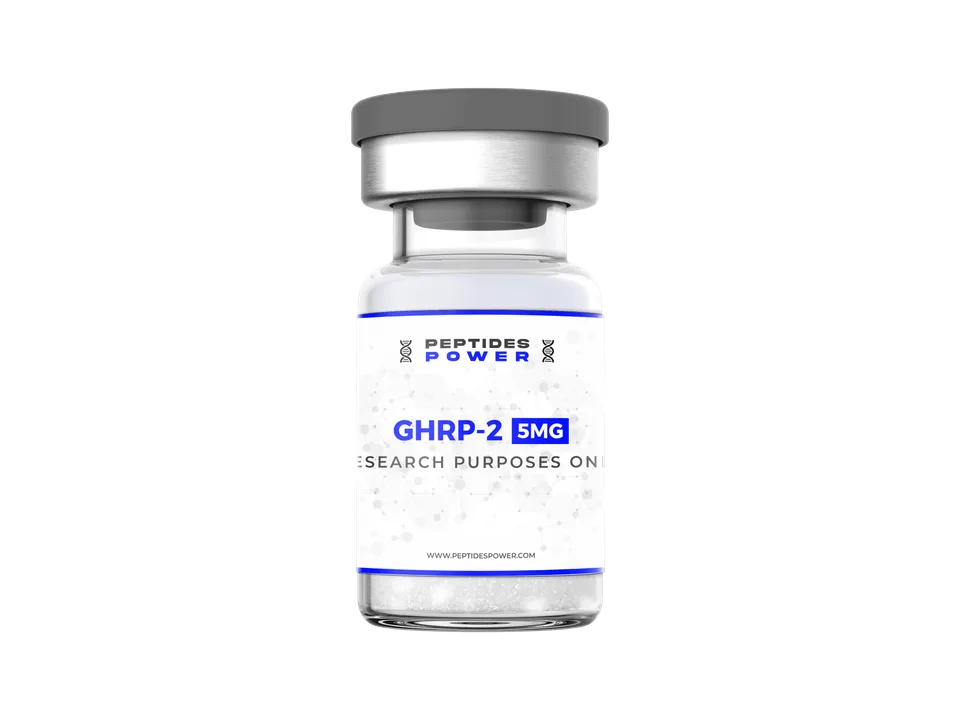
Forms we sell5 mg research vial
Regulatory statusNot FDA-approved; approved in Japan since 2004 only as a one-time diagnostic test; FDA category 2 for outsourcing facilities42615
WADA statusProhibited at all times (class S2.2.4, GH-releasing peptides) on the 2026 and 2027 Lists1214

What sources report

GHRP-2 is a six-amino-acid peptide, H-D-Ala-D-2Nal-Ala-Trp-D-Phe-Lys-NH2, that includes D-2-naphthylalanine, an amino acid the body does not make.3 Its free-peptide formula is C45H55N9O6 (818.0 g/mol), and PubChem lists it as CID 6918245; CID 6852372, which some websites cite, is a different stereoisomer with L-phenylalanine.14 Unnatural growth hormone-releasing peptides were discovered in 1976, years before ghrelin, the natural hormone they mimic.41 GHRP-2 came from a series developed by Polygen in Germany and Tulane University in the US, and Kaken Pharmaceutical of Japan developed it as KP-102.833

It acts at both the hypothalamus and the pituitary, and its growth hormone effect in people depends on the body's own GHRH.3341 Given together with GHRH, it released growth hormone synergistically in 12 children.24 It is short-acting: Japan's label gives an elimination half-life of about 0.42 to 0.69 hours after an IV dose, and in 10 children growth hormone peaked about 25 minutes after the dose.525 It is not fully specific: it also raises prolactin, ACTH and cortisol, and a 2026 review describes the cortisol and prolactin rises as transient.2938

Diagnostic use in Japan

  • Validation (2007, 135 people): after one 100 µg IV dose, growth hormone peaked within 60 minutes in everyone.9 Peaks averaged 84.6 µg/L in 77 healthy volunteers and 1.36 µg/L in 58 adults with severe deficiency, and a 15 µg/L cut-off matched the insulin tolerance test's 3 µg/L.9
  • Post-marketing survey (503 patients at 19 sites, 2006 to 2012; 502 analyzed): sensitivity 0.853 and specificity 0.885 for severe deficiency, against diagnosis by two or more other tests.6
  • Pituitary tumors (71 adults aged 18 to 65): against the insulin tolerance test, 81.3% sensitivity and 94.5% specificity.10
  • Children (56 with growth disorders): a weight-based IV dose separated children with and without deficiency, and the test took an hour or less.11
  • Adolescents (23, tested 2010 to 2023): two patients passed the GHRP-2 cut-off but failed other tests, so the authors say the adolescent cut-off may need revisiting.40
  • Beyond the label: in 69 patients assessed for adrenal insufficiency, a cortisol peak below 12 µg/dL during the test was specific to the hypothalamic form among patients whose cortisol response to CRH looked normal.39

A Japanese review calls the GHRP-2 test convenient and safe for adult growth hormone deficiency.36 In the US, the comparable approved test drug is macimorelin (Macrilen), an oral ghrelin-receptor agonist approved in 2017 as a single 0.5 mg/kg dose for diagnosing adult deficiency; Drugs@FDA now lists its marketing status as discontinued.1644

Appetite

GHRP-2 increases eating, as ghrelin does.1920 A 270-minute infusion under the skin raised buffet intake by 35.9% in 7 lean men, and every subject ate more.19 In a randomized, double-blind study of 10 lean and 9 obese volunteers, intake rose 10.2% at a low dose and 33.5% at a higher dose, and obesity did not change the effect.20 Seven of 10 children with growth hormone deficiency reported more appetite during the first 6 months of a year of oral dosing, though their BMI did not change in a clinically significant way.28

Growth hormone and IGF-1 over weeks

  • Older adults (17 men and women): a 30-day continuous infusion under the skin raised pulsatile growth hormone more than 3-fold on day 1 and more than 1.8-fold on days 14 and 30, and held IGF-1 at a raised plateau.21 Safety screening tests stayed normal.21
  • Children with short stature (15, no control group): intranasal GHRP-2 raised height velocity from 3.7 to 6.1 cm a year at 6 months, without changing IGF-1 or IGFBP-3; 6 children who continued for 18 to 24 months grew 6.0 cm a year.26
  • Children with growth hormone deficiency (6, no control group): daily injections under the skin, in rising doses over 6 months and then with GHRH added for 2 months, gave higher growth velocity than before or after treatment without raising IGF-1 or IGFBP-3, and no side effects were seen.27

Critical illness

In 14 patients critically ill for about 40 days, 5 days of GHRP-2 plus TRH raised osteocalcin 19% (placebo, minus 6%) and leptin 32% (placebo, minus 15%) without changing cortisol.22 In 33 men with prolonged critical illness, GHRP-2 alone restored growth hormone secretion and normalized IGF-1, but it did not reduce protein breakdown; that needed added TRH.23

Animal and lab studies

  • In steroid-treated rats, GHRP-2 lowered the muscle-breakdown genes atrogin-1 and MuRF1 without changing IGF-1, acting through the ghrelin receptor in mouse muscle cells.34
  • In a rat rotator cuff tear model, it reduced inflammatory M1 macrophages, raised healing scores and bone density at 8 weeks, and improved repair strength at 4 and 8 weeks.35
  • In pigs, it was more potent than GHRP-6 and ipamorelin but reached a lower maximum growth hormone level, and it raised ACTH and cortisol, which ipamorelin did not.30
  • In the developer's standard animal safety tests, it showed no serious general pharmacological effects at doses that release growth hormone.33

What has not been shown

A 2026 review places GHRP-2 in its tier B: human data limited to diagnostic use and small studies of growth hormone and appetite, with no controlled efficacy data for performance endpoints such as muscle or fat, and no long-term safety data.38 For laboratory work, GHRP-2 for sale is listed as a 5 mg research vial.

Side effects

Most human safety data describe Japan's diagnostic product, given once by vein.56

On Japan's label

  • Most common (5% or more): feeling hot (16.0%), abdominal rumbling and a raised white blood cell count.5
  • Less common (0.1% to under 5%): low blood pressure, nausea, stomach discomfort, bloating, drowsiness, runny nose, sweating, dry mouth, feeling dazed, cold sweat, hunger, tiredness and unsteadiness.5
  • Frequency unknown: raised ALT (a liver enzyme), abdominal pain, dizziness, shifts in white cell types, bitter taste, back pain, headache and facial flushing.5

In trials and surveys

  • Before approval, 86 of 227 people (37.9%) in Japan's phase 1 to 3 trials had an adverse reaction, mainly abdominal rumbling, heat sensation, sweating and a raised white cell count.6
  • A post-marketing survey of 503 patients found no adverse reactions.6 During the re-examination period, 2 patients had 5 serious events reported spontaneously (impaired consciousness, facial pallor, abdominal pain, sweating and raised blood pressure); all recovered, and other causes were possible.6
  • In 6 healthy young adults, it raised prolactin (less than TRH did) and raised ACTH and cortisol about as much as CRH did.29
  • In critically ill men, GHRP-2 infused alone raised blood lactate and white cell counts by day 5.23
  • In children, no side effects or toxicities were seen in 6 given daily injections for 8 months, and the intranasal form was well tolerated.2724

Warnings

  • FDA cites reports of serious adverse events in people given GHRP-2, including increased insulin needs, deaths of critically ill study subjects, infection and pancreatitis, and notes that causality has not been established.15
  • Immune reactions: FDA says compounded GHRP-2 for injection or nasal use may trigger them, because of potential aggregation and peptide-related impurities.15
  • Blood sugar: a 2018 review of growth hormone secretagogues notes concern about higher blood glucose from lower insulin sensitivity.37
  • Pregnancy and young children: Japan's label says not to give it to women who are or may be pregnant, and notes it was not tested in clinical trials in children under 4.5
  • Pituitary tumors: the label notes reports of pituitary apoplexy, with vision problems, headache and vomiting, when similar drugs were given to people with pituitary adenomas.5
  • Long-term use: safety is unknown, and the longest published human dosing found was 18 to 24 months of intranasal use in 6 children.3826
  • Product quality: research-chemical peptides have uncertain purity, dose consistency and sterility, and an anti-doping lab found about 50 µg of GHRP-2 per tablet in a product sold as a nutritional supplement.3832
  • Athletes: a doping-control urine test detected unchanged GHRP-2 and its metabolite AA-3 in all 10 men given an IV dose.31

Dosage information

The only approved dosing on record is Japan's single-dose diagnostic test, which a clinician orders and gives.56 No dose is established for any other use, and it has no FDA approval.5642

Use or study Who Route What was given
Japan's approved diagnostic test56 Adults; ages 4 to under 18 Slow IV injection while fasting 100 µg once for adults; 2 µg/kg (100 µg above 50 kg) for ages 4 to under 18
Diagnostic validation, 20079 77 healthy volunteers and 58 adults with deficiency IV 100 µg once after an overnight fast
Children, pharmacokinetics and diagnosis251124 10, 56 and 15 children IV; nasal 1 µg/kg IV over 1 minute; 2 µg/kg IV; 5 to 20 µg/kg per nasal dose
Treatment studies in children, 1997 to 2003262728 15, 6 and 10 children Nasal; under the skin; by mouth 5 to 15 µg/kg twice, then three times, daily for 6 to 24 months; 0.3, 1.0 and 3.0 µg/kg per day in 2-month steps; 900 µg/kg twice daily for 12 months
Adult infusions1920212223 7 and 19 adults; 17 older adults; 14 and 33 critically ill patients Under the skin; IV 0.1 or 1 µg/kg per hour for 270 minutes; 1 µg/kg per hour for 30 days; 1 µg/kg per hour for 5 days
IV bolus, 199729 6 young adults IV 1 and 2 µg/kg

In Japan's test, blood growth hormone is measured before the dose and at 15, 30, 45 and 60 minutes, and a peak of 9 ng/mL or less (recombinant standard) indicates severe deficiency.56 Most study doses above were weight-based, and several were continuous infusions. They come from research studies and are not guidance for anyone.

Reconstitution and storage

The only regulator-reviewed handling instructions cover Japan's diagnostic vial, which holds 100 µg of pralmorelin hydrochloride.5

  • Mixing: dissolved in 10 mL of physiological saline immediately before use and used as soon as possible; stability after dissolving was confirmed for up to 24 hours at room temperature.56
  • Storage: at 10 °C (50 °F) or below, never frozen, protected from light once the outer box is opened, within a 3-year shelf life.5
  • The substance: the hydrochloride salt (C45H55N9O6 · 2HCl, 890.90) absorbs moisture and breaks down in light.57

The 5 mg research vial listed on this site is a different product, and the supplier states neither its salt form nor any stability data. General lab steps are in How to reconstitute a peptide vial and How to store peptides, and the reconstitution calculator handles the concentration math.

Regulatory status

  • United States: no FDA approval. openFDA's Drugs@FDA data held no application for pralmorelin on October 24, 2026.42 Kaken had sublicensed US and Canadian rights to Wyeth, whose US phase 2 program for growth hormone deficiency appeared to have been discontinued by 2004.8
  • FDA compounding lists: since September 29, 2023, GHRP-2 for injectable and nasal use has been in category 2 for outsourcing facilities (503B), substances that may present significant safety risks.15 The listing stood on FDA's page current as of April 22, 2026.15 For pharmacy compounding (503A), FDA's May 14, 2026 list puts it in category 3, substances nominated without adequate support.43
  • Japan: approved on October 22, 2004 as GHRP KAKEN 100 for Injection, a prescription diagnostic for growth hormone deficiency, and on sale since February 2005.65 The 2014 re-examination rated it Category 1, meaning no grounds to change or withdraw the approval.65
  • Elsewhere: Japan's regulator reported in 2014 that the product was not approved or sold in any other country, and a 2026 review says broader therapeutic use is not supported by widespread regulatory approval.638
  • Sport: WADA names GHRP-2 (pralmorelin) under S2.2.4 and prohibits it at all times on the 2026 List.12 The 2027 List, published September 21, 2026 and in force from January 1, 2027, keeps it there.1314

GHRP-2 in the store

GHRP-2 for sale: strengths, stock and shipping are on the product page.

For research use only. Not for human or veterinary use. Read the research use policy.

Frequently asked questions

Is GHRP-2 a steroid or growth hormone?

Neither. GHRP-2 is a synthetic peptide of six amino acids that acts on the ghrelin receptor and prompts the pituitary to release the body's own growth hormone; it does not replace the hormone.319 WADA lists it among growth hormone releasing factors in class S2.2.4 and prohibits it at all times, in and out of competition.12

Is GHRP-2 FDA approved?

No. FDA's Drugs@FDA data held no application for pralmorelin when checked on October 24, 2026, and a 2018 review noted that the growth hormone-releasing peptides it covered were not FDA approved.4237 Since September 29, 2023, FDA has listed GHRP-2 among bulk substances that may present significant safety risks in compounding by outsourcing facilities.15

What is the difference between GHRP-2 and GHRP-6?

GHRP-2 is a synthetic super-analog of GHRP-6, from the same family of growth hormone-releasing peptides.29 In pigs, GHRP-2 was more potent but reached a lower maximum growth hormone level, and both raised ACTH and cortisol.30 Japan approved GHRP-2 as a one-time diagnostic in 2004, and WADA bans both under S2.2.4.612 More: What is GHRP-6?

Does GHRP-2 build muscle or burn fat?

No human study has shown either. A 2026 review describes the human evidence as diagnostic use plus small studies of growth hormone and appetite, with no long-term safety data.38 GHRP-2 kept growth hormone and IGF-1 raised over 30 days in 17 older adults, and it increases appetite rather than reducing it.211920 The muscle-related findings come from steroid-treated rats and mouse muscle cells.34

Can GHRP-2 be taken by mouth or as a nasal spray?

In research, yes. A nasal dose of 5 to 20 µg/kg raised growth hormone in all 15 children who received it, and children with growth hormone deficiency were given 900 µg/kg by mouth twice daily for a year.2428 These were supervised studies, not guidance. The only approved product, Japan's diagnostic, is an IV injection.5

Is GHRP-2 being studied now?

ClinicalTrials.gov listed no registered studies for "GHRP-2" or "pralmorelin" when searched on October 24, 2026.1718 Most human studies reviewed here date from 1995 to 2007.249 Recent papers are mainly Japanese diagnostic studies, such as a 2024 report on adolescents and a 2026 study of adrenal testing, plus animal work such as a 2025 rat rotator cuff study.403935

Written by D2C Peptides Editorial Team.

Pending qualified review.

Updated .

Sources

  1. PubChem compound properties for pralmorelin (CID 6918245). PubChem, NCBI/NLM, 2026.
  2. PubChem synonyms for CID 6918245 (pralmorelin). PubChem, NCBI/NLM, 2026.
  3. PubChem Biologic Description for CID 6918245 (pralmorelin). PubChem, NCBI/NLM, 2026.
  4. PubChem compound properties for CID 6852372 (an L-Phe stereoisomer). PubChem, NCBI/NLM, 2026.
  5. 注射用GHRP科研100 (GHRP KAKEN 100 for Injection, pralmorelin hydrochloride) package insert, 3rd edition, Kaken Pharmaceutical. Pharmaceuticals and Medical Devices Agency (PMDA), Japan, 2025.
  6. 再審査報告書 (Re-examination report): 注射用GHRP科研100, プラルモレリン塩酸塩, February 5, 2014. Pharmaceuticals and Medical Devices Agency (PMDA), Japan, 2014.
  7. 審査報告書 (Review report): 塩酸プラルモレリン, 注射用GHRP科研100, 2004. Pharmaceuticals and Medical Devices Agency (PMDA), Japan, 2004.
  8. Pralmorelin: GHRP 2, GPA 748, growth hormone-releasing peptide 2, KP-102 D, KP-102 LN, KP-102D, KP-102LN. Drugs in R&D (PubMed record via NCBI E-utilities), 2004.
  9. A simple diagnostic test using GH-releasing peptide-2 in adult GH deficiency (Chihara K et al., KP-102 Study Group). European Journal of Endocrinology (PubMed record via NCBI E-utilities), 2007.
  10. The arginine and GHRP-2 tests as alternatives to the insulin tolerance test for the diagnosis of adult GH deficiency in Japanese patients: a comparison (Kinoshita Y et al.). Endocrine Journal (PubMed record via NCBI E-utilities), 2013.
  11. Growth hormone response to GH-releasing peptide-2 in children (Asakura Y et al.). Journal of Pediatric Endocrinology and Metabolism (PubMed record via NCBI E-utilities), 2010.
  12. World Anti-Doping Code International Standard: Prohibited List 2026. World Anti-Doping Agency (WADA), 2025.
  13. WADA publishes 2027 Prohibited List. World Anti-Doping Agency (WADA), 2026.
  14. World Anti-Doping Code International Standard: Prohibited List 2027 (tracked changes version, 26 August 2026). World Anti-Doping Agency (WADA), 2026.
  15. Certain Bulk Drug Substances for Use in Compounding that May Present Significant Safety Risks (content current as of 04/22/2026). U.S. Food and Drug Administration, 2026.
  16. MACRILEN (macimorelin) for oral solution, prescribing information. U.S. Food and Drug Administration (Drugs@FDA label), 2017.
  17. ClinicalTrials.gov API search: query.term=GHRP-2. ClinicalTrials.gov, U.S. National Library of Medicine, 2026.
  18. ClinicalTrials.gov API search: query.term=pralmorelin. ClinicalTrials.gov, U.S. National Library of Medicine, 2026.
  19. Growth hormone releasing peptide-2 (GHRP-2), like ghrelin, increases food intake in healthy men (Laferrère B et al.). Journal of Clinical Endocrinology and Metabolism (PubMed record via NCBI E-utilities), 2005.
  20. Obese subjects respond to the stimulatory effect of the ghrelin agonist growth hormone-releasing peptide-2 on food intake (Laferrère B et al.). Obesity (Silver Spring) (PubMed record via NCBI E-utilities), 2006.
  21. Sustained elevation of pulsatile GH secretion and IGF-I, IGFBP-3, and IGFBP-5 concentrations during 30-day continuous subcutaneous infusion of GH-releasing peptide-2 in older men and women (Bowers CY et al.). Journal of Clinical Endocrinology and Metabolism (PubMed record via NCBI E-utilities), 2004.
  22. Reactivation of pituitary hormone release and metabolic improvement by infusion of GH-releasing peptide and thyrotropin-releasing hormone in patients with protracted critical illness (Van den Berghe G et al.). Journal of Clinical Endocrinology and Metabolism (PubMed record via NCBI E-utilities), 1999.
  23. The combined administration of GHRP-2, TRH and GnRH to men with prolonged critical illness evokes superior endocrine and metabolic effects compared to treatment with GHRP-2 alone (Van den Berghe G et al.). Clinical Endocrinology (PubMed record via NCBI E-utilities), 2002.
  24. Diagnostic studies with intravenous and intranasal growth hormone-releasing peptide-2 in children of short stature (Pihoker C et al.). Journal of Clinical Endocrinology and Metabolism (PubMed record via NCBI E-utilities), 1995.
  25. Pharmacokinetics and pharmacodynamics of growth hormone-releasing peptide-2: a phase I study in children (Pihoker C et al.). Journal of Clinical Endocrinology and Metabolism (PubMed record via NCBI E-utilities), 1998.
  26. Treatment effects of intranasal growth hormone releasing peptide-2 in children with short stature (Pihoker C et al.). Journal of Endocrinology (PubMed record via NCBI E-utilities), 1997.
  27. Effects of eight months treatment with graded doses of a GH-releasing peptide in GH-deficient children (Mericq V et al.). Journal of Clinical Endocrinology and Metabolism (PubMed record via NCBI E-utilities), 1998.
  28. Changes in appetite and body weight in response to long-term oral administration of the ghrelin agonist GHRP-2 in growth hormone deficient children (Mericq V et al.). Journal of Pediatric Endocrinology and Metabolism (PubMed record via NCBI E-utilities), 2003.
  29. Effects of GHRP-2 and hexarelin, two synthetic GH-releasing peptides, on GH, prolactin, ACTH and cortisol levels in man (Arvat E et al.). Peptides (PubMed record via NCBI E-utilities), 1997.
  30. Ipamorelin, the first selective growth hormone secretagogue (Raun K et al.). European Journal of Endocrinology (PubMed record via NCBI E-utilities), 1998.
  31. Determination of growth hormone secretagogue pralmorelin (GHRP-2) and its metabolite in human urine by liquid chromatography/electrospray ionization tandem mass spectrometry (Okano M et al.). Rapid Communications in Mass Spectrometry (PubMed record via NCBI E-utilities), 2010.
  32. Identification of the growth-hormone-releasing peptide-2 (GHRP-2) in a nutritional supplement (Thomas A et al.). Drug Testing and Analysis (PubMed record via NCBI E-utilities), 2010.
  33. General pharmacology of KP-102 (GHRP-2), a potent growth hormone-releasing peptide (Furuta S et al.). Arzneimittelforschung (PubMed record via NCBI E-utilities), 2004.
  34. GHRP-2, a GHS-R agonist, directly acts on myocytes to attenuate the dexamethasone-induced expressions of muscle-specific ubiquitin ligases, Atrogin-1 and MuRF1 (Yamamoto D et al.). Life Sciences (PubMed record via NCBI E-utilities), 2008.
  35. Growth Hormone-Releasing Peptide 2 May Be Associated With Decreased M1 Macrophage Production and Increased Histologic and Biomechanical Tendon-Bone Healing Properties in a Rat Rotator Cuff Tear Model (Li Y et al.). Arthroscopy (PubMed record via NCBI E-utilities), 2025.
  36. Adult Growth Hormone Deficiency: Current Concepts (Fukuda I, Hizuka N, Muraoka T, Ichihara A). Neurologia medico-chirurgica (Tokyo), PubMed Central, 2014.
  37. The Safety and Efficacy of Growth Hormone Secretagogues (Sigalos JT, Pastuszak AW). Sexual Medicine Reviews, PubMed Central, 2018.
  38. The emerging landscape of performance-enhancing peptides modulating GH-IGF1 axis: bridging the gap between clinical evidence and patient self-administration (Dominikowski A et al.). Frontiers in Endocrinology, PubMed Central, 2026.
  39. Differentiating hypothalamic from pituitary adrenal insufficiency: underlying causes and diagnostic utility of the corticotropin-releasing hormone and growth hormone-releasing peptide-2 stimulation tests (Okada N et al.). Endocrine Journal (PubMed record via NCBI E-utilities), 2026.
  40. Robust growth hormone responses to GH-releasing peptide 2 in adolescents (Onuki T et al.). Journal of Pediatric Endocrinology and Metabolism (PubMed record via NCBI E-utilities), 2024.
  41. History to the discovery of ghrelin (Bowers CY). Methods in Enzymology (PubMed record via NCBI E-utilities), 2012.
  42. openFDA Drugs@FDA API query: openfda.generic_name "pralmorelin". U.S. Food and Drug Administration (openFDA), 2026.
  43. Bulk Drug Substances Nominated for Use in Compounding Under Section 503A of the Federal Food, Drug, and Cosmetic Act (updated May 14, 2026). US Food and Drug Administration, 2026.
  44. openFDA Drugs@FDA record for macimorelin acetate (MACRILEN, NDA205598). U.S. Food and Drug Administration (openFDA), 2026.
