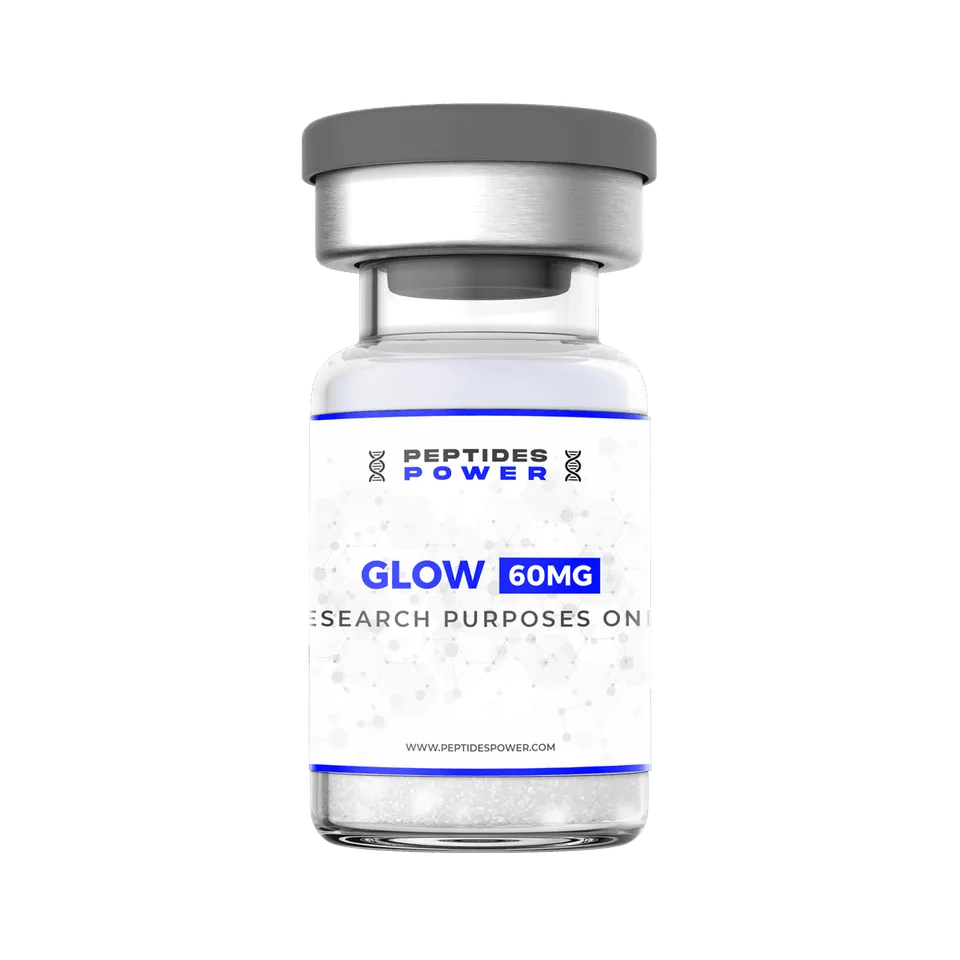
Glow Peptide Stack
$85
In stock
View product
Side effects
Glow peptide side effects have not been studied, because no published study has tested the blend.1 Reports come from its ingredients: an FDA case of skin and gum darkening, small human studies with no serious adverse events, and clotting and liver signals in animals.2 Regulators also warn of immune reactions to injected peptides.3
This page summarizes published sources for information only. It is not medical advice and does not tell anyone to use a product. Questions about your own health belong with a licensed clinician. For questions about an order or a product, contact us.
No safety data exist for the three-peptide blend.1 An FDA complaint database holds two reports about "blended TB-500 and BPC-157", and neither included a safety assessment.3 A search of FDA's adverse event database for TB-500 through March 26, 2025 returned no reports.3 A 2026 sports medicine review calls rigorous human safety data for these unapproved peptides scarce and warns of potential for serious harm.4
The lists below group what has been reported by the strength of the evidence. They run from case reports in people, to small human studies, to animal findings, to risks no study has measured.
Regulators and reviewers name these risks for injected peptides like Glow's ingredients. None has been measured for the blend, so how often they occur is unknown.
What is Glow Peptide Stack? covers the blend's contents and regulatory status. Glow Peptide Stack dosage explains why no human dose exists, and Glow Peptide Stack benefits and uses lists what studies report. For one ingredient, see TB-500 side effects; for a related blend, see KLOW Peptide Blend side effects. General risk and handling: Peptide safety basics. Vial contents and storage: Glow Peptide Stack for sale.
Published dosing information for Glow Peptide Stack from studies of its ingredients, with its sources, and why it is not advice for you.
What published sources report about Glow Peptide Stack and its uses, with the evidence level of each finding. No promises.
$85
In stock
View productGlow Peptide Stack for sale: strengths, stock and shipping are on the product page.
For research use only. Not for human or veterinary use. Read the research use policy.
It might, though no study has measured it. Glow's copper comes from GHK-Cu, its main ingredient by weight. A 2026 review says repeated injection should be evaluated for copper build-up in the liver and, at high exposures, the nervous system.8 The same review found no validated human safety threshold for GHK-Cu.8 MedlinePlus notes that large amounts of copper are poisonous, and that Wilson disease, a rare inherited disorder, causes copper deposits in the liver and brain.16
It cannot be ruled out. Copper is a recognized contact allergen in susceptible people, and a 2026 review recommends metal-allergy screening for injectable copper-peptide products.8 FDA says injectable GHK-Cu may pose a risk of immune reactions because of aggregation and peptide-related impurities, and that human data are limited.14 The 2026 review also judges the GHK peptide unlikely to be strongly immunogenic on its own.8
The safety records differ by route. A 2026 review calls topical GHK-Cu very safe, with very few cases of irritation, but says systemic GHK-Cu is not yet used clinically.11 Controlled human trials of injectable GHK-Cu are entirely absent, so its safety by injection in people is unknown.12 Results from skin creams cannot be assumed to apply to an injected solution.
No data show that it is. No published study has tested Glow in pregnancy.1 FDA found no developmental or reproductive toxicity studies of TB-500.3 A 2020 preclinical safety study reported no embryo-fetal toxicity for BPC-157 in animals, but it did not test the blend or GHK-Cu.10 With no human data, safety in pregnancy is unknown.
Written by D2C Peptides Editorial Team.
Pending qualified review.
Updated .
D2C Peptides sells peptides for laboratory research. Please confirm both statements to continue.