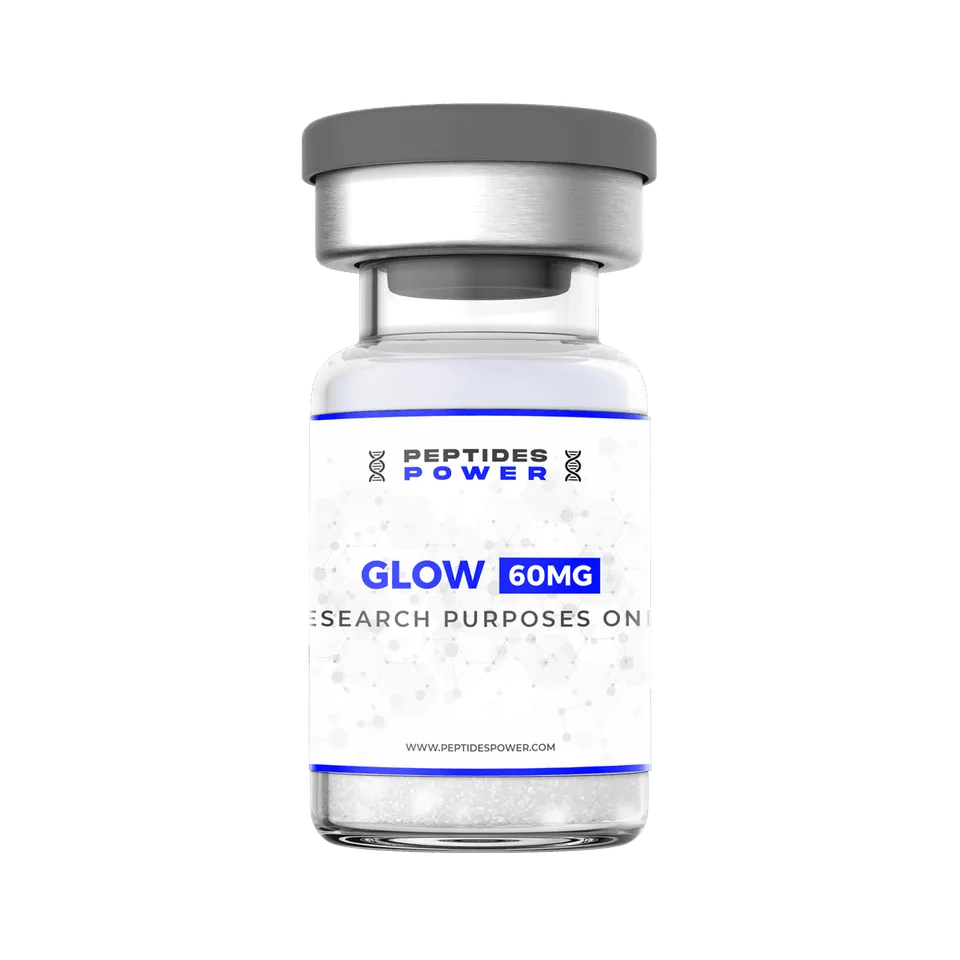
Staging preview: health content pending qualified review

Dosage information

Glow Peptide Stack dosage

No glow peptide dosage has been established. No study has tested the blend, and no human dose exists for injected GHK-Cu, BPC-157 or TB-500.12 This page lists doses used in published studies of each ingredient, with species, route and length. It also explains why none is a dose for people.

This page summarizes published sources for information only. It is not medical advice and does not tell anyone to use a product. Questions about your own health belong with a licensed clinician. For questions about an order or a product, contact us.

Is there a published Glow dose?

No. As of October 24, 2026, PubMed held no study of Glow, KLOW or any GHK-Cu, BPC-157 and TB-500 blend.13 The six papers naming all three ingredients were review articles.3 No study dose therefore exists for the blend. The amounts below come from studies of one ingredient at a time, or of a related molecule. Each row names who or what was studied, the route and the schedule.

Doses used in published studies

Ingredient Study Studied in Route Amount and schedule
BPC-157 Small human studies reviewed by FDA (2026) 24 healthy adults; about 26 people with ulcerative colitis Rectal enema Up to 2 mg/kg once daily for 8 days; 80 mg once daily for 2 weeks4
BPC-157 Same FDA review 17 people with knee pain (FDA's count) Into the knee joint 2 to 4 mg, 1 or 2 doses4
BPC-157 Same FDA review 12 people with interstitial cystitis Into the bladder wall 10 mg in one procedure4
BPC-157 Same FDA review 2 healthy adults Intravenous infusion 10 mg on day 1, then 20 mg on day 24
BPC-157 and TB-500 Randomized rat study (2026) 32 rats after Achilles tendon repair, 8 per group Into the abdomen (intraperitoneal) BPC-157 10 µg/kg and TB-500 60 µg/kg per day, alone or combined, for 4 weeks5
TB-500 Horse study summarized by FDA Thoroughbred geldings Under the skin One 10 mg dose6
Thymosin beta-4, not TB-500 Placebo-controlled phase 1 trial (2010) 40 healthy adults, 4 groups of 10 Intravenous 42, 140, 420 or 1260 mg once, then the same dose daily for 14 days7
Thymosin beta-4, not TB-500 Phase 2 trial (2015) 9 people with severe dry eye Eye drops 0.1% solution, 6 times daily for 28 days8
GHK-Cu Randomized trial (1994) People with diabetic foot ulcers Gel on the ulcer A metered dose daily with standard wound care; strength not stated in the abstract9
GHK-Cu Split-face trial (2026) 18 healthy adults Serum on one eyebrow 2%, twice daily for 12 weeks1011
GHK-Cu Mouse study (2023) Mice exposed to cigarette smoke Into the abdomen 0.2 or 2 mg/kg once a week for 7 weeks1213
GHK-Cu Rat study (2015) 72 rats after knee ligament (ACL) reconstruction Into the knee joint 0.3 or 3 mg/mL once a week for 4 weeks, from week 214
GHK-Cu Cell study (1988) Cultured fibroblasts Lab dish Collagen output began to rise at 1 to 10 picomolar and peaked at 1 nanomolar; concentrations, not doses15

Why these numbers are not a dose for people

The rows above used different molecules, routes, species and lengths. They cannot be combined into a Glow dose or scaled to a person.12 Several details make this concrete:

  • The human BPC-157 doses were exploratory. FDA says those studies were short, had small samples and evaluated doses that were likely exploratory in nature.4
  • The thymosin beta-4 trials did not use TB-500. FDA says thymosin beta-4 and TB-500 are not the same substance.6 It also says results for the closely related unacetylated sequence cannot be directly extrapolated to TB-500.6
  • The rat combination study used a different mix. It gave six times as much TB-500 as BPC-157 by body weight and no GHK-Cu.5 In Glow, BPC-157 and TB-500 are present in equal amounts and GHK-Cu makes up most of the powder; the contents are listed in What is Glow Peptide Stack?.
  • Glow's ratio is fixed. Any BPC-157 drawn from a Glow solution comes with the same amount of TB-500 and a much larger amount of GHK-Cu, so the blend cannot reproduce a study that gave one ingredient alone.
  • Human GHK-Cu data are topical. No controlled human trial has tested GHK-Cu by injection.16 No validated human safety threshold exists for GHK-Cu, on the skin or by injection.11
  • Labeled amounts may not match. A 2026 review reported significant deviations from stated doses when direct-to-consumer peptides were tested.16

How long the ingredients last in the body

No study has measured the blend in blood or tissue.1 The animal figures that exist describe short exposure:

  • BPC-157 given into a vein had a half-life of 5.3 minutes in dogs and 15.2 minutes in rats.4 FDA found no human pharmacokinetic data for BPC-157 given by mouth, under the skin, by nasal spray or on the skin.4
  • In horses, one 10 mg dose of TB-500 under the skin peaked in plasma at 0.05 to 0.08 ng/mL within 60 to 120 minutes. It could no longer be measured after 6 to 10 hours.6
  • For GHK-Cu, formal absorption, distribution, metabolism and excretion studies of the intact complex have not been reported.11

These figures describe blood levels in animals. They do not show how long any effect lasts, in animals or in people.

Trials that may add human data

Four registered trials of single Glow ingredients had posted no results as of October 2026:

  • Topical GHK-Cu gel for acute skin wounds (recruiting).17
  • BPC-157 for acute hamstring strain, injected under the skin by trained study staff (recruiting).1718
  • TB-500, described as the 17 to 23 fragment of thymosin beta-4, and cardiovascular biomarkers in stable atherosclerotic cardiovascular disease (recruiting).17
  • BPC-157 for recovery after rotator cuff repair surgery (not yet recruiting).17

What the blend is and how it is regulated: What is Glow Peptide Stack?. Reported effects and risks: Glow Peptide Stack benefits and uses and Glow Peptide Stack side effects. How to read study doses in general: Peptide dosage basics. One ingredient on its own: TB-500 dosage. The research vial, with its contents and storage data: Glow Peptide Stack for sale.

More on Glow Peptide Stack

  • Glow Peptide Stack benefits and uses

    What published sources report about Glow Peptide Stack and its uses, with the evidence level of each finding. No promises.

  • Glow Peptide Stack side effects

    Side effects of Glow Peptide Stack as reported in case reports, small studies of its ingredients and animal research, with links to the full profile.

Glow Peptide Stack in the store

Glow Peptide Stack for sale: strengths, stock and shipping are on the product page.

For research use only. Not for human or veterinary use. Read the research use policy.

Frequently asked questions

What is the recommended dosing protocol for glow peptide?

There is none. No study has tested the blend, so no protocol has a research basis.1 A 2026 review of injectable peptides says that indications, dosing, frequency and duration of treatment remain unknown.2 Weekly schedules labeled beginner or advanced on seller websites are not drawn from any published study of Glow, because no such study exists.1

How many times a week do I take glow peptide?

No schedule has been studied or established for Glow, and this page does not give one.1 Glow is sold for research use only. Schedules in single-ingredient studies vary too widely to transfer. A small human study used one or two knee injections of BPC-157, while a rat tendon study used daily abdominal injections for 4 weeks.45

How much glow peptide do you inject daily?

No daily amount is established, and none is given here. No published study has tested Glow in people.1 FDA's literature search found no article in which TB-500 was given to humans, and FDA calls its potential safety risks in humans unknown.6 Because the three peptides share one vial, any amount drawn from it is an untested mix of all three.

How long to take glow peptide?

No duration is established, because no study has given Glow for any length of time.1 The human BPC-157 studies FDA reviewed were short and small, with doses FDA calls likely exploratory.4 Topical GHK-Cu skin studies ran for 12 weeks, but they tested creams, not injections or the blend.19

Written by D2C Peptides Editorial Team.

Pending qualified review.

Updated .

Sources

  1. NCBI E-utilities PubMed search: 'GLOW' or 'KLOW' with peptide and GHK, BPC, TB-500 or thymosin (title/abstract). NCBI, U.S. National Library of Medicine, 2026.
  2. Mayfield CK, et al. Injectable Peptide Therapy: A Primer for Orthopaedic and Sports Medicine Physicians (PMID 41476424). American Journal of Sports Medicine, 2026.
  3. PubMed search: (GHK-Cu OR copper peptide OR GHK) AND (BPC-157) AND (TB-500 OR thymosin beta-4); all 6 results are 2026 review articles. PubMed, U.S. National Library of Medicine, 2026.
  4. FDA Evaluation of BPC-157-Related Bulk Drug Substances (BPC-157 free base and BPC-157 acetate), PCAC briefing document dated 5/11/2026. U.S. Food and Drug Administration, 2026.
  5. Bicer O, et al. Effects of BPC-157 and TB-500 on Achilles tendon healing in rats: A histopathological and biomechanical study (PMID 42542926). Joint Diseases and Related Surgery, 2026.
  6. FDA Evaluation of TB-500-Related Bulk Drug Substances (TB-500 free base and TB-500 acetate), PCAC briefing document dated 5/15/2026. U.S. Food and Drug Administration, 2026.
  7. Ruff D, et al. A randomized, placebo-controlled, single and multiple dose study of intravenous thymosin beta4 in healthy volunteers (PMID 20536472). Annals of the New York Academy of Sciences, 2010.
  8. Sosne G, Dunn SP, Kim C. Thymosin beta4 significantly improves signs and symptoms of severe dry eye in a phase 2 randomized trial (PMID 25826322). Cornea, 2015.
  9. Mulder GD, et al. Enhanced healing of ulcers in patients with diabetes by topical treatment with glycyl-l-histidyl-l-lysine copper (PMID 17147644). Wound Repair and Regeneration, 1994.
  10. Bo SL, Nararatwanchai T, et al. The Efficacy of 2% Copper Peptide (GHK-Cu) Serum for Eyebrow Hypotrichosis: A Randomized, Double-Blind, Vehicle-Controlled, Split-Face Comparative Study (proceedings poster), methods. Procedia of Multidisciplinary Research (Mae Fah Luang University authors), 2026.
  11. Mateescu DM, et al. GHK-Cu as a Bioactive Metallopeptide and Drug-Delivery Cargo: Coordination Chemistry, Formulation Science, Therapeutic Evidence, and a Translational Roadmap (conclusion). Pharmaceutics, 2026.
  12. Deng M, et al. Glycyl-l-histidyl-l-lysine-Cu2+ rescues cigarette smoking-induced skeletal muscle dysfunction via a sirtuin 1-dependent pathway (full text, Figure 4 legend). Journal of Cachexia, Sarcopenia and Muscle, 2023.
  13. Deng M, et al. Glycyl-l-histidyl-l-lysine-Cu2+ rescues cigarette smoking-induced skeletal muscle dysfunction via a sirtuin 1-dependent pathway (PubMed 36905132), mouse results. Journal of Cachexia, Sarcopenia and Muscle, 2023.
  14. Fu SC, et al. Tripeptide-copper complex GHK-Cu (II) transiently improved healing outcome in a rat model of ACL reconstruction (PubMed 25731775), conclusion. Journal of Orthopaedic Research, 2015.
  15. Maquart FX, et al. Stimulation of collagen synthesis in fibroblast cultures by the tripeptide-copper complex glycyl-L-histidyl-L-lysine-Cu2+ (PMID 3169264). FEBS Letters, 1988.
  16. Moiz A, O'Keefe EL, O'Keefe JH. Dangers of Injectable Peptides and Other Unregulated 'Biohacking' Drugs (PMC13585006). Missouri Medicine, 2026.
  17. ClinicalTrials.gov API v2: NCT07437586 title and status. ClinicalTrials.gov, U.S. National Library of Medicine, 2026.
  18. ClinicalTrials.gov API v2: NCT07437586, NCT07437547, NCT07487363, NCT07803250 (intervention details). ClinicalTrials.gov, U.S. National Library of Medicine, 2026.
  19. Pickart L, Margolina A. Regenerative and Protective Actions of the GHK-Cu Peptide in the Light of the New Gene Data (PMC6073405). International Journal of Molecular Sciences, 2018.
