Staging preview: health content pending qualified review

Side effects

TB-500 side effects

TB-500 side effects in people are unknown.1 FDA found no clinical studies or human exposure data, and no reports in its adverse event database through March 2025.1 FDA flags a possible risk of immune reactions with injected peptides, and it found no toxicity, cancer or reproductive studies of TB-500.1

This page summarizes published sources for information only. It is not medical advice and does not tell anyone to use a product. Questions about your own health belong with a licensed clinician. For questions about an order or a product, contact us.

What is known in people

FDA found no clinical studies or human exposure data for TB-500 by any route.1 It concluded that the potential safety risks in humans are unknown.1 Its literature search found no article in which TB-500 was given to people.1 A later human report, a 2026 series of 3 patients, used TB-500 mixed with other drugs.2 So no study has measured how often any TB-500 side effect occurs.1 The reports that do exist are grouped below by where they come from, followed by the risks regulators flag.

Reports involving TB-500

  • FDA adverse event database (FAERS): a search through March 26, 2025 found no reports for TB-500, and FDA's literature search found no published adverse event cases.1
  • FDA complaint reports: FDA's system for food, supplement and cosmetic complaints held two reports from 2004 to March 10, 2025 about "blended TB-500 and BPC-157".1 Neither included a safety assessment.1
  • 2026 case series (3 patients, TB-500 mixed with other drugs): the authors' summary table lists no adverse events for any of the 3 patients.2 The series was small and uncontrolled, and the authors say questions about the safety of these peptides remain unresolved.2

Reports from thymosin beta-4 trials (a different molecule)

These trials tested the full 43-amino-acid parent protein. FDA says it is not the same substance as TB-500.1 TB-500 has 7 amino acids.1 The trials below used IV infusions, eye drops and a topical form, not the injections used in TB-500 animal studies.3451 Their safety results describe a different molecule given by different routes.1

  • IV infusion, 40 healthy volunteers: a single dose, then the same dose daily for 14 days, at 42 to 1260 mg.3 Adverse events were infrequent and mild or moderate, with no dose-limiting toxicities or serious adverse events.3
  • Eye drops, 9 patients with severe dry eye (phase 2): the drops were reported safe and well tolerated.4
  • Eye drops, 18 patients with neurotrophic keratopathy (phase 3): no significant adverse effects were observed.6
  • Topical treatment, 73 patients with venous leg ulcers (phase 2): the safety profile was comparable to placebo.5

Serious risks regulators and reviewers flag

These are potential risks named by FDA and by review authors, not side effects measured in people using TB-500.

  • Immune reactions (immunogenicity): FDA warns that injected peptides like TB-500 may trigger an immune response.1 Outcomes range from antibodies with no apparent symptoms to life-threatening and catastrophic reactions.1 Neutralizing antibodies could weaken a drug's effect or even block the body's own matching peptide.1 FDA adds that aggregation and peptide-related impurities may amplify this risk for TB-500.1 Its compounding safety page makes the same point for compounded TB-500 and notes that FDA has identified no human exposure data.7
  • Route and immune risk: FDA says that, in general, under-the-skin dosing is linked to more immune reactions than intramuscular or IV dosing.1 FDA found no clinical studies of TB-500 by any route.1
  • Aggregation and degradation: FDA says peptides like TB-500 can be extremely sensitive to formulation, processing, pH, heat, concentration, impurities and added ingredients.1 Those conditions may lead to aggregation and degradation, and FDA names aggregation as a factor that may amplify immune risk.1
  • Contamination and impurities: a 2026 review of unregulated injectable peptides lists product contamination and manufacturing impurities among their severe potential risks.8 The same review says TB-500 lacks an established human safety profile.8
  • Unknown cancer risk: FDA found no carcinogenicity studies of TB-500.1 SW480 colon cancer cells made to overproduce thymosin beta-4 became markedly more invasive in the lab.9 In patients, thymosin beta-4 mRNA was relatively higher in colorectal cancer liver metastases than in the matched primary tumors.9 Whether TB-500 affects cancer risk is unknown.1
  • Uncertain product identity: FDA has encountered several salts and derivatives marketed as TB-500, some with a different active molecule.1 A representative certificate of analysis that FDA found did not test assay, impurities, bacterial endotoxins or aggregates.1
  • Scarce data overall: a 2026 Sports Medicine review covered approved and unapproved peptide therapies for musculoskeletal injuries and athletic performance.10 It says rigorous human safety data for many unapproved peptides are scarce, with potential for serious harm to patients.10

Warnings

  • No safety testing: FDA found no nonclinical toxicity studies of TB-500 or TB-500 acetate, including none on development or reproduction.1
  • No long-term data: the longest TB-500 exposure in these studies is 4 weeks, in rats and in the 3-patient case series.112 The rat study's authors call for longer-term studies.11
  • Pregnancy and breastfeeding: with no reproductive studies and no human exposure data, there are no data on use in pregnancy or breastfeeding.1
  • Combining with other peptides: no safety data exist for blends.1 FDA's only complaint reports involved blended TB-500 and BPC-157.1 A dissenting member of FDA's advisory committee raised concern about TB-500 being used with other peptides.12
  • Athletes: TB-500 is prohibited at all times under WADA class S2.3.13 USADA gave a triathlete a four-year ban for possessing and using BPC-157 and TB-500.14
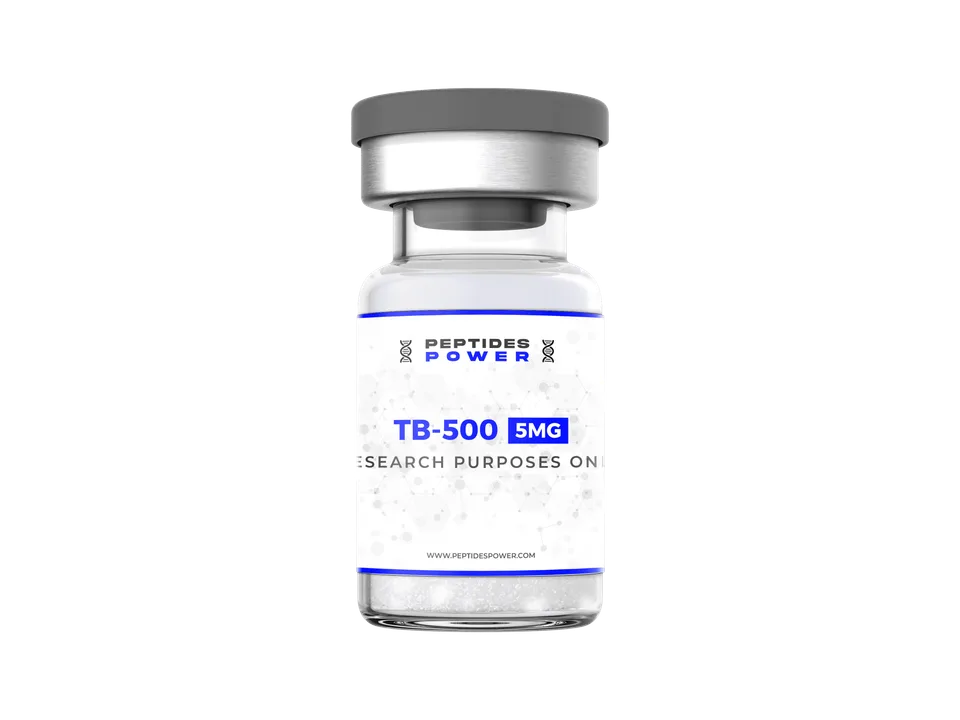
  • Research-use labels: in a 2023 warning letter, FDA said website evidence showed an online seller's "TB-500" was intended for human use despite "research purpose only" labeling.15 It called the products new drugs that are not generally recognized as safe and effective.15

The overview is in What is TB-500?. Study doses are on TB-500 dosage, and reported results on TB-500 benefits and uses. Storage and lab handling are on How to reconstitute TB-500. General lab safety is covered in safety basics. The research vial is listed under TB-500 for sale.

More on TB-500

  • TB-500 dosage

    Published dosing information for TB-500 from studies, with its source, and why it is not advice for you.

  • TB-500 benefits and uses

    What published sources report about TB-500 and its uses, with the evidence level of each finding. No promises.

  • How to reconstitute TB-500

    How TB-500 is reconstituted, the supplies used, and the calculator, step by step. Sourced and reviewed.

TB-500 in the store

TB-500 for sale: strengths, stock and shipping are on the product page.

For research use only. Not for human or veterinary use. Read the research use policy.

Frequently asked questions

What are the side effects of TB-500?

They are unknown in people.1 FDA found no clinical studies or human exposure data, and its adverse event database held no TB-500 reports through March 2025.1 FDA flags a possible risk of immune reactions with injected peptides like TB-500, ranging from no symptoms to life-threatening reactions.1 An IV trial of the parent protein, thymosin beta-4, in 40 healthy volunteers reported infrequent mild or moderate adverse events, but that is a different molecule.3

Does TB-500 cause cancer?

This is unknown: FDA found no carcinogenicity studies of TB-500.1 A 2004 study found that colon cancer cells made to overproduce the parent protein, thymosin beta-4, became more invasive in the lab.9 In patients' tumors, its mRNA was relatively higher in liver metastases than in the matched primary colorectal tumors.9 That link concerns the full protein; whether TB-500 affects cancer risk is unknown.1

Is TB-500 safe during pregnancy?

There are no data: FDA found no developmental or reproductive toxicity studies of TB-500 and no human exposure data of any kind.1 Without those studies, its effects on pregnancy, a developing baby or breastfeeding are unknown.1 FDA's overall conclusion is that the safety risks of TB-500 in humans are unknown.1

Is it safe to mix TB-500 with BPC-157?

No safety data exist for the combination.1 FDA's only complaint reports about TB-500 involved "blended TB-500 and BPC-157", and those reports had no safety assessments.1 A dissenting member of FDA's advisory committee raised concern about TB-500 being used with other peptides.12 In a rat study that tested the pair, the combination added no benefit over either peptide alone.11 Read more: What is Wolverine Stack (BPC-157 + TB-500)?.

Written by D2C Peptides Editorial Team.

Pending qualified review.

Updated .

Sources

  1. FDA Briefing Document, Pharmacy Compounding Advisory Committee, July 23-24, 2026: TB-500-Related Bulk Drug Substances (TB-500 (Free Base) and TB-500 acetate). U.S. Food and Drug Administration, 2026.
  2. Case Report: Regenerative peptides for Inferior alveolar nerve injury: a narrative review with hypothesis-generating three clinical cases (full text, PMC13661421). Frontiers in Oral Health (via PubMed Central), 2026.
  3. A randomized, placebo-controlled, single and multiple dose study of intravenous thymosin beta4 in healthy volunteers (Ruff et al., PMID 20536472). Annals of the New York Academy of Sciences, 2010.
  4. Thymosin β4 significantly improves signs and symptoms of severe dry eye in a phase 2 randomized trial (Sosne et al., PMID 25826322). Cornea, 2015.
  5. The effect of thymosin treatment of venous ulcers (Guarnera et al., PMID 20536470). Annals of the New York Academy of Sciences, 2010.
  6. 0.1% RGN-259 (Thymosin β4) Ophthalmic Solution Promotes Healing and Improves Comfort in Neurotrophic Keratopathy Patients in a Randomized, Placebo-Controlled, Double-Masked Phase III Clinical Trial (Sosne et al., PMID 36613994). International Journal of Molecular Sciences, 2022.
  7. Certain Bulk Drug Substances for Use in Compounding that May Present Significant Safety Risks. U.S. Food and Drug Administration, 2026.
  8. Dangers of Injectable Peptides and Other Unregulated "Biohacking" Drugs (Moiz et al., PMID 42757290). Missouri Medicine, 2026.
  9. Overexpression of the thymosin beta-4 gene is associated with increased invasion of SW480 colon carcinoma cells and the distant metastasis of human colorectal carcinoma (Wang et al., PMID 15235586). Oncogene, 2004.
  10. Safety and Efficacy of Approved and Unapproved Peptide Therapies for Musculoskeletal Injuries and Athletic Performance (Mendias and Awan, PMID 41966639). Sports Medicine, 2026.
  11. Effects of BPC-157 and TB-500 on Achilles tendon healing in rats: A histopathological and biomechanical study (Biçer et al., PMID 42542926). Joint Diseases and Related Surgery, 2026.
  12. FDA committee recommends looser restrictions for several peptides. Healio, 2026.
  13. World Anti-Doping Code International Standard: Prohibited List 2026. World Anti-Doping Agency (PDF hosted by the International Testing Agency), 2025.
  14. Anthony McCauley Accepts Doping Sanction (USADA sanction announcement, September 17, 2025). U.S. Anti-Doping Agency, 2025.
  15. Warning Letter: Warrior Labz SARMS (MARCS-CMS 655280), June 12, 2023. U.S. Food and Drug Administration, 2023.
