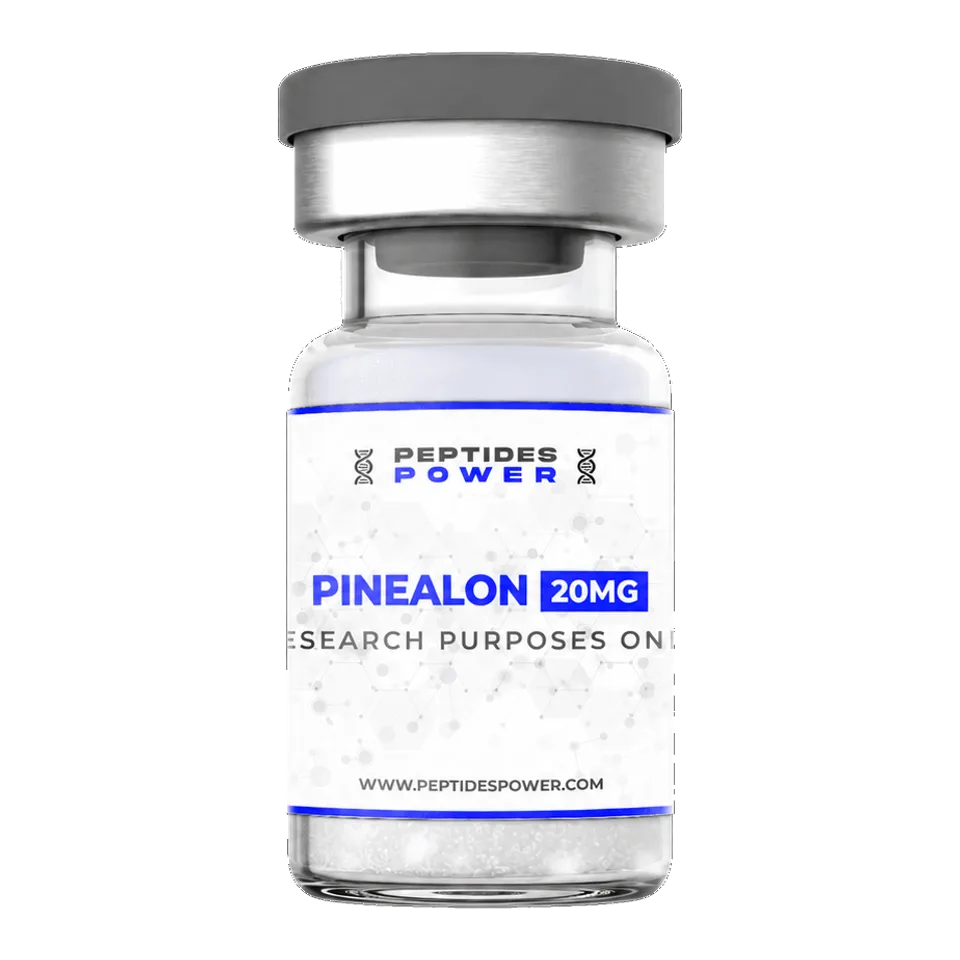
Pinealon
$55
In stock
View product
Side effects
Side effects of Pinealon in people are largely unknown, because no clinical trial of it is registered.1 The human record is a few small Russian studies.234 One, of 32 adults given Pinealon and Vesugen, reported pro-oxidant activity and lower markers of blood-forming stem cells; another rated the peptides among the safest methods tested.23
This page summarizes published sources for information only. It is not medical advice and does not tell anyone to use a product. Questions about your own health belong with a licensed clinician. For questions about an order or a product, contact us.
Pinealon's human safety record is thin: ClinicalTrials.gov lists no Pinealon study,1 and none of the 22 PubMed records found for it in October 2026 is a registered clinical trial.61 A few small Russian studies give the human data, including these three:
None of these three abstracts gives side effect frequencies.234 They also leave out doses, routes and length of use, so no finding in them can be tied to an amount.234
These are the safety-relevant findings in the sources reviewed for this page, ordered from the strongest evidence level (people) to the weakest (cells):
Much of the Pinealon research comes from the St. Petersburg Institute of Bioregulation and Gerontology and its partners.109 The human studies were published in Russian, and only their English abstracts were reviewed for this page.234 The 2015 abstract reports 32 participants but lists 18 men and 12 women, which adds to 30.2 A 2026 US review of therapeutic peptides in orthopedics, which mentions pinealon, noted a current lack of clinical trials for the peptides it covers.15 Until a registered trial reports adverse events by dose, the side effect profile of Pinealon remains unknown.1
The full Pinealon profile covers what studies report, the doses used in animal research and its regulatory status. See also Peptide safety basics and Peptide dosage basics.
$55
In stock
View productPinealon for sale: strengths, stock and shipping are on the product page.
For research use only. Not for human or veterinary use. Read the research use policy.
No one can say yet: Pinealon has never been tested in a registered clinical trial, so its side effects, how often they occur and its long-term safety are unknown.1 One small Russian study of Pinealon and Vesugen found pro-oxidant activity and lower markers of blood-forming stem cells.2 Health Canada says the injectable Pinealon products it seized had not been assessed for safety, efficacy or quality.5
One study suggests it might: in a 2015 study of Pinealon and Vesugen in 32 adults, the authors measured a fall in CD34+ blood-forming stem cells.2 They called it significant inhibition of blood cell formation.2 The study was small and published in Russian, and its English abstract gives no dose or duration and does not say which peptide caused the fall.2 No later study in our sources repeated the measurement.
The studies in our sources do not describe allergic reactions to Pinealon, but no registered trial has ever collected its safety data.1 Health Canada warns that unauthorized injectable peptides, including the Pinealon products it seized, may cause infection and allergic reactions.5 They may also contain high-risk ingredients or contaminants that may not be listed on the label.5
Interactions have not been studied: no Pinealon trial is registered, and use alongside other medicines is among the questions no published study has addressed.61 Health Canada warns that unauthorized injectable drugs, a group that includes the Pinealon products it seized, may interact with other medicines a person is taking.5
Pregnancy in people has never been studied.61 One 2012 experiment gave pinealon to pregnant rats in a high-homocysteine model and reported better learning in their offspring.7 That is a single animal study of offspring learning, not a test of safety in human pregnancy, and no human data exist to fill the gap.
Written by D2C Peptides Editorial Team.
Pending qualified review.
Updated .
D2C Peptides sells peptides for laboratory research. Please confirm both statements to continue.