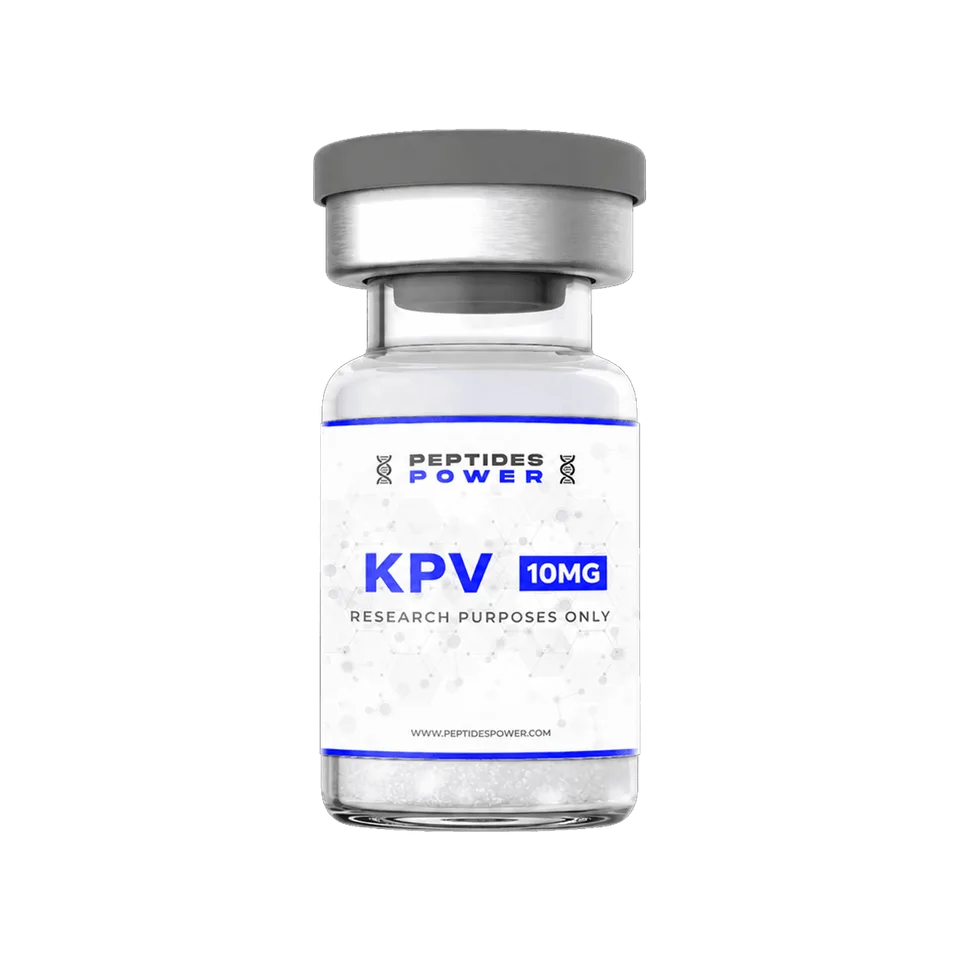
KPV
$60
In stock
View product
Side effects
No side effects of KPV have been recorded in people, because FDA found no study that gave it to people.1 FDA's 2026 review also found no case reports and no animal toxicity studies, and it called the potential safety risks of KPV in humans unknown.1 The risks it names include immune reactions.1
This page summarizes published sources for information only. It is not medical advice and does not tell anyone to use a product. Questions about your own health belong with a licensed clinician. For questions about an order or a product, contact us.
None of these risks has a measured frequency for KPV. They are the hazards regulators and reviewers name for KPV or for products like it.
Health Canada's April 2026 advisory on unauthorized injectable peptides lists liver or kidney damage, blood clots and the growth of cancerous tumors among the risks of these products, and it names KPV among the peptides it has seized.4 These warnings cover the whole group of products; they are not effects measured for KPV.4
FDA warns that peptides such as KPV can trigger an immune response (immunogenicity), with outcomes from no symptoms to life-threatening reactions.1 Aggregation, the clumping of peptide molecules, adds to the risk, and FDA says the data are too thin to conclude KPV is free of it.1 FDA says it is particularly concerned about the lack of any human data for any route, including data to assess immune reactions or clumping.1
KPV is a common name, not an official drug name, and FDA has seen several salts and derivatives, some with a different active part, sold under it.1 FDA treats this as a safety risk because a person may get a different substance than intended.1 Most published certificates of analysis for KPV free base that FDA found reported only purity, with no impurity limits or aggregation data; FDA found no microbiological test data for either form and judged both KPV free base and KPV acetate not well characterized.1 A 2026 review of peptides in sport adds that the largely unregulated supply leaves products often mislabeled or contaminated.5
KPV is the last three amino acids of alpha-MSH, the hormone that darkens skin, but a 2019 review reports that it lacks the hormone's pigment-inducing activity.6 In cell tests it did not compete for binding at the MC1 receptor, through which alpha-MSH acts on pigment cells.7 These are lab and animal findings; no human study has checked.1
FAERS relies on voluntary reports, and FDA notes that pharmacies compounding under section 503A generally do not report adverse events.1 With no human studies and no tracked use, an empty record says that harm has not been measured, not that it is absent.1
General precautions are in Peptide safety basics.
Back to the KPV profile. The cell and animal findings are in KPV benefits and uses, and the amounts used in studies are in KPV dosage. For a blend that includes KPV, see KLOW Peptide Blend side effects. For the vial's specifications and storage figures, see KPV for sale.
Published dosing information for KPV from animal and cell studies, with its sources, and why it is not advice for you.
What published sources report about KPV and its uses, with the evidence level of each finding. No promises.
$60
In stock
View productKPV for sale: strengths, stock and shipping are on the product page.
For research use only. Not for human or veterinary use. Read the research use policy.
There is no information either way: FDA found no study that gave KPV to people, so none has looked for tiredness or any other effect, and it found no case reports.1 Its adverse event database held no KPV reports through December 3, 2025, but reporting is voluntary and pharmacies that compound under section 503A generally do not report, so the empty record does not show that KPV causes no side effects.1
No published evidence supports that claim. FDA concluded in 2026 that the potential safety risks of KPV in humans are unknown, and said it is particularly concerned that no human data exist for any route of use.1 It found no animal toxicity testing either: no acute (single-dose) or repeat-dose studies and no genotoxicity, reproductive or cancer studies.1 Without those data, there is nothing on which to rank KPV's safety against other peptides.
Nobody knows, because no published study has given KPV to people: FDA's review dated May 12, 2026 found no clinical studies or case reports, and its adverse event database held no KPV reports through December 3, 2025.1 FDA still names possible risks: immune reactions that range from no symptoms to life-threatening, made more likely when the peptide clumps, and vials sold as KPV that may hold a different salt or derivative than expected.1
It might, but no one has measured it. FDA says peptides such as KPV can provoke an immune response, from one with no symptoms to a life-threatening reaction, and that clumping of the peptide (aggregation) raises the risk.1 FDA found too few data to conclude that KPV does not carry this risk, and most published certificates of analysis for KPV free base that it found reported purity alone, without aggregation data or impurity limits.1
Written by D2C Peptides Editorial Team.
Pending qualified review.
Updated .
D2C Peptides sells peptides for laboratory research. Please confirm both statements to continue.