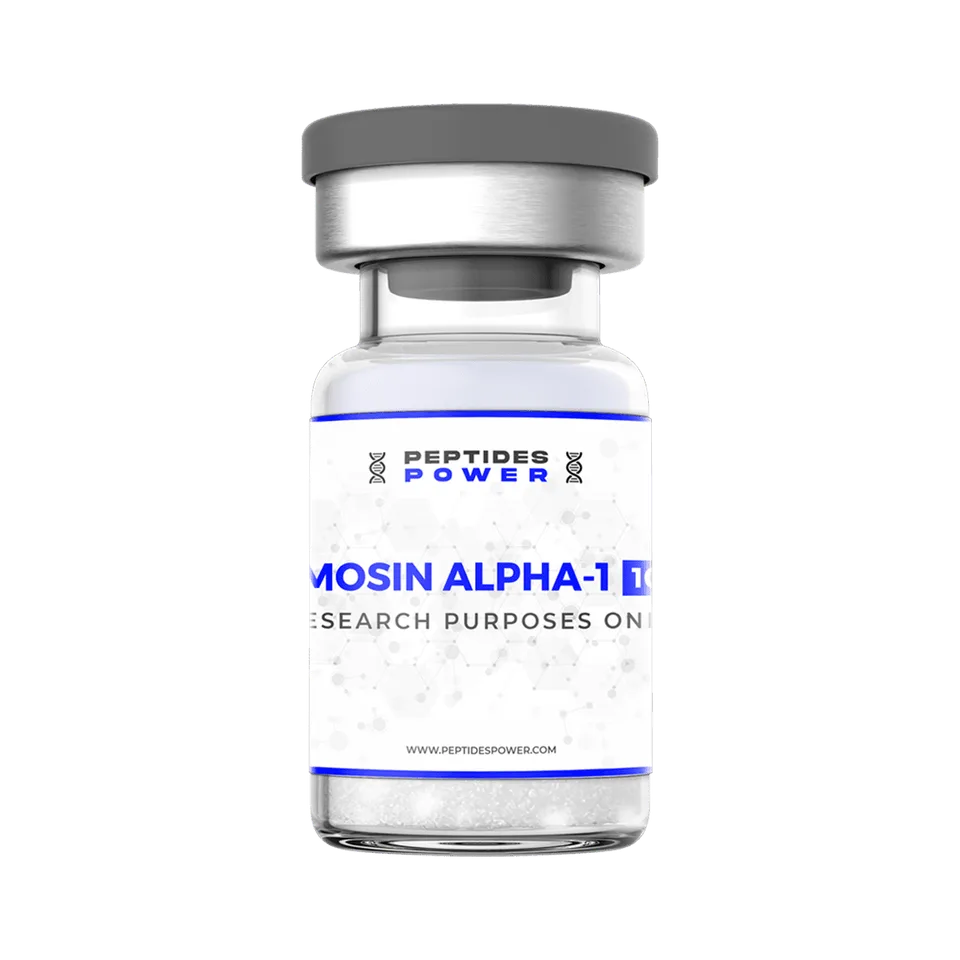
Thymosin Alpha-1
$80
In stock
View product
Side effects
In clinical studies of Thymosin Alpha-1, mostly at 1.6 mg under the skin, the most common side effects were irritation, redness or discomfort at the injection site.1 The most serious reports came from stem cell transplant recipients: engraftment failure and fatal immune destruction of red blood cells.12 FDA also warns of possible immune reactions to compounded Ta1.7
This page summarizes published sources for information only. It is not medical advice and does not tell anyone to use a product. Questions about your own health belong with a licensed clinician. For questions about an order or a product, contact us.
The safety record of Thymosin Alpha-1 (Ta1) comes from clinical studies, mostly in patients with infections or cancer, who usually received 1.6 mg under the skin.12 In those studies, the most common side effects were local irritation, redness or discomfort at the injection site.1 In most studies, Ta1 was not linked to significant adverse events at doses of 1 to 16 mg under the skin for up to 12 months.1
Larger studies and label data point the same way:
FDA's 2024 review summarizes these warnings from Zadaxin labels outside the US.2
According to the Zadaxin product monograph as summarized by FDA, single doses up to 20 mg/kg caused no drug-related safety signals in mice, rats and marmosets.1 Neither did repeated doses under the skin of up to 6 mg/kg a day for 13 weeks, or 1 mg/kg a day for 26 weeks.1 FDA could not review the underlying data, and it found no carcinogenicity studies and no published reproductive toxicity data.1 These are animal results and say nothing direct about people.
The human data on this page come from Zadaxin and from trial drug given under medical care.12 FDA notes that Zadaxin is a finished drug product that cannot be used interchangeably with Ta1 as a substance.2 Health Canada warns that unauthorized injectable peptides, thymosin alpha among them, may contain high-risk ingredients, additives or contaminants that may or may not be listed on the label.8 The vial sold on this site is labeled: For research use only. Not for human or veterinary use.
Read the full Thymosin Alpha-1 profile, the study schedules in Thymosin Alpha-1 dosage, and the trial results in Thymosin Alpha-1 benefits and uses. For general background on peptide risks, see Peptide safety basics.
Published dosing information for Thymosin Alpha-1 from clinical trials and published studies, with its source, and why it is not advice for you.
What published sources report about Thymosin Alpha-1 and its uses, with the evidence level of each finding. No promises.
$80
In stock
View productThymosin Alpha-1 for sale: strengths, stock and shipping are on the product page.
For research use only. Not for human or veterinary use. Read the research use policy.
The most common in clinical studies were irritation, redness or discomfort at the injection site, and in most studies Ta1 was not linked to significant adverse events.1 The Indonesian label for the brand Zadaxin, as summarized by FDA, lists rare redness, temporary muscle wasting, joint pain with hand swelling, and rash.2 In an early cancer study, 1 of 14 people had fever and 2 had mild nausea after single doses into the muscle.2
In studies under medical care, mostly at 1.6 mg under the skin, it was generally well tolerated, and injection-site reactions were the main complaint.1 Still, FDA judged its safety information inadequate, warned of possible immune reactions to compounded Ta1, and noted serious harms in stem cell transplant recipients.71 Labels abroad advise against use in children, in pregnancy and breastfeeding, and in people kept immunosuppressed on purpose.2 Health Canada warns that unauthorized injectable peptides, thymosin alpha among them, may contain high-risk ingredients or contaminants that may or may not be listed on the label.8
FDA says compounded Ta1 may pose a significant risk of immunogenicity, meaning an immune response against the peptide itself, for certain routes of administration.7 Its review adds that clumping (aggregation) and peptide-related impurities could make this worse, and that a solution stronger than 2 mg/mL, the highest strength it found in clinical studies, could raise the risk.1 FDA listed the lack of information on immunogenicity among its reasons for calling the safety data insufficient.1
Italy's Zadaxin label, as summarized by FDA, says the medicine is contraindicated during pregnancy and breastfeeding and should not be used in children.2 FDA's 2024 review also found no published reproductive toxicity data for Ta1 and no carcinogenicity studies, and it could not check the animal safety data in the maker's monograph.1
Written by D2C Peptides Editorial Team.
Pending qualified review.
Updated .
D2C Peptides sells peptides for laboratory research. Please confirm both statements to continue.